Skip to content

ADVOCATETANMOY LAW LIBRARY

Research & Library Database

Primary Menu
  • News
  • Opinion
  • Countries198
    • National Constitutions: History, Purpose, and Key Aspects
  • Judgment
  • Book
  • Legal Brief
    • Legal Eagal
  • LearnToday
  • HLJ
    • Supreme Court Case Notes
    • Daily Digest
  • Sarvarthapedia
    • Sarvarthapedia (Core Areas)
    • Systemic-and-systematic
    • Volume One
05/04/2026
  • Law

How to become a judge

advtanmoy 02/08/2021 4 minutes read

ยฉ Advocatetanmoy Law Library

  • Share on WhatsApp (Opens in new window) WhatsApp
  • Share on X (Opens in new window) X
  • Share on Facebook (Opens in new window) Facebook
  • Share on Telegram (Opens in new window) Telegram
Judge

Home ยป Law Library Updates ยป Sarvarthapedia ยป Law ยป How to become a judge

What makes a good judge?

Lord Judge, the former Lord Chief Justice, speaking at Equality in Justice Day, October 2008:

โ€œ[When taking the judicial oath, judges and magistrates swear] โ€˜To do right to all manner of people after the laws and usages of this realm without fear or favour, affection or ill-willโ€™.

โ€œPonder the words. I hear them frequently, and they still send a shiver up my spine. It binds my conscience, as it binds the conscience of every judge who takes it.

Read Next

  • ย Judicial office is essentially a public trust: Supreme Court
  • Disclosure of Personal Information under the Right to Information Act, 2005
  • Analysis of Section 8(1)(j), Right to Information Act, 2005

โ€œMany qualities are required of a judgeโ€ฆ He or she must of course know the law, and know how to apply it, but the judge must also be wise to the ways of the world. The judge must have the ability to make a decision.

โ€œDecisions can be profoundly unpleasant: for example, to say to a mother that her children can be taken away from her, or to say to an individual that he is going to go to prison for the rest of his life.

โ€œJudges must have moral courage โ€“ it is a very important judicial attribute โ€“ to make decisions that will be unpopular with the politicians or the media and the public, and indeed perhaps most importantly of all, to defend the right to equal treatment before the law of those who are unpopular at any given time.

โ€œโ€ฆBut however you draw up the list, and in whatever order, gender, colour of your skin, religious belief, and social origins are all utterly irrelevant. It is you who is the judge.โ€

Read Next

  • ย Judicial office is essentially a public trust: Supreme Court
  • Disclosure of Personal Information under the Right to Information Act, 2005
  • Analysis of Section 8(1)(j), Right to Information Act, 2005

Who appoints judges?

The Judicial Appointments Commission (JAC) is an independent commission that recommends candidates for judicial office in the courts and tribunals of England and Wales and for some tribunals whose jurisdiction extends to Scotland or Northern Ireland.

Salaried positions have traditionally been full-time, but are increasingly open to part-time and flexible working as well. A legal professional who has taken a salaried role will not be able to return to legal practice.

Fee-paid (part-time) positions are usually similar to the equivalent salaried appointment, but may deal with the less complex or serious cases.

Read Next

  • ย Judicial office is essentially a public trust: Supreme Court
  • Disclosure of Personal Information under the Right to Information Act, 2005
  • Analysis of Section 8(1)(j), Right to Information Act, 2005

Fee-paid positions โ€“ including tribunal appointments, Recorders, and Deputy District Judges โ€“ are paid according to the number of sittings or days worked. The number of sitting days varies depending on the type of appointment, and will generally be at least 15 days a year.

Basic requirements

Judicial appointments are open only to citizens (including those holding dual nationality) of the United Kingdom, the Republic of Ireland or a Commonwealth country.

There is no upper or lower age limit for candidates, apart from the statutory retirement age of 70 for all judges. However, applicants should be able to offer a โ€˜reasonable length of serviceโ€™ โ€“ usually at least five years.

Applications from disabled people are welcomed, and reasonable adjustments will be made at every stage to ensure applicants are treated fairly.

Qualifications โ€“ legal positions

Most judicial posts will require a relevant legal qualification that has been held for either five or seven years.

Government lawyers are eligible to apply for all judicial posts, but when sitting as a fee-paid judge they must not hear cases involving their own department.

For salaried judicial appointments, applicants must normally have served as a fee-paid judicial office-holder for at least two years or have completed 30 sitting days since appointment in a fee-paid capacity.

Work-shadowing

For anyone wanting to find out more about the role they are considering before applying, the Judicial Office runs a Work Shadowing Scheme.

For most shadowing opportunities the scheme is open to any eligible qualified legal practitioner with a minimum of seven yearsโ€™ post-qualification legal experience who may be interested in seeking judicial appointment, within the next two years. The scheme covers the following positions:

  • High Court Judge
  • Circuit Judge
  • District Judge (sitting in civil or family jurisdictions)
  • District Judge (Magistratesโ€™ Courts)
  • Tribunal Judge

A shadower will spend up to three days observing a judgeโ€™s main duties including, as appropriate, preparing for trial, case management, presiding over court proceedings, hearing actions, sentencing, determining applications and giving judgments.


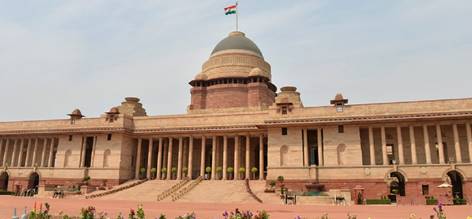
Becoming a judge-Crown Copyright
Tags: judges

Post navigation

Previous: Appeal Process in UK
Next: Judicial Responsibility
Arrest
Sarvarthapedia

Latin Maxims in Criminal Law: Meaning, Usage, and Courtroom Application

Sarvarthapedia
Sarvarthapedia

Research Methodology and Investigation: Concepts, Frameworks, and Emerging Trends

Rule of Law vs Rule by Law and Rule for Law: History, Meaning, and Global Evolution

IPS Cadre Strength 2025: State-wise Authorised Strength

Uric Acid: From 18th Century Discovery to Modern Medical Science

Christian Approaches to Interfaith Dialogue: Orthodox, Catholic, Protestant, and Pentecostal Views

Origin of Central Banking in India: From Hastings to RBI and the History of Preparatory Years (1773โ€“1934)

Howrah District Environment Plan: Waste Management, Water Quality & Wetland Conservation

Bharatiya Nyaya Sanhita 2023: Sections (1-358), Punishments, and Legal Framework

Bengali Food Culture: History, Traditions, and Class Influences

West Bengal Court-Fees Act, 1970: Fees, Schedules, and Procedures

WB Land Reforms Tribunal Act 1997: History, Features, Provisions, Structure, Powers and Functions

Civil Procedure Law of the Democratic People’s Republic of Korea (1976)

Knowledge Management in the Modern Era: From History to Digital Transformation

  • Sarvarthapedia

  • Delhi Law Digest

  • Howrah Law Journal

  • Amit Aryaย vs Kamlesh Kumari:ย Doctrine of merger
  • David Vs. Kuruppampady: SLP against rejecting review by HC (2020)
  • Nazim & Ors. v. State of Uttarakhand (2025 INSC 1184)
  • Geeta v. Ajay: Expense for daughter`s marriage allowed in favour of the wife
  • Ram v. Sukhram: Tribal women’s right in ancestral property [2025] 8 SCR 272
  • Naresh vs Aarti: Cheque Bouncing Complaint Filed by POA (02/01/2025)
  • Bharatiya Nagarik Suraksha Sanhita 2023 (BNSS)
  • Bharatiya Sakshya Adhiniyam 2023 (BSA): Indian Rules for Evidence
  • Bharatiya Nyaya Sanhita (BNS) 2023
  • The Code of Civil Procedure (CPC)
  • Supreme Court Daily Digest
  • U.S. Supreme Court Orders
  • U.k. Supreme Court Orders
Sarvarthapedia, Law and Legal Materials

Rule of Law vs Rule by Law and Rule for Law: History, Meaning, and Global Evolution

Indian Government

IPS Cadre Strength 2025: State-wise Authorised Strength

Sarvarthapedia

Uric Acid: From 18th Century Discovery to Modern Medical Science

Christian Education

Christian Approaches to Interfaith Dialogue: Orthodox, Catholic, Protestant, and Pentecostal Views

2026 ยฉ Advocatetanmoy Law Library

  • About
  • Global Index
  • Judicial Examinations
  • Indian Statutes
  • Glossary
  • Legal Eagle
  • Subject Guide
  • Journal
  • SCCN
  • Constitutions
  • Legal Brief (SC)
  • MCQs (Indian Laws)
  • Sarvarthapedia (Articles)
  • Contact Us
  • Privacy Policy
  • FAQs
  • Library Updates