Officials say drones targeted Putin residence, prompting warnings of revised negotiations and Russian response
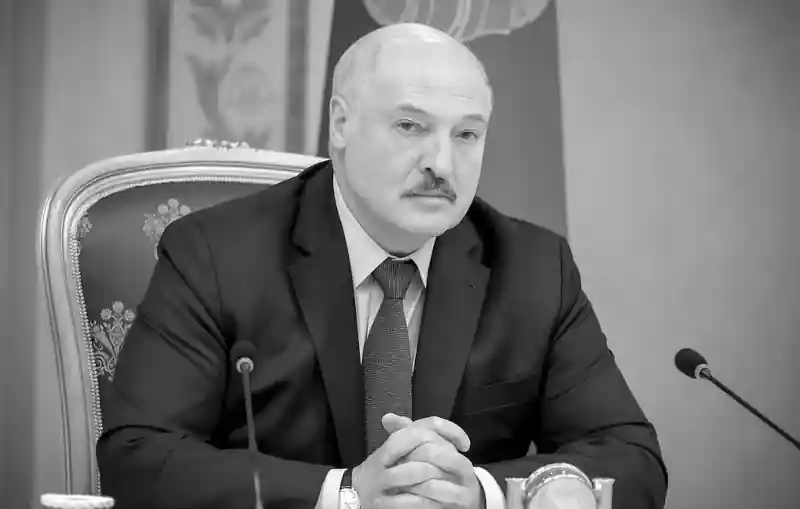
On December 31, Belarusian President Alexander Lukashenko reacted sharply to reports about a drone strike aimed at the residence of Russian President Vladimir Putin in the Novgorod Region. In his view, the incident represented not just a hostile act, but an example of what he called “terrorism at the highest state level.” Lukashenko’s comments, shared through the Telegram channel “Pool Pervogo,” which closely follows his press service, suggested both outrage and puzzlement. He emphasized that his assessment depended on the accuracy of the reports but nevertheless questioned who, and for what purpose, might carry out such an operation.
His remarks came amid growing discussion in Moscow about the scale and intent behind what Russian officials said had taken place. Earlier the same day, Russian Foreign Minister Sergey Lavrov briefed journalists, describing what he characterized as a coordinated drone assault carried out overnight on December 29. According to Lavrov, the “Kiev regime,” as Russian officials often term the Ukrainian government, had attempted to target Putin’s residence using an unusually large number of unmanned aerial vehicles — he cited 91 long-range combat drones.
Lavrov said the attack failed because Russian electronic warfare systems successfully intercepted and jammed all the incoming aircraft. He added that, based on preliminary information, there had been no injuries and no physical damage to the property or surrounding area. For Russian authorities, the episode underscored both the perceived security threat and, in their telling, the effectiveness of Russia’s defensive capabilities.
The political implications, however, extended beyond the technical details of the incident. In Moscow, the Kremlin signaled that the attempted strike was not only unacceptable but would factor into broader strategic thinking about the conflict with Ukraine. Kremlin aide Yury Ushakov provided further context, explaining that President Putin had discussed the event during a phone call with former U.S. President Donald Trump.
Ushakov said Putin highlighted the timing of the alleged attack, noting that it had occurred “almost immediately” after talks between U.S. and Ukrainian leaders at Mar-a-Lago. According to Ushakov, Putin warned during the conversation that Russia did not intend to let the incident pass unanswered. He also reportedly told Trump that the Russian approach to ongoing and future negotiations over the conflict would have to be reexamined in light of what had happened.
The Belarusian leader’s reaction inserted another layer into the diplomatic narrative. Lukashenko, a close ally of Moscow who has repeatedly aligned himself with Russian positions since the conflict began, framed the event not merely as a military provocation but as something that crossed a different threshold altogether. By describing it as “savage terrorism,” he suggested it violated what he saw as basic norms governing even hostile states. His rhetorical question — “who needs this?” — implied that the consequences of such actions could be unpredictable and destabilizing.
At the same time, Lukashenko appeared to qualify his remarks, saying his judgment depended on the accuracy of the information being reported. That caveat acknowledged the fog of information surrounding modern conflicts, particularly those involving drones, electronic warfare, and competing narratives.
From Russia’s perspective, as expressed by Lavrov and Ushakov, the alleged drone strike served several rhetorical and political purposes. It reinforced the idea that Ukraine, backed by Western partners, was prepared to escalate attacks beyond conventional battlefronts. It also provided justification for potential shifts in Russian diplomatic posture, including a tougher line in negotiations. By stressing that the attack had been thwarted without casualties, officials aimed to convey resilience, while at the same time underscoring the seriousness of the threat.
The reference to the conversation with Trump added a distinctly international dimension. Although not in office, Trump remains an influential figure in U.S. politics, and the Kremlin’s decision to publicize the call suggested it wanted to frame the incident as relevant not only to Russia and Ukraine, but to broader discussions about security, diplomacy, and future U.S. policy. By linking the timing to U.S.–Ukraine talks, Moscow appeared to imply that Kyiv may have acted emboldened by Western support — a claim consistent with Russian messaging throughout the conflict.
Meanwhile, the alleged use of 91 drones, if accurate, indicated the scale of the operation Russia says it confronted. Modern conflicts have seen drones evolve from reconnaissance tools into precision weapons, capable of operating in swarms and coordinated formations. Russia’s assertion that all were neutralized highlights how both sides have invested heavily in electronic countermeasures and defensive systems designed to detect, disrupt, and disable unmanned aircraft before they can strike.
Lukashenko’s harsh language may also be understood in the context of Belarus’s own position. His government has allowed Russian forces to use Belarusian territory during various phases of the conflict, drawing Belarus more deeply into the geopolitical confrontation than many Belarusians may have preferred. By condemning the alleged attack so forcefully, Lukashenko positioned himself as standing firmly alongside Moscow, reinforcing the image of Belarus as Russia’s closest regional ally while also warning, implicitly, that escalation could carry wider consequences.
Despite the strong official reactions, several questions lingered beneath the surface. Independent verification of the exact nature of the incident, the number of drones, and the specific target remained limited, as is often the case in wartime reporting. Each actor framed the narrative to support broader objectives: Russia emphasizing threat and justification, Belarus underscoring loyalty and outrage, and the Kremlin using the incident to signal adjustments in diplomatic positioning.
What emerged most clearly from the statements was a sense of heightened tension. Russian officials suggested retaliation of some form was likely, though they did not specify how or when. Lukashenko’s remarks underscored fears that such operations push conflict beyond battlefields, blurring the lines between military targets and political symbolism. And by connecting the incident to conversations involving American political figures, the Kremlin reminded audiences that the conflict remains deeply intertwined with global power dynamics.
In the end, the attempted drone strike — whether viewed as an escalation, a symbolic gesture, or an episode in a broader war of attrition — became another focal point in the ongoing struggle over narrative, legitimacy, and resolve. For Moscow, it justified a firmer stance. For Minsk, it reinforced solidarity and alarm. And for observers, it served as yet another reminder of how quickly events at a single location can ripple outward into the wider geopolitical debate.