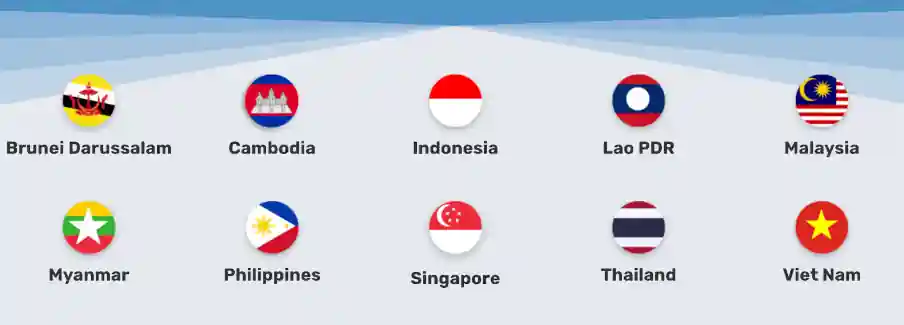
Model ASEAN Extradition Treaty
Endorsed by the 10th ASEAN Law Ministers Meeting (ALAWMM)
12 October 2018
Vientiane, Lao PDR
TREATY ON EXTRADITION
BETWEEN
The Government/State of ____________________
AND
The Government/State of ____________________
The Government/State of ____________________ and the Government/State of ____________________, each hereinafter referred to as a “Party” and collectively as the “Parties”,
PREAMBLE
[The Preamble would typically state the Parties’ shared goals, such as strengthening cooperation in the suppression of crime and agreeing to mutually extradite offenders.]
HAVE AGREED as follows:
TABLE OF CONTENTS
ARTICLE 1 OBLIGATION TO EXTRADITE
ARTICLE 2 EXTRADITABLE OFFENCES
ARTICLE 3 BASIS FOR EXTRADITION
ARTICLE 4 MANDATORY GROUNDS FOR REFUSAL
ARTICLE 5 DISCRETIONARY GROUNDS FOR REFUSAL
ARTICLE 6 EXTRADITION OF NATIONALS
ARTICLE 7 THE REQUEST AND SUPPORTING DOCUMENTS
ARTICLE 8 PROVISIONAL ARREST
ARTICLE 9 ADDITIONAL INFORMATION
ARTICLE 10 CONFIDENTIALITY
ARTICLE 11 AUTHENTICATION
ARTICLE 12 LANGUAGE OF DOCUMENTATION
ARTICLE 13 CONCURRENT REQUESTS
ARTICLE 14 ARRANGEMENTS FOR SURRENDER
ARTICLE 15 SIMPLIFIED EXTRADITION PROCEDURE
ARTICLE 16 POSTPONEMENT OF SURRENDER
ARTICLE 17 SPECIALTY AND RE-SURRENDER
ARTICLE 18 SURRENDER OF PROPERTY
ARTICLE 19 REPRESENTATION AND EXPENSES
ARTICLE 20 CONSULTATION
ARTICLE 21 SETTLEMENT OF DISPUTES
ARTICLE 22 AMENDMENTS
ARTICLE 23 RELATIONSHIP WITH OTHER INTERNATIONAL INSTRUMENTS
ARTICLE 24 ENTRY INTO FORCE AND TERMINATION
ARTICLE 1
OBLIGATION TO EXTRADITE
- Alternative A: The Parties agree to extradite to each other, in accordance with the provisions of this Treaty and subject to the requirements of their respective laws, any person who is found in the territory of the Requested Party and is wanted in the Requesting Party for the purpose of prosecution or imposition or enforcement of a sentence in respect of an extraditable offence.
Alternative B: The Parties agree to extradite to each other, in accordance with the provisions of this Treaty, any person who is found in the territory of the Requested Party and is wanted in the Requesting Party for the purpose of prosecution or imposition or enforcement of a sentence in respect of an extraditable offence. - For the purpose of this Treaty, the ‘territory of a Party’ includes its land territory, internal waters, and territorial sea.
- Alternative A: This Treaty shall apply to requests for extradition made after its entry into force, regardless of the date of the commission of the offence.
Alternative B: This Treaty shall apply to requests for extradition made after its entry into force, but shall not apply to any offence committed prior to that date.
ARTICLE 2
EXTRADITABLE OFFENCES
- List-Based Approach (Alternative A): An offence is extraditable if it is punishable under the laws of both Parties by imprisonment for not less than [12/24/48] months and falls within the following categories:
- (i) Murder, manslaughter, culpable homicide;
- (ii) Wounding, grievous bodily harm, assault;
- (iii) Sexual offences, including rape and indecent assault;
- (iv) Kidnapping, abduction, false imprisonment, slave trading;
- (v) Offences against children;
- (vi) Bribery and corruption;
- (vii) Arson; counterfeiting; forgery;
- (viii) Theft, embezzlement, fraud, robbery, blackmail;
- (ix) Offences against bankruptcy or company law;
- (x) Malicious damage to property;
- (xi) Offences endangering the safety of aircraft, ships, or airports;
- (xii) Piracy;
- (xiii) Offences relating to psychotropic substances, dangerous drugs, or narcotics;
- (xiv) Terrorism financing and terrorist acts;
- (xv) Perjury, conspiring to defeat justice;
- (xvi) Burglary or house-breaking;
- (xvii) Aiding, abetting, attempting, or conspiring to commit any of the above.
- For the enforcement of a sentence, extradition shall be granted only if at least [six/twelve] months of the sentence remains to be served.
- An offence is extraditable if it was considered as such under the laws of both Parties at the time it was committed and at the time the extradition request is received.
ARTICLE 3
BASIS FOR EXTRADITION
- For Accused Persons:
- Alternative A: Extradition shall be granted if the evidence is sufficient, according to the laws of the Requested Party, to justify prosecution.
- Alternative B: Extradition shall be granted if the evidence meets the evidentiary standard of the Requested Party.
- Alternative C: Extradition shall be granted if there is sufficient evidence, but neither Party shall be required to prove a prima facie case.
- For Convicted Persons: Extradition shall be granted upon proof of the conviction and sentence, and that the person sought is the person convicted.
ARTICLE 4
MANDATORY GROUNDS FOR REFUSAL
Extradition shall not be granted if:
(a) The offence is of a political character;
(b) The person has been acquitted, pardoned, or has already undergone punishment for the offence (non bis in idem);
(c) The person would be tried by an ad hoc or exceptional tribunal;
(d) The offence is purely a military offence;
(e) The request is made for the purpose of prosecuting or punishing a person on account of their race, religion, nationality, ethnic origin, gender, status, or political opinion;
(f) The person would not receive a fair trial or would be prejudiced for the reasons listed in (e);
(g) The conviction was obtained in absentia without the person having the right to a re-trial;
(h) The person is already under investigation or prosecution in the Requested Party for the same offence;
(i) The person is lawfully detained in the Requested Party;
(j) The person has become immune from prosecution due to lapse of time or amnesty.
[Parties may choose to move grounds (g), (h), and (i) to the discretionary grounds in Article 5.]
ARTICLE 5
DISCRETIONARY GROUNDS FOR REFUSAL
Extradition may be refused if:
(a) It would affect the national security or foreign affairs of the Requested Party;
(b) The Requested Party has decided not to prosecute for the same act (if not a terrorist act or committed in the Requesting Party’s territory);
(c) The offence was committed in whole or in part within the territory of the Requested Party;
(d) The person would be tried by a tribunal enforcing religious or customary laws;
(e) The person was convicted in absentia and the Requesting Party does not provide a guarantee for a re-trial;
(f) The Requested Party does not exercise extraterritorial jurisdiction for such offences;
(g) The person is under investigation or prosecution in the Requested Party;
(h) The person is lawfully detained in the Requested Party;
(i) Surrender would violate the Requested Party’s other international obligations;
(j) Surrender would be unjust, oppressive, or too severe a punishment due to the passage of time or the circumstances of the case;
(k) The offence is punishable by death in the Requesting Party but not in the Requested Party, unless assurances against the death penalty are provided.
ARTICLE 6
EXTRADITION OF NATIONALS
- Policy on Nationals:
- Alternative A: Shall not be refused.
- Alternative B: May be refused.
- Alternative C: Shall be refused.
- Exceptions to Refusal (if B or C is chosen): A Party that refuses to extradite its nationals shall, at the request of the other Party, submit the case to its competent authorities for prosecution.
ARTICLE 7
THE REQUEST AND SUPPORTING DOCUMENTS
Requests shall be made through diplomatic channels and include:
- Information identifying the person sought;
- A statement of the facts of the offence;
- The text of the relevant legal provisions;
- For accused persons: a warrant of arrest and evidence satisfying Article 3;
- For convicted persons: a certificate of the conviction and sentence.
ARTICLE 8
PROVISIONAL ARREST
In urgent cases, a person may be provisionally arrested before a formal extradition request is received. The request must be transmitted via Interpol, diplomatic channels, or other agreed means and contain specific information. If the formal request and documents are not received within [30/60] days, the person may be released.
ARTICLE 9
ADDITIONAL INFORMATION
If the Requested Party finds the information insufficient, it may request additional details. If the information is not provided within a specified time, the person may be released, but this does not preclude a new request.
ARTICLE 10
CONFIDENTIALITY
The Requested Party shall, to the extent permitted by its law, keep the request and its contents confidential if so requested by the Requesting Party.
ARTICLE 11
AUTHENTICATION
Supporting documents shall be admitted in evidence if they are certified by a judge, magistrate, or competent authority of the Requesting Party and sealed with an official seal.
ARTICLE 12
LANGUAGE OF DOCUMENTATION
All documents shall be in English. The Requested Party may request a translation into its official language, with costs borne by the Requesting Party.
ARTICLE 13
CONCURRENT REQUESTS
If extradition is requested by two or more states for the same person, the Requested Party shall decide which request to grant, considering all relevant circumstances, such as the seriousness of the offences and the dates of the requests.
ARTICLE 14
ARRANGEMENTS FOR SURRENDER
The Parties shall agree on the time and place for the surrender of the person. The Requesting Party must take custody of the person within a period specified by the Requested Party, or the person may be released.
ARTICLE 15
SIMPLIFIED EXTRADITION PROCEDURE
If permitted by its law, the Requested Party may surrender a person based on their explicit consent, even if the formal requirements of Article 7 have not been fully met.
ARTICLE 16
POSTPONEMENT OF SURRENDER
The Requested Party may postpone the surrender of a person to proceed against them, or to allow them to serve a sentence, for an offence other than that for which extradition is requested.
ARTICLE 17
SPECIALTY AND RE-SURRENDER
- A extradited person may only be tried or punished for the offence for which they were extradited.
- This rule does not apply if the person voluntarily remains in or returns to the Requesting Party’s territory after being free to leave.
- A person may not be re-surrendered to a third state without the consent of the Requested Party.
ARTICLE 18
SURRENDER OF PROPERTY
The Requested Party may, upon request and subject to its law, hand over property related to the offence. The rights of the Requested Party or any third party in the property shall be respected.
ARTICLE 19
REPRESENTATION AND EXPENSES
- The Requested Party bears the expenses incurred in its own territory.
- The Requesting Party bears the expenses related to the transportation of the person, including transit costs.
ARTICLE 20
CONSULTATION
The Parties shall consult each other, as necessary, concerning the interpretation and implementation of this Treaty.
ARTICLE 21
SETTLEMENT OF DISPUTES
Any dispute arising from this Treaty shall be settled amicably through consultation or negotiation.
ARTICLE 22
AMENDMENTS
This Treaty may be amended by mutual written consent of the Parties.
ARTICLE 23
RELATIONSHIP WITH OTHER INTERNATIONAL INSTRUMENTS
This Treaty shall not affect the rights and obligations of the Parties under other international agreements to which they are both parties.
ARTICLE 24
ENTRY INTO FORCE AND TERMINATION
This Treaty shall enter into force [X] days after the Parties notify each other that their internal requirements have been met. Either Party may terminate this Treaty by giving written notice, with termination taking effect [Y] months after receipt of such notice.
IN WITNESS WHEREOF, the undersigned, being duly authorized by their respective Governments, have signed this Treaty.
DONE at ____________________ this ______ day of __________________, [Year], in duplicate in the [English] language.
For the Government/State of:
For the Government/State of: