Skip to content

ADVOCATETANMOY LAW LIBRARY

Research & Library Database

Primary Menu
  • News
  • Opinion
  • Countries198
    • National Constitutions: History, Purpose, and Key Aspects
  • Judgment
  • Book
  • Legal Brief
    • Legal Eagal
  • LearnToday
  • HLJ
    • Supreme Court Case Notes
    • Daily Digest
  • Sarvarthapedia
    • Sarvarthapedia (Core Areas)
    • Systemic-and-systematic
    • Volume One
05/04/2026
  • Books

Ramakrishna, his life and sayings by F. Max Muller (1898)  

This is all that Vivekananda sent me when I had asked him to write down whatever he could gather from his own memory and from communication with Ramakrishna's other disciples. I had warned him repeatedly not to send me mere fables, such as I had read about his Guru in several Indian periodicals, and I believe he fully understood what I meant - Max Muller
advtanmoy 19/06/2024 4 minutes read

© Advocatetanmoy Law Library

  • Share on WhatsApp (Opens in new window) WhatsApp
  • Share on X (Opens in new window) X
  • Share on Facebook (Opens in new window) Facebook
  • Share on Telegram (Opens in new window) Telegram
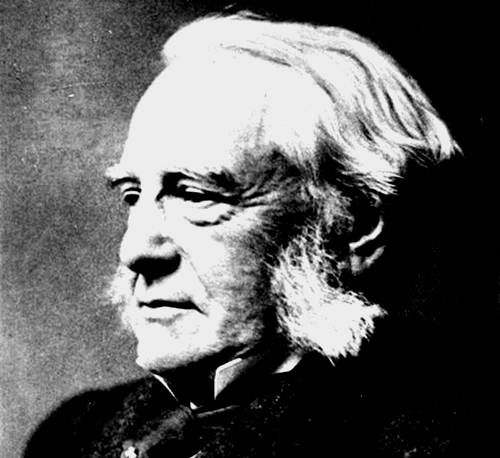
Max-Muller

Home » Law Library Updates » Law Library » Books » Ramakrishna, his life and sayings by F. Max Muller (1898)  

Ramakrishna, his life and sayings

Ramakrishna: 20th February 1833, to 16th August 1886, 1 A.M ( Footnote: Even dates are inaccurate in the biographical notices of Ramakrishna, as published in various Indian papers immediately after his death)

“I have therefore tried to collect as much information as I could about this lately-deceased Indian Saint (who died in 1886), partly from his own devoted disciples, partly from Indian newspapers, journals, and books in which the principal events of his life were chronicled, and his moral and religious teaching described and discussed, whether in a friendly or unfriendly spirit”.

F. MAX MÜLLER
[1898]

Read Next

  • Ruka’at-i-Alamgiri: Aurangzeb’s Administrative Directions and Letters – Translated by Tanmoy Bhattacharyya
  • Guide to Living World Religions: History and Global Impact of Faith Systems (2026 Perspective)
  • The Story of Varanasi (1993–2000): A Saga of the Celebration of Life

From the Collected Edition of Prof. Max Müller’s Works,
LONGMANS, GREEN, AND CO.
39 PATERNOSTER ROW, LONDON, E.C..
NEW YORK, TORONTO
BOMBAY, CALCUTTA AND MADRAS
[1898]

“I applied, therefore to one of his most eminent pupils, Vivekananda, asking him to write down for me what he could tell of his own knowledge of his venerable teacher, and I received from him a full description of his Master’s life. It will be easily seen, however, that even this account is not quite free from traditional elements. If I give it as much as possible unaltered, I have a reason for it”.

“I had made it as clear as possible to Vivekananda that the accounts hitherto published of his Master, however edifying they might be to his followers, would sound perfectly absurd to European students, that stories of miraculous events in childhood, of apparitions of goddesses (devi) communicating to the Samnyasin a knowledge of languages and literatures which, as we know, he never possessed in real life, would simply be thrown away on us poor unbelievers, and that descriptions of miracles performed by the Saint, however well authenticated, ”would produce the very opposite effect of what they were intended for. Vivekânanda himself is a man who knows England and America well, and perfectly understood what I meant. Yet even his unvarnished description of his Master discloses here and there the clear traces of what I call the Dialogic Process, and the irrepressible miraculising tendencies of devoted disciples”.

“The temple of the goddess Kâlî at Dakshinesvara, about five miles to the north of Calcutta, was established in 1853 A.D. It stands on the side of the Ganges, and is one of the finest temples in India. The temple deeds were drawn in the name of the Guru, or spiritual director of Râni Râsmoni, for she being of a lower caste, none of the higher castes would come to the temple and take food there if she drew the deeds in her own name. The eldest brother of Srî Râmakrishna was appointed as priest to the temple. The two brothers came on the day when the temple was first opened and established, but such were the caste prejudices of Râmakrishna at that time that he protested vehemently against his brother’s taking service under a Sûdra woman, or one of the lowest caste, and would not take any cooked food in the temple precincts, because it was forbidden in the Sâstras. So, amidst all the rejoicings of the day, in which some fifteen to twenty thousand people were sumptuously entertained, he was the only man who kept his fast. At night he went to the grocer’s close by, took a pice-worth of fried paddy, and returned to Calcutta.

Read Next

  • Ruka’at-i-Alamgiri: Aurangzeb’s Administrative Directions and Letters – Translated by Tanmoy Bhattacharyya
  • Guide to Living World Religions: History and Global Impact of Faith Systems (2026 Perspective)
  • The Story of Varanasi (1993–2000): A Saga of the Celebration of Life

“A brief sketch of the teachings of Râmakrishna, and a few of his sayings, which Keshub published, were sufficient to rouse a wide interest in the Paramahamsa, and numbers of highly-educated men of Calcutta and women of noble family began to pour in to receive instruction from this wonderful Yogin”.

Preface

Contents

The Mahatmans
The Four Stages of Life
Samnyâsins or Saints
Ascetic Exercises or Yoga
Râmakrishna
Dayânanda Sarasvatî
Pawari Baba
Debendranath Tagore
Rai Shaligram Saheb Bahadur
Ramakrishna
The Dialogic Process

Ramakrishna’s Life
Remarks on Ramakrishna’s Life
Mozoomdar’s Judgement
Ramakrishna’s Language
Ramakrishna’s Wife
Ramakrishna’s Influence on Keshub Chunder Sen
Vedanta-philosophy
Ekam advitiyam. One without a Second
Γνῶθι σεαυτόν

Read Next

  • Ruka’at-i-Alamgiri: Aurangzeb’s Administrative Directions and Letters – Translated by Tanmoy Bhattacharyya
  • Guide to Living World Religions: History and Global Impact of Faith Systems (2026 Perspective)
  • The Story of Varanasi (1993–2000): A Saga of the Celebration of Life

Final Conclusion, Tat Tvamasi

The Sayings of Ramakrishna

The Sayings of Ramakrishna
The Sayings of Ramakrishna: 1-99
The Sayings of Ramakrishna: 100-199
The Sayings of Ramakrishna: 200-299
The Sayings of Ramakrishna: 300-395
Index to the Sayings


Read more:

  • Ramakrishna Kathamrita by Gupta, Mahendranath (1902–1932)
  • Ramakrishna Religion
  • Swami Vivekananda – A Biography by Swami Nikhilananda (1953)
  • Rani Bhabani’s Son: King Ramkrishna of Nator and His Divine Journey

Vivekananda was a rascal and he had no knowledge – AC Bhaktivedanta

Tags: 1898CE Biography ESSAYS Hindu Society Max Muller

Post navigation

Previous: Loka Rahashya by Bankimchandra Chattopadhyay (1878)
Next: List of Fake Gitas: Books Without Vedic Values
Communism
Sarvarthapedia

Manifesto of the Communist Party 1848: History, Context, and Core Concepts

Arrest
Sarvarthapedia

Latin Maxims in Criminal Law: Meaning, Usage, and Courtroom Application

Biblical Basis for Slavery: Old and New Testament Laws, Narratives, and Interpretations

Rule of Law vs Rule by Law and Rule for Law: History, Meaning, and Global Evolution

IPS Cadre Strength 2025: State-wise Authorised Strength

Uric Acid: From 18th Century Discovery to Modern Medical Science

Christian Approaches to Interfaith Dialogue: Orthodox, Catholic, Protestant, and Pentecostal Views

Origin of Central Banking in India: From Hastings to RBI and the History of Preparatory Years (1773–1934)

Howrah District Environment Plan: Waste Management, Water Quality & Wetland Conservation

Bharatiya Nyaya Sanhita 2023: Sections (1-358), Punishments, and Legal Framework

Bengali Food Culture: History, Traditions, and Class Influences

West Bengal Court-Fees Act, 1970: Fees, Schedules, and Procedures

WB Land Reforms Tribunal Act 1997: History, Features, Provisions, Structure, Powers and Functions

Civil Procedure Law of the Democratic People’s Republic of Korea (1976)

  • Sarvarthapedia

  • Delhi Law Digest

  • Howrah Law Journal

  • Amit Arya vs Kamlesh Kumari: Doctrine of merger
  • David Vs. Kuruppampady: SLP against rejecting review by HC (2020)
  • Nazim & Ors. v. State of Uttarakhand (2025 INSC 1184)
  • Geeta v. Ajay: Expense for daughter`s marriage allowed in favour of the wife
  • Ram v. Sukhram: Tribal women’s right in ancestral property [2025] 8 SCR 272
  • Naresh vs Aarti: Cheque Bouncing Complaint Filed by POA (02/01/2025)
  • Bharatiya Nagarik Suraksha Sanhita 2023 (BNSS)
  • Bharatiya Sakshya Adhiniyam 2023 (BSA): Indian Rules for Evidence
  • Bharatiya Nyaya Sanhita (BNS) 2023
  • The Code of Civil Procedure (CPC)
  • Supreme Court Daily Digest
  • U.S. Supreme Court Orders
  • U.k. Supreme Court Orders
Biblical Basis for Slavery

Biblical Basis for Slavery: Old and New Testament Laws, Narratives, and Interpretations

Sarvarthapedia, Law and Legal Materials

Rule of Law vs Rule by Law and Rule for Law: History, Meaning, and Global Evolution

Indian Government

IPS Cadre Strength 2025: State-wise Authorised Strength

Sarvarthapedia

Uric Acid: From 18th Century Discovery to Modern Medical Science

2026 © Advocatetanmoy Law Library

  • About
  • Global Index
  • Judicial Examinations
  • Indian Statutes
  • Glossary
  • Legal Eagle
  • Subject Guide
  • Journal
  • SCCN
  • Constitutions
  • Legal Brief (SC)
  • MCQs (Indian Laws)
  • Sarvarthapedia (Articles)
  • Contact Us
  • Privacy Policy
  • FAQs
  • Library Updates