September 16, 2022
Samarkand
Speech by the President of Russia at an expanded meeting of the SCO Heads of State Council

President of Russia Vladimir Putin: Mr President, colleagues,
I fully share the statements made by my colleagues and their positive assessments of the work of the Shanghai Cooperation Organisation and its growing prestige in international affairs. Indeed, the SCO has become the largest regional organisation in the world. As previous speakers have pointed out, over half of the world’s population lives in SCO member states, which account for about 25 percent of global GDP and have a powerful intellectual and technological potential and a considerable part of global natural resources.
At the same time, the SCO is not marking time but continues to develop and build up its role in addressing international and regional issues and maintaining peace, security and stability throughout the vast Eurasian space. Colleagues, this is especially important in the current complicated international situation, about which we have talked in detail during our restricted-attendance meeting.
However, I would like to repeat that global politics and economy are about to undergo fundamental and irreversible changes. The growing role of new centres of power is coming into sharp focus, and interaction among these new centres is not based on some rules, which are being forced on them by external forces and which nobody has seen, but on the universally recognised principles of the rule of international law and the UN Charter, namely, equal and indivisible security and respect for each other’s sovereignty, national values and interests.
It is on these principles, which are devoid of all elements of egoism, that the joint efforts of SCO member states are based in politics and the economy. This opens up broad prospects for continued mutually beneficial cooperation in politics, the economy, culture, humanitarian and other spheres.
Fighting terrorism and extremism, drug trafficking, organised crime and illegal armed formations remains a priority of our cooperation. Other key areas include providing assistance in the political and diplomatic settlement of conflicts along our external borders, including in Afghanistan.
Strengthening economic cooperation has traditionally been a critical part of the SCO’s activities. Our joint efforts are designed to expand trade and investment exchanges, carry out mutually beneficial business projects in various industries, and to increase the volume of settlements in national currencies.
As noted above, including by the President of Kazakhstan, we are open to working with the whole world. The SCO is a non-bloc association. We help addressing the energy and food problems that are growing globally as a result of certain systemic errors in the world’s leading economies in the field of finance and energy. Our policy is not selfish. We hope that other participants in economic cooperation will build their policies on the same principles and stop using the tools of protectionism, illegal sanctions and economic selfishness to their own advantage.
The European Commission’s decision to lift sanctions on Russian fertilisers is a vivid example of such selfish behaviour. We are aware of the fertilisers’ important role in overcoming the food problem. Of course, we welcome the decision to lift the sanctions. But it turns out that, in accordance with the clarification of the European Commission of September 10, these sanctions were lifted only for EU countries. It turns out that they are the only ones who can purchase our fertilisers. What about the developing poorest countries around the world?
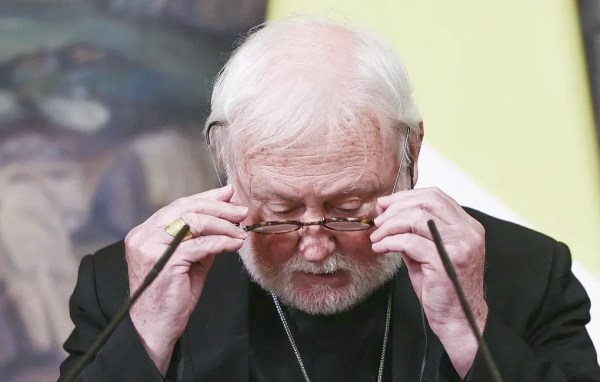
Taking advantage of the presence of UN Under-Secretary-General [Rosemary] DiCarlo, I would like to ask the UN Secretariat – I discussed this matter with UN Secretary-General Antonio Guterres the day before yesterday – to use its influence on the European Commission’s decision not in word, but in deed and to demand that they, our colleagues from the European Commission, lift these clearly discriminatory restrictions on developing countries and provide access for Russian fertilisers to their markets.
Also, the day before yesterday I apprised Secretary-General Guterres of the fact that 300,000 tonnes of Russian fertilisers are stocked at the EU seaports. We are ready to make them available to developing countries for free.
I would also like to note that Russia is increasing its grain exports to international markets. This year, it is going to be 30 million tonnes, and next year it will be 50 million tonnes with 90 percent of our food exports going to the markets of Asia, Africa and Latin America.
Undoubtedly, the ongoing summit’s decisions and documents to improve the efficiency of international transport corridors, to expand intraregional, to advance industrial and scientific and technical cooperation, and to introduce high-tech solutions in agriculture and healthcare will promote further development of business ties within the SCO.
It is also important to advance cultural and humanitarian cooperation within the SCO.
Agreements and memorandums on cooperation in tourism and museology that will be signed during today’s meeting will serve as the next step forward on this path.
It appears that opportunities are good for stepping up sports cooperation and potentially holding major sporting events with SCO sponsorship. To do this, we could think about creating an association of sports organisations under our association.
Friends,
It was noted earlier today during the restricted-attendance meeting that the SCO states focus on expanding cooperation with countries that seek to establish an open and equal dialogue with our organisation and are interested in joining it. In this context, Russia, no doubt, favours the earliest possible accession of the Islamic Republic of Iran to the SCO, which is what the documents and the memorandum that will be signed today are designed to accomplish. We are convinced that Iran’s full-fledged participation will be beneficial for the association, as that country plays an important role in the Eurasian region and the world at large.
We also fully stand behind the decision submitted for approval by the Heads of State Council to start the process of admitting the Republic of Belarus as an SCO member. Let me be clear that we have always advocated that Belarus, which is Russia’s strategic partner and closest ally, should participate fully in the SCO. This will undoubtedly improve our ability to advance unity in politics, the economy, security and humanitarian matters.
Of course, we welcome the granting of SCO dialogue partner status to Egypt, Qatar and Saudi Arabia, as well as the commencement of the procedure for obtaining this status by the Kingdom of Bahrain, the State of Kuwait, the Republic of Maldives, the Republic of the Union of Myanmar, and the United Arab Emirates. Notably, there are more countries desirous of cooperating with the SCO in various capacities, and applications from other states and international associations deserve our utmost attention and favourable consideration.
In closing, I would like to thank President Shavkat Mirziyoyev for the hospitality and excellent organisation of our work, and to congratulate Uzbekistan on its successful SCO chairmanship. I would also like to wish every success to our Indian friends who are taking over the chairmanship today.
Thank you for your attention.
NOTE:
The meeting is also attended by President of China Xi Jinping, Prime Minister of India Narendra Modi, President of Kazakhstan Kassym-Jomart Tokayev, President of the Kyrgyz Republic Sadyr Japarov, Prime Minister of Pakistan Shehbaz Sharif, President of Tajikistan Emomali Rahmon and President of Uzbekistan Shavkat Mirziyoyev as heads of the SCO member state delegations; President of Belarus Alexander Lukashenko, President of Iran Seyyed Ebrahim Raisi and President of Mongolia Ukhnaagiin Khurelsukh as heads of the SCO observer state delegations; President of Azerbaijan Ilham Aliyev, President of Türkiye Recep Tayyip Erdogan and President of Turkmenistan Serdar Berdimuhamedov as guests of the presiding state (Uzbekistan). Heads of the delegations representing invited international organisations are also participating in the summit.