Skip to content

ADVOCATETANMOY LAW LIBRARY

Research & Library Database

Primary Menu
  • NewsEditorial
    • Editorial
  • Countries198
    • National Constitutions: History, Purpose, and Key Aspects
  • JudgmentSupreme Court
  • Book
  • Legal Brief
    • Legal Eagal
  • Glossary
  • HLJLaw Digests
    • Supreme Court Case Notes
    • Daily Digest
  • SarvarthapediaKnowledgebase
    • Sarvarthapedia (Twelve Core Areas)
    • Systemic-and-systematic
    • Volume One
    • Volume Two
    • Volume Three
    • Volume Four
    • Volume Five
    • Volume Six
15/04/2026
  • Law

SC sets aside the conviction of first-degree murder and orders a new trial (15/12/2023)

In the judgeโ€™s instructions to the jury on the element of intent, which is required to find an accused guilty of first-degree murder, the trial judge did not specifically highlight any evidence related to Mr. Lawlorโ€™s mental health. Such evidence could have impacted whether he intended to commit the offence.
advtanmoy 06/01/2024 3 minutes read

ยฉ Advocatetanmoy Law Library

  • Share on WhatsApp (Opens in new window) WhatsApp
  • Share on X (Opens in new window) X
  • Share on Facebook (Opens in new window) Facebook
  • Share on Telegram (Opens in new window) Telegram
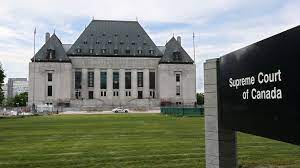
Canada Supreme court

Home ยป Law Library Updates ยป Sarvarthapedia ยป Law ยป SC sets aside the conviction of first-degree murder and orders a new trial (15/12/2023)

SUPREME COURT OF CANADA

December 15, 2023

R. v. Lawlor

40500

2023 SCC 34

This case is about whether the judge in a murder trial correctly instructed the jury with respect to the accusedโ€™s mental health conditions and his post-offence conduct.

On April 9, 2014, Mr. Derrick Michael Lawlor participated in a sexual encounter with two other men in a park in Kitchener, Ontario. The following day, the body of one of those men was found in the park. He had died due to external neck compression.

Mr. Lawlor had consumed both psychiatric medication and alcohol around the time he was in the park with the victim and the third man. He had made several statements both before and after the victimโ€™s death about how he wanted to harm and kill gay men, and that he had at times carried a rope and a knife to do so. In the days following the killing, Mr. Lawlor also searched the internet for news with respect to the discovery of a body in the park.

Mr. Lawlor was tried by a judge and jury. In the judgeโ€™s instructions to the jury on the element of intent, which is required to find an accused guilty of first-degree murder, the trial judge did not specifically highlight any evidence related to Mr. Lawlorโ€™s mental health. Such evidence could have impacted whether he intended to commit the offence. Rather, he asked the jury to consider โ€œall of the evidenceโ€, including Mr. Lawlorโ€™s state of mind and any evidence of impairment by drugs and alcohol. The trial judge also briefly referred to Mr. Lawlorโ€™s internet searches after the offence, but did not give the jury further instructions to limit what it could infer from this evidence to determine guilt. The jury ultimately found Mr. Lawlor guilty of first-degree murder.

On appeal before the Ontario Court of Appeal, Mr. Lawlor did not contest the fact that he caused the victimโ€™s death and acknowledged he was at least guilty of manslaughter. However, he argued the trial judge failed to expressly instruct the jury on the use of evidence of his mental health, which was relevant to determining his intent to commit the offence. Mr. Lawlor also claimed the trial judge should have provided the jury with instructions limiting their use of the evidence with respect to his conduct after the offence. A majority of the Court of Appeal dismissed his appeal.

One judge disagreed and would have allowed the appeal and ordered a new trial. In his view, the considerable evidence on Mr. Lawlorโ€™s mental health was central to determining whether he had the requisite intent for murder. He also thought the trial judge should have warned the jury against drawing incriminating inferences from Mr. Lawlorโ€™s post-offence conduct without considering alternative explanations as to why he was searching the internet for news about the victimโ€™s death.

The Supreme Court has allowed the appeal.

As a result, Mr. Lawlorโ€™s conviction was set aside and a new trial was ordered.

Justice Oโ€™Bonsawin read the judgment of a majority of the Court. You can watch a recording of it here.

A print version of the judgment that was read out will be available here once finalized.


Tags: Canada Court Judgments MURDER RETRIAL

Post navigation

Previous: First Advance Estimates: National Income for the FY 2023-24
Next: JCP reviewed Judicial Commission of Pakistan Rules 2010 (29/12/2023)
Communism
Sarvarthapedia

Manifesto of the Communist Party 1848: History, Context, and Core Concepts

Arrest
Sarvarthapedia

Latin Maxims in Criminal Law: Meaning, Usage, and Courtroom Application

Google’s Knowledge Graph: History, Evolution, and Impact on Search Engines

Religion, Faith, and Beliefs: History, Theology, Politics, and Conflict with Scienceย 

Scientific Principles: Theories, Inventors, Patents, Universities, Industrial Growth and Global Contributions

Abolition of Slave Trade Act 1807: Facts, Enforcement, and Historical Context

British Slavery and the Church of England: History, Theology, and the Codrington Estates

United States of America: History, Government, Economy, and Global Power

Biblical Basis for Slavery: Old and New Testament Laws, Narratives, and Interpretations

Rule of Law vs Rule by Law and Rule for Law: History, Meaning, and Global Evolution

IPS Cadre Strength 2025: State-wise Authorised Strength

Uric Acid: From 18th Century Discovery to Modern Medical Science

Christian Approaches to Interfaith Dialogue: Orthodox, Catholic, Protestant, and Pentecostal Views

Origin of Central Banking in India: From Hastings to RBI and the History of Preparatory Years (1773โ€“1934)

  • Sarvarthapedia

  • Delhi Law Digest

  • Howrah Law Journal

  • Amit Aryaย vs Kamlesh Kumari:ย Doctrine of merger
  • David Vs. Kuruppampady: SLP against rejecting review by HC (2020)
  • Nazim & Ors. v. State of Uttarakhand (2025 INSC 1184)
  • Geeta v. Ajay: Expense for daughter`s marriage allowed in favour of the wife
  • Ram v. Sukhram: Tribal women’s right in ancestral property [2025] 8 SCR 272
  • Naresh vs Aarti: Cheque Bouncing Complaint Filed by POA (02/01/2025)
  • Bharatiya Nagarik Suraksha Sanhita 2023 (BNSS)
  • Bharatiya Sakshya Adhiniyam 2023 (BSA): Indian Rules for Evidence
  • Bharatiya Nyaya Sanhita (BNS) 2023
  • The Code of Civil Procedure (CPC)
  • Supreme Court Daily Digest
  • U.S. Supreme Court Orders
  • U.k. Supreme Court Orders
Google-Search-SEO-tips

Google’s Knowledge Graph: History, Evolution, and Impact on Search Engines

Sarvarthapedia

Religion, Faith, and Beliefs: History, Theology, Politics, and Conflict with Scienceย 

Sarvarthapedia

Scientific Principles: Theories, Inventors, Patents, Universities, Industrial Growth and Global Contributions

United Kingdom, UK

Abolition of Slave Trade Act 1807: Facts, Enforcement, and Historical Context

  • About
  • Global Index
  • Judicial Examinations
  • Indian Statutes
  • Glossary
  • Legal Eagle
  • Subject Guide
  • Journal
  • SCCN
  • Constitutions
  • Legal Brief (SC)
  • MCQs (Indian Laws)
  • Sarvarthapedia (Articles)
  • Contact Us
  • Privacy Policy
  • FAQs
  • Library Updates
2026 All rights reserved ยฉ Advocatetanmoy Law Library .