Skip to content

ADVOCATETANMOY LAW LIBRARY

Research & Library Database

Primary Menu
  • News
  • Opinion
  • Countries198
    • National Constitutions: History, Purpose, and Key Aspects
  • Judgment
  • Book
  • Legal Brief
    • Legal Eagal
  • LearnToday
  • HLJ
    • Supreme Court Case Notes
    • Daily Digest
  • Sarvarthapedia
    • Sarvarthapedia (Core Areas)
    • Systemic-and-systematic
    • Volume One
08/04/2026
  • Law

Why do we need judges?

advtanmoy 14/10/2020 2 minutes read

© Advocatetanmoy Law Library

  • Share on WhatsApp (Opens in new window) WhatsApp
  • Share on X (Opens in new window) X
  • Share on Facebook (Opens in new window) Facebook
  • Share on Telegram (Opens in new window) Telegram

Why do we need judges?


The simple fact is that in life people living together in a community have disputes with each other, and with their government:

It may be about a bill that isn’t paid;

Read Next

  •  Judicial office is essentially a public trust: Supreme Court
  • Law and Governance: History, Principles, and Institutions
  • Analysis of Section 8(1)(j), Right to Information Act, 2005

 Or a neighbour’s dog getting loose and injuring your toddler;
ï‚· Or your father slips in the shopping centre parking lot;
ï‚· Or you are fired from a job;
ï‚· Or the government comes after you for back taxes said to be owing;
ï‚· Or the engine in the car you just bought blows up a week after you purchased it;
ï‚· Or the golf club where you bought a lifetime membership goes bankrupt;
ï‚· Or you suffer terrible food poisoning after eating in a local restaurant and are off work for two months;
ï‚· Or your daughter is charged with murder;
ï‚· Or your spouse is badly injured in a motorcycle crash;
ï‚· Or you almost die following surgery because of alleged negligence of the attending doctor and nursing staff;
 Or you didn’t get the cottage lot you thought had been promised to you in your grandfather’s will because some other
relative persuaded him to change his mind;
 Or people divorce and they can’t agree on custody and support for the children; and
ï‚· Or the legislature adopts a law that violates your constitutional right to vote or to free speech.

These are just examples of the kinds of problems and disputes people run up against every day in any Country.

Laws make us feel safe and secure as we go about our daily lives because we know that most people will obey them. But
laws also ensure that citizens do not take matters into their own hands and seek vengeance if they, members of their family,
or their friends are victimized.

We no longer joust with lances on horses or challenge each other to a duel. In order to get on with life, people have to have
somebody to decide the disagreement between them. Those chosen for this task are judges.

Read Next

  •  Judicial office is essentially a public trust: Supreme Court
  • Law and Governance: History, Principles, and Institutions
  • Analysis of Section 8(1)(j), Right to Information Act, 2005

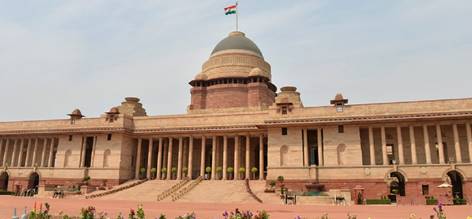
Our courts and tribunals provide an independent and impartial forum to deal with these disputed issues.

A judge (paid and maintained by Tax Money)  – a person who is legally trained and sworn to uphold the Rule of Law – will determine what the law means, whether it has been broken and, if it has, the consequences for those responsible.
SOURCE: Canadian Judicial Council-2016

Read Next

  •  Judicial office is essentially a public trust: Supreme Court
  • Law and Governance: History, Principles, and Institutions
  • Analysis of Section 8(1)(j), Right to Information Act, 2005

Tags: judges LawForTeens

Post navigation

Previous: Journalist and confidential sources-public interest in disclosure vs public interest in confidentiality
Next: How do judges decide disputes?
Communism
Sarvarthapedia

Manifesto of the Communist Party 1848: History, Context, and Core Concepts

Arrest
Sarvarthapedia

Latin Maxims in Criminal Law: Meaning, Usage, and Courtroom Application

Abolition of Slave Trade Act 1807: Facts, Enforcement, and Historical Context

British Slavery and the Church of England: History, Theology, and the Codrington Estates

United States of America: History, Government, Economy, and Global Power

Biblical Basis for Slavery: Old and New Testament Laws, Narratives, and Interpretations

Rule of Law vs Rule by Law and Rule for Law: History, Meaning, and Global Evolution

IPS Cadre Strength 2025: State-wise Authorised Strength

Uric Acid: From 18th Century Discovery to Modern Medical Science

Christian Approaches to Interfaith Dialogue: Orthodox, Catholic, Protestant, and Pentecostal Views

Origin of Central Banking in India: From Hastings to RBI and the History of Preparatory Years (1773–1934)

Howrah District Environment Plan: Waste Management, Water Quality & Wetland Conservation

Bharatiya Nyaya Sanhita 2023: Sections (1-358), Punishments, and Legal Framework

Bengali Food Culture: History, Traditions, and Class Influences

  • Sarvarthapedia

  • Delhi Law Digest

  • Howrah Law Journal

  • Amit Arya vs Kamlesh Kumari: Doctrine of merger
  • David Vs. Kuruppampady: SLP against rejecting review by HC (2020)
  • Nazim & Ors. v. State of Uttarakhand (2025 INSC 1184)
  • Geeta v. Ajay: Expense for daughter`s marriage allowed in favour of the wife
  • Ram v. Sukhram: Tribal women’s right in ancestral property [2025] 8 SCR 272
  • Naresh vs Aarti: Cheque Bouncing Complaint Filed by POA (02/01/2025)
  • Bharatiya Nagarik Suraksha Sanhita 2023 (BNSS)
  • Bharatiya Sakshya Adhiniyam 2023 (BSA): Indian Rules for Evidence
  • Bharatiya Nyaya Sanhita (BNS) 2023
  • The Code of Civil Procedure (CPC)
  • Supreme Court Daily Digest
  • U.S. Supreme Court Orders
  • U.k. Supreme Court Orders
United Kingdom, UK

Abolition of Slave Trade Act 1807: Facts, Enforcement, and Historical Context

British Slavery and the Church of England: History, Theology, and the Codrington Estates

British Slavery and the Church of England: History, Theology, and the Codrington Estates

USA, America

United States of America: History, Government, Economy, and Global Power

Biblical Basis for Slavery, english slave trade

Biblical Basis for Slavery: Old and New Testament Laws, Narratives, and Interpretations

2026 © Advocatetanmoy Law Library

  • About
  • Global Index
  • Judicial Examinations
  • Indian Statutes
  • Glossary
  • Legal Eagle
  • Subject Guide
  • Journal
  • SCCN
  • Constitutions
  • Legal Brief (SC)
  • MCQs (Indian Laws)
  • Sarvarthapedia (Articles)
  • Contact Us
  • Privacy Policy
  • FAQs
  • Library Updates