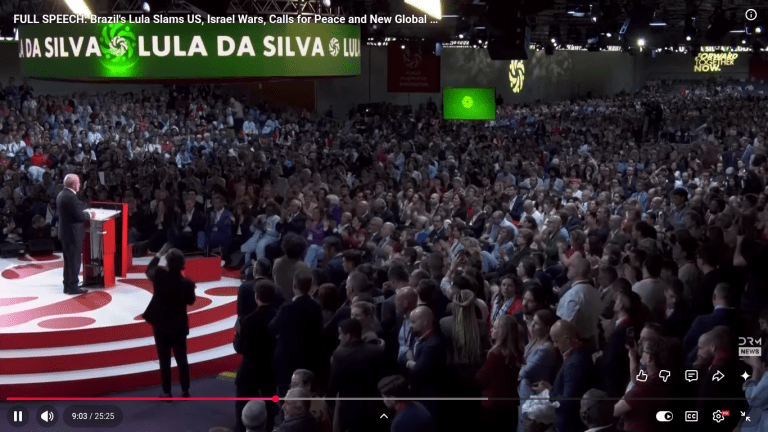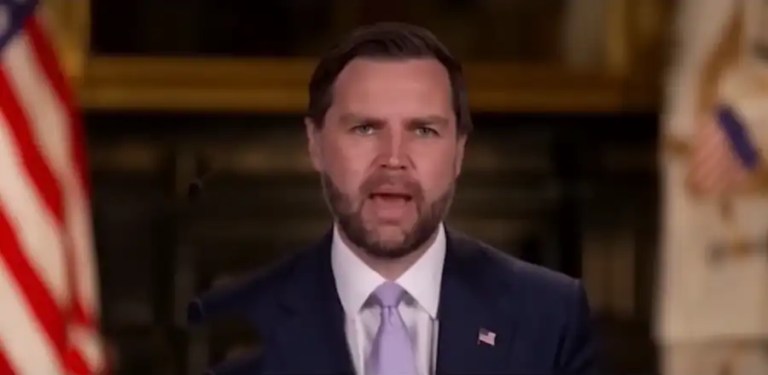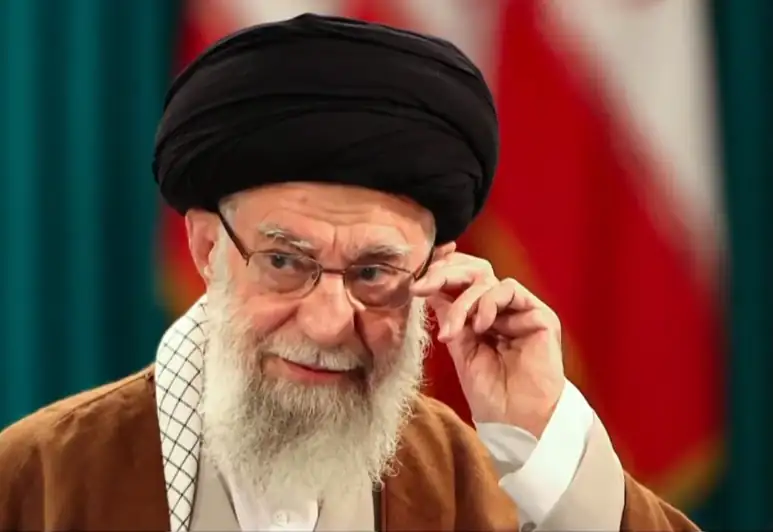
Iranian state media has confirmed that Ayatollah Ali Khamenei was killed during the strikes the United States and Israel conducted on Iran
Editorial By Advocatetanmoy
From Monarchy to Theocracy, Iran’s Revolution Triggered Decades of Regional Conflict
The 1979 Islamic Revolution reshaped the Middle Eastern strategic environment with an impact comparable to other 20th-century geopolitical shocks. When the Pahlavi monarchy fell, and Ruhollah Khomeini took power, Iran transformed from a Western-aligned monarchy into a theocratic state structured around ideological absolutism and an aggressive internal-security architecture. The Shah of Iran was overthrown with the help of useful idiots on the left in the West — in Iran, across Europe, America, Australia, and throughout the cowardly West, especially in France.
They replaced him with a lunatic cleric who genuinely believes he is doing God’s work. This system relied on purges, mass detentions, and strict social enforcement measures, creating a political environment in which dissent was contained by coercive force. Compulsory dress codes, particularly for women, and the normalization of political executions became central components of state control. These measures produced a tightly contained domestic battlespace, enabling the regime to allocate significant strategic bandwidth to external operations.
Tehran rapidly developed a multi-layered proxy ecosystem capable of shaping conflicts from Beirut to Gaza to Yemen. Organizations such as Hezbollah and Hamas evolved into forward-deployed irregular assets, capable of launching deniable operations, creating pressure points against adversaries, and sustaining long-duration attrition campaigns. Training pipelines, logistical corridors, and ideological indoctrination mechanisms allowed Iran’s security organs to mobilize these groups as extensions of state power. This proxy structure entrenched Tehran as a persistent asymmetric threat, complicating traditional military planning by blending state strategy with non-state execution.
Internal repression remained a defining characteristic of the regime. Crackdowns on protests generated large-scale casualties, with widespread allegations of torture, rape, chemical-agent use, and summary execution. Public hangings and hostage-taking reinforced a climate of fear while projecting resolve to external competitors. The state’s willingness to project ideological authority beyond its borders surfaced in incidents such as the death sentence declared against Salman Rushdie, demonstrating Tehran’s readiness to reach into other jurisdictions to advance doctrinal objectives. Diplomatically, Tehran benefited from prolonged Western hesitancy.
French and British governments often adopted risk-averse postures, while multiple U.S. administrations attempted negotiated approaches. The leadership under Barack Obama and Joe Biden pursued agreements aimed at limiting Iran’s nuclear program, accompanied by financial concessions intended to incentivize compliance. Critics argued that these measures strengthened Tehran’s strategic depth and extended the lifespan of its security apparatus. A major shift occurred with the Trump administration, which adopted a confrontational approach toward the regime. Donald Trump emphasized kinetic options, targeted sanctions, and close coordination with Israel.
Joint planning with Benjamin Netanyahu focused on degrading Iranian command nodes, constraining nuclear development, and weakening proxy capabilities across multiple fronts. The operational framework relied on precision engagements, information warfare, and pressure campaigns designed to increase internal strain and reduce Tehran’s escalation confidence. Opposition groups—both domestic and expatriate—interpreted these actions as strikes not against the Iranian nation, but against the coercive machinery responsible for decades of killings and repression. Casualty figures circulating among dissident networks cited 36,500 civilians killed in street crackdowns, reinforcing demands for foreign pressure and catalyzing waves of internal protest.
Israel entered a period of heightened alert, with repeated missile warnings sending civilians into hardened shelters. These events were understood as part of an intensifying confrontation over Iran’s nuclear ambitions. The strategic priority centered on preventing Tehran from achieving a breakout capability that could destabilize the regional balance of power and trigger an arms race. From a military standpoint, preemptive or preventive action was viewed as a necessary measure to preserve deterrence, limit Iranian escalation options, and reassure regional partners. The pressure campaign had global consequences. Beijing and Moscow monitored the evolving confrontation closely, aware that decisive U.S. action against Tehran could signal a return to high-intensity American deterrence postures.
Observers argued that the strategy aimed to fracture Chinese and Russian cooperation by demonstrating U.S. unpredictability and willingness to apply force. The implication was that Iranian vulnerability could reverberate through broader Eurasian power calculations. Inside Iran, visible shifts in civilian behavior suggested eroding regime control. Women discarding hijabs, street demonstrations, and diaspora mobilization all pointed to a society evaluating the possibility of a post-clerical future.
For military planners, these developments served as indicators of a regime approaching a potential inflection point—where the combination of internal resistance and external pressure might overwhelm the government’s capacity to maintain centralized control. The convergence of U.S. resolve, Israeli operational proficiency, dissident momentum, and regime overstretch generated a belief among opposition figures that a narrow window had opened for decisive geopolitical change.
The attempted assassination of Trump, viewed symbolically by some supporters as a near-interruption of an unfolding strategic course, intensified perceptions of a high-stakes confrontation entering its terminal phase. Taken together, these dynamics form a battlespace defined by asymmetric threats, unconventional force integration, nuclear escalation risks, and internal volatility.
For war planners, the pivotal questions revolve around the endurance of Iran’s proxy web under sustained assault, the regime’s ability to maintain domestic suppression while facing external pressure, the probability of wider regional escalation, and the long-term geopolitical realignments that could emerge if the governing command structure falters or collapses under the weight of simultaneous internal and external shocks.
The postscript to these cascading events came with an extraordinary announcement: Donald Trump declared that Iran’s Supreme Leader, Ali Khamenei, had been killed. Speaking through his Truth Social platform, the U.S. President proclaimed, “This is not only Justice for the people of Iran, but for all Great Americans, and those people from many Countries throughout the World.” He emphasized that Khamenei “was unable to evade our Intelligence and Highly Sophisticated Tracking Systems and, working closely with Israel, there was not a thing he, or the other leaders that have been killed along with him, could do… This is the single greatest chance for the Iranian people to take back their Country.”
Satellite imagery soon corroborated the claim, revealing the Supreme Leader’s compound reduced to shattered rubble after coordinated U.S.–Israeli strikes rippled across the country. Israeli officials asserted that seven additional senior Iranian figures had been eliminated in the operation, signaling a direct assault on the core of Tehran’s command echelon.
Iran’s response was immediate and expansive. Missile and drone attacks were launched across the Middle East, targeting cities such as Dubai, Doha, Bahrain, and Kuwait—locations hosting U.S. installations or aligned closely with Washington. The strikes underscored Tehran’s intent to demonstrate regional reach even in the face of decapitation-level losses, further escalating an already volatile strategic environment.
More editorial
- Trump’s Attack on the Supreme Court Shows His Deep Disrespect for American Law
- Who Runs the Epstein Network in 2026?
- Trump’s Gaza Development Plan: Ambition, Investment, and the Limits of Peacebuilding
- Modi failed to protect India’s interests at Chabahar under American Pressure