How 1967 Changed Indian Politics: Data-Backed Study of the 4th Lok Sabha Verdict
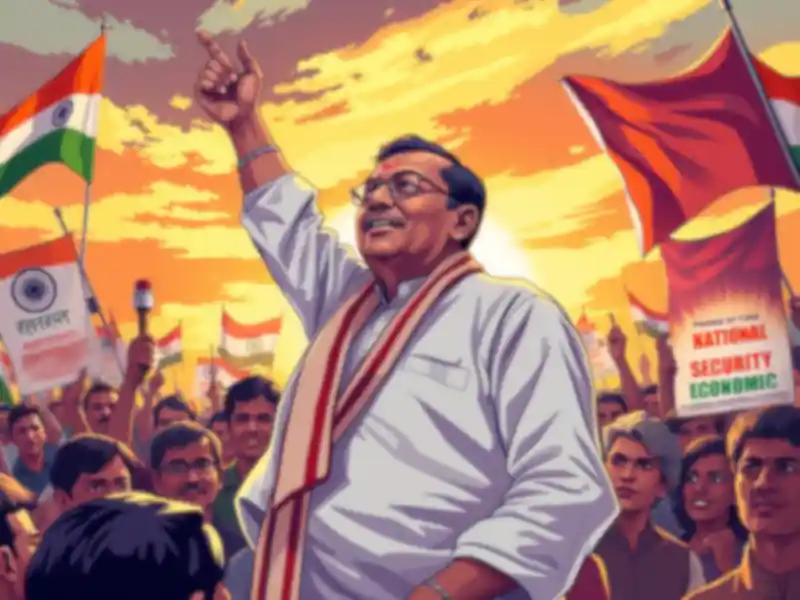
The 1967 General Elections to India’s Fourth Lok Sabha marked a sharp political pivot, a moment when the electorate punctured the Congress Party’s long-standing aura of inevitability. In this churn, the Bharatiya Jana Sangh (Deendayal Upadhyaya, Party President) did not seize national power, yet it crystallized into a disciplined and rising counterforce, planting the ideological and organizational roots of a future political realignment.
Congress retained office with 283 seats, but its dominance stood visibly eroded. Against this backdrop of discontent, the Jana Sangh pressed forward with an assertive electoral sweep, contesting 249 seats—its boldest national spread to date. It captured 35, but the deeper revelation lay in its nearly 13.6 million votes, amounting to 9.31% of the national tally. This was no incremental rise but a clear geometric leap, signalling the party’s evolution from a largely Hindi-belt formation into one harboring genuine all-India intent.
Its gains, while geographically concentrated, carried strategic weight. The Hindi heartland served as its fulcrum. In Madhya Pradesh, the party emerged as the principal opposition, seizing 10 of 37 constituencies, including pivotal centers such as Gwalior, Vidisha, and Ujjain. Rajasthan yielded 3 seats and saw the Jana Sangh split the non-Congress vote with particular force in Sikar. Delhi delivered the most dramatic outcome: a near-clean sweep of 6 out of 7 seats, grounding the party in an urban, educated, commercially oriented electorate—a constituency that would anchor its successor organizations for decades.
Outside the North, the party edged into new terrain, registering symbolic yet meaningful breakthroughs. Its victory in Kanker—then part of undivided Madhya Pradesh, now in Chhattisgarh—marked its first southernly success. Though Andhra Pradesh and Maharashtra produced no seats, these ventures seeded early cadres and networks. In Punjab, it secured Amritsar; in Haryana, Ambala (SC). These wins suggested that its appeal could extend beyond traditional urban trading groups into rural and agrarian pockets.
The party’s campaign blended organizational rigour with a sharpened ideological thrust. It foregrounded national security anxieties still vivid after the 1962 and 1965 wars, advocated a “Swadeshi” economic ethos over Congress’s statist planning, and condemned what it termed appeasement politics. Such themes resonated with a restless middle class, small traders, and segments of the intelligentsia disillusioned with perceived governmental drift and compromise.
The 1967 mandate was, at its core, a collective uprising of the opposition, and the Jana Sangh formed an indispensable chapter of that insurgent narrative. It proved that a party anchored in a coherent ideological alternative could build a stable, expandable voter base. By mastering the craft of disciplined opposition, it laid a foundational stratum for political developments yet to come. The expanded vote share, the broadened geography, and the new social constituencies it touched in 1967 were not a culmination but a launch point—momentum that would, through adaptation and alliances, eventually redraw India’s political centre of gravity. In the Fourth Lok Sabha, the Jana Sangh ceased to be peripheral; it stepped onto the national stage as a determined and consequential force.
Performance of Congress Party
The 1967 General Elections stand as a profound paradox in the history of the Indian National Congress—a pyrrhic victory that revealed the deep cracks in the party’s once-unassailable fortress. Officially, the Congress remained the undisputed champion, securing 283 seats and comfortably crossing the halfway mark in the 520-member Fourth Lok Sabha. It formed the government, and Indira Gandhi ascended to the Prime Minister’s office. Yet, beneath this veneer of continuity lay a seismic shift. This was not the triumphant Congress of 1952 or 1957; it was a wounded giant, having bled over 70 seats since the previous election, its national vote share dipping to 40.78%. The result was less an affirmation of Congress dominance and more a national referendum that delivered a stern, fragmented rebuke.
The election unfolded in the shadow of towering challenges that eroded the Congress’s foundational pillars. The devastating droughts and famines of the mid-1960s had exposed the frailties of the economic planning model, translating into tangible rural distress. The 1962 defeat by China and the stalemate of the 1965 war with Pakistan had punctured the aura of Nehruvian foreign policy competence, fueling a narrative of national vulnerability. Most critically, the death of Jawaharlal Nehru in 1964 had removed the party’s great unifier, unleashing fierce internal factionalism between the so-called “Syndicate” of old-guard leaders and the rising Indira Gandhi. The Congress entered the campaign not as a monolith, but as a divided house, its message of stability ringing hollow against a backdrop of scarcity and uncertainty.
Geographically, the verdict was a tale of startling reversals. The party suffered catastrophic losses across the vast Hindi heartland, the very core of its “Congress System.” It was virtually swept out of Rajasthan, defeated in Delhi, and lost significant ground in Madhya Pradesh, Bihar, and Uttar Pradesh, where a resurgent opposition—from the Bharatiya Jana Sangh to the Samyukta Socialist Party—successfully channeled agrarian discontent and economic frustration. The southern fortress, however, held firm. In Andhra Pradesh and Mysore, the Congress romped home with large majorities. Its most dramatic and consequential defeat occurred in Madras (modern-day Tamil Nadu), where the regional Dravida Munnetra Kazhagam (DMK) achieved a landslide, winning 25 out of 39 seats. This loss was symbolic of a new political force: the potent rise of sub-national identity, which the Congress’s pan-Indian nationalism could no longer contain.
Perhaps the most telling indicator of the Congress’s diminished stature was its performance in state assembly elections held simultaneously. For the first time, the party lost power in nearly half the states, including Kerala, Orissa, Madras, Rajasthan, Punjab, West Bengal, and Bihar. This created the novel and destabilizing phenomenon of a Congress central government forced to contend with a phalanx of robust non-Congress state governments. The era of Congress hegemony at all levels of governance was irrevocably broken.
Thus, the 1967 performance was a watershed. The Congress retained power in New Delhi, but its moral authority and political invincibility were dismantled. It no longer represented an inevitable national consensus but was now first among equals in a crowded, assertive opposition field. The election signaled the end of the one-party dominant system and the dawn of a more competitive, fragmented, and federal polity. The reduced majority forced Indira Gandhi into a weaker position within her own party, setting the stage for the internal split of 1969 and her subsequent dramatic leftward turn—the “Garibi Hatao” slogan—to reclaim a direct connection with the masses. In essence, 1967 was the election where the Congress party won the battle but began, unmistakably, to lose the war for India’s political soul, entering an era of adaptation and struggle from which it would never fully regain its former supremacy.
Performance of Communist and left Parties
The 1967 General Elections revealed a Left that was potent yet splintered, more a constellation of competing currents than a unified ideological phalanx. The communist movement—freshly divided between the CPI and the CPM—and the socialist formations of the SSP and PSP advanced as distinct organisms, each driven by its own regional logic and tactical gambits. What emerged was not a national leftward surge, but the hardening of regional citadels and sharply etched boundaries between competing doctrines.
The CPM delivered the cycle’s most electric performance, though tightly anchored to specific geographies. In West Bengal, riding the turbulence of a mounting food crisis, fiery industrial unrest, and a charged student upsurge, it surged to prominence. Though it secured only 5 Lok Sabha seats, they were symbolically immense—Jyoti Basu’s triumph in Diamond Harbour and Renu Chakravartty’s victory broadcast the consolidation of a “Red Fortress” spanning Calcutta and its industrial arcs. Parallel strength unfolded in Kerala, where the CPM-led alliance captured 9 of 19 Lok Sabha seats and assembled the state government. Figures like E.K. Nayanar and A.K. Gopalan registered emphatic wins, underscoring the party’s standing as the uncompromising voice of agrarian militancy and working-class agitation. In these two states, the CPM established itself as the most muscular and ideologically clear opposition to the Congress.
The CPI, by contrast, remained caught in an uneasy ideological posture. Having moved closer to the Congress after the split, it entered the race with compromised credibility among radical cadres. Its haul of 23 Lok Sabha seats was numerically solid but geographically diffuse. It retained influence in Telangana, held pockets in Bihar, and even secured 5 seats in West Bengal—competing directly with its Marxist counterpart. A standout victory in Patna lent it prestige, yet its conciliatory tilt toward Congress blunted its appeal, allowing the CPM to claim the mantle of authentic revolutionary opposition. The CPI’s national narrative appeared blurred next to the sharply outlined stances of its rivals.
The socialist parties offered a different idiom of Left politics—one rooted in Lohiaite anti-Congressism, social justice, and federal assertion. The SSP emerged as a formidable northern force, winning 23 seats and becoming a major challenger in Bihar and Uttar Pradesh. It tapped into the rising tide of backward caste energy and agrarian resentment, channeling anti-Congress sentiment with remarkable precision. The PSP, smaller but still relevant, contributed meaningfully to the opposition surge in places such as Orissa and Assam, reinforcing the Left’s multi-centered presence.
Together, these performances etched a deep regional and strategic divide across the Left spectrum. In the North, Left politics largely flowed through the socialist route—caste-conscious, agrarian, and explicitly anti-Congress. In the East and South, communism—particularly the CPM—stood at the forefront, mobilizing masses through class struggle and militant activism. This regionalization prevented the Left from offering a cohesive national alternative, but it endowed it with potent state-level strongholds from which it could exert outsized influence.
The 1967 elections thus marked a definitive metamorphosis for the Indian Left. It ceased to be a single ideological river and became a network of parallel streams: a regionally entrenched and combative CPM, a ideologically moderated and widely dispersed CPI, and socialist forces wielding caste-class coalitions in the Hindi heartland. Their success lay not in seizing national power but in demonstrating, with unmistakable clarity, that the Congress could be cornered and defeated in vital regions by forces to its left. In doing so, they redrew the political map into a mosaic of rival centers, inaugurating a new era of coalition politics and sharpening the ideological frontiers that would shape India’s political contests for decades.
1967 Lok Sabha Elections in Numbers: Voter Turnout, Seat Share & Performance Data
VOLUME I (National and State Abstracts & Detailed Results)
ELECTION COMMISSION OF INDIA, NEW DELHI
© Election Commission of India, 1968
Part I: National Summary & Analysis
1. The Electoral Landscape
- Total Electorate: 250,207,401
- Total Valid Votes Polled: 145,866,510
- National Voter Turnout: 61.04%
- Total Seats: 520
- Total Candidates: 2,369
- Average Candidates per Constituency: 4.56
2. Performance of Political Parties (National Summary)
| Party Type | Party (Abbr.) | Contested | Won | % of Seats Won | Votes Polled | % of Nat. Vote |
|---|---|---|---|---|---|---|
| National | Indian National Congress (INC) | 516 | 283 | 54.4% | 59,490,701 | 40.78% |
| Swatantra Party (SWA) | 178 | 44 | 8.5% | 12,646,847 | 8.67% | |
| Bharatiya Jana Sangh (BJS) | 249 | 35 | 6.7% | 13,580,935 | 9.31% | |
| Samyukta Socialist Party (SSP) | 122 | 23 | 4.4% | 7,171,627 | 4.92% | |
| Communist Party of India (CPI) | 109 | 23 | 4.4% | 7,458,396 | 5.11% | |
| Praja Socialist Party (PSP) | 109 | 13 | 2.5% | 4,456,487 | 3.06% | |
| Communist Party (Marxist) (CPM) | 59 | 19 | 3.7% | 6,246,522 | 4.28% | |
| State | Dravida Munnetra Kazhagam (DMK) | 26 | 25 | 4.8% | 5,529,405 | 3.79% |
| Akali Dal – Sant Fateh Singh (ADS) | 8 | 3 | 0.6% | 968,712 | 0.66% | |
| Bangla Congress (BAC) | 7 | 5 | 1.0% | 1,204,356 | 0.83% | |
| Peasants & Workers Party (PWP) | 11 | 2 | 0.4% | 1,028,755 | 0.71% | |
| Others | Independents (IND) | 866 | 35 | 6.7% | 20,106,051 | 13.78% |
| All Other Parties | 82 | 10 | 1.9% | 3,057,816 | 2.10% | |
| GRAND TOTAL | 2,369 | 520 | 100% | 145,866,510 | 100% |
The INC retained power but with a significantly reduced majority (283 seats vs. 361 in 1962), marking the end of the era of its overwhelming dominance. Opposition parties and independents made substantial gains.
3. Voter Participation & Candidates
| Metric | Figure |
|---|---|
| Total Polling Stations | 243,693 |
| Votes Rejected (%) | 4.47% |
| Candidates Forfeiting Deposit | 1,203 (50.8% of all candidates) |
| Women Candidates | 67 |
| Women Elected | 29 |
| State with Highest Turnout | Laccadive Islands (82.02%) |
| State with Lowest Turnout | Orissa (43.70%)* |
*Excluding Nagaland, where the election was countermanded.
Part II: State-by-State Results
Seats Won by Major Parties in Key States
| State | Total Seats | INC | SWA | BJS | DMK | CPI | CPM | SSP | Others & IND |
|---|---|---|---|---|---|---|---|---|---|
| Andhra Pradesh | 41 | 35 | 3 | – | – | 1 | – | – | 2 |
| Bihar | 53 | 34 | – | 1 | – | 5 | – | 7 | 6 |
| Gujarat | 24 | 11 | 12 | – | – | – | – | – | 1 |
| Madhya Pradesh | 37 | 24 | 1 | 10 | – | – | – | – | 2 |
| Madras | 39 | 3 | 6 | – | 25 | – | 4 | – | 1 |
| Maharashtra | 45 | 37 | – | – | – | 2 | – | 2 | 4 |
| Punjab | 13 | 9 | – | 1 | – | – | – | – | 3 |
| Rajasthan | 23 | 10 | 8 | 3 | – | – | – | – | 2 |
| Uttar Pradesh | 85 | 47 | 1 | 12 | – | 5 | 1 | 8 | 11 |
| West Bengal | 40 | 14 | – | – | – | 5 | 5 | 1 | 15 |
| Kerala | 19 | 1 | – | – | – | 3 | 9 | 3 | 3 |
Detailed State Results (Excerpts)
Note: The full report contains 520 constituency results. Below are examples from the first few states.
ANDHRA PRADESH (41 Seats)
- Turnout: 66.97%
- Key Winners:
- Srikakulam: G. Latchanna (SWA)
- Visakhapatnam: T. Viswanatham (IND)
- Cuddapah: Y.E. Reddy (CPI)
- Hyderabad: G. S. Melkote (INC)
ASSAM (14 Seats)
- Turnout: 54.99%
- Key Winners:
- Autonomous Districts (ST): G. G. Swell (AHL)
- Dhubri: J. Ahmed (PSP)
- Gauhati: D. Kalita (CPI)
BIHAR (53 Seats)
- Turnout: 51.53%
- Key Winners:
- Banka: B. S. Sharma (BJS) [Notable BJS win in Congress stronghold]
- Patna: R. A. Shastri (CPI)
- Dhanbad: L. R. Lakshmi (JKD)
- Chatra: V. Raje (IND)
Part III: Appendices & Notable Facts
Women in the Elections
- 67 women contested; 29 were elected (4.3% of total MPs).
- The INC fielded the most women candidates (37) and elected the most (19), including Indira Gandhi (Rae Bareli).
- Other elected women included T. Lakshmikantam (Khammam-INC), N. Kaur (Sangrur-ADS), and G. Devi (Jaipur-SWA).
Forfeited Deposits
- A candidate forfeits their deposit if they fail to secure more than one-sixth (≈16.67%) of the valid votes polled.
- 1,203 candidates (over 50%) lost their deposit, indicating a high number of non-serious or poorly performing candidates.
- Independents had the highest forfeiture rate (86.26%), followed by the PSP (68.81%).
Uncontested & Unique Wins
- Nagaland’s sole seat was won uncontested by the Nagaland Nationalist Organisation (NNO).
- The Jammu & Kashmir National Conference (JKN) won the Srinagar seat.
The 1967 General Election decisively fractured the Congress monopoly. Though it clung to power with 283 seats, its myth of permanence collapsed as the Hindi heartland slipped from its grasp and state after state fell away. A once-hegemonic system gave way to a crowded, assertive opposition: the Jana Sangh on the right, the socialists in the northern plains, the communists in their emerging bastions, and the DMK inaugurating a new southern assertiveness. What emerged was the irreversible end of the Congress System and the birth of a competitive, coalition-driven republic in which federal voices grew sharper and national politics ceased to move in a single, predictable rhythm.
4th February 2026
Read More
- CPI(M) collapsed: It abandoned basic path of class struggle (All India Left Coordination)
- The Rise and Fall of Wokeism: A Global Analysis
- Left-Liberal Influence on American Politics and Governance
- Statement of HM Patil regarding incident of firing in Nandigram of WB on 14.03.2007