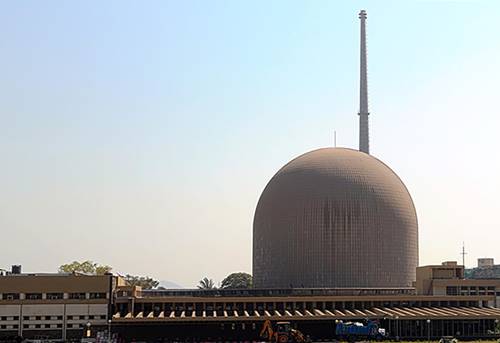
The Document provides a comprehensive historical overview of India’s nuclear program and the international community’s reactions. It gives insight into the complex political and strategic considerations of the time.
June 29, 1961
(SECRET)
The State Department of the U.S. asks its embassies to collect information about India’s nuclear energy program and its intentions regarding the development of nuclear weapons. In 1961, Prime Minister Jawaharlal Nehru was strongly opposed to nuclear warfare, although India had a very active civilian nuclear energy program. However, many foreign policy analysts considered it likely that India would eventually choose to develop a nuclear weapons capability. The U.S. used various means to monitor India’s nuclear plans and activities.
The documents in the briefing book date from 1961 to 1983. In 1961, India had an advanced civilian nuclear program, while Pakistan was in its early stages. In 1983, nine years had elapsed since India’s explosion of a nuclear device, and Pakistan’s nuclear weapons program was well underway.
During the early 1960s, India under Prime Minister Jawaharlal Nehru strongly advocated global disarmament but was apprehensive about China’s nuclear weapons program. India’s concern increased following its October 1962 territorial war with China. The stakes were raised by China’s first nuclear weapons test in October 1964. Many observers thought it increasingly likely that India would respond to China’s actions by seeking its own weapons capability.
War with Pakistan in 1965 further alarmed India: it was angered by China’s outspoken support for Pakistan during the conflict, and disappointed by what it viewed as insufficient Western attention to its security needs. The U.S. considered various options that might dissuade India from developing nuclear weapons, including scientific cooperation aimed at enhancing India’s national prestige. It also joined in cooperative arrangements with both India and Pakistan to monitor nuclear and missile developments in China and the Soviet Union. India, for its part, launched a campaign seeking security guarantees to shield it from Chinese nuclear attack, arguing that such assurances might make a nuclear weapons program of its own unnecessary.
Various options were proposed: U.S. guarantees, joint U.S.-Soviet guarantees, guarantees from all the nuclear states, British guarantees, or guarantees in conjunction with the nuclear non-proliferation treaty, then negotiated. U.S. policymakers seriously considered these proposals, although some doubted that they would deter India from developing a bomb.
The Embassy in New Delhi viewed India’s overtures sympathetically, while the Defense Department opposed any commitment to India that would alienate Pakistan, a U.S. military ally. In 1967, both President Lyndon Johnson and Defense Secretary Robert McNamara supported the concept of guarantees during meetings with a visiting Indian representative.
Later that year, U.S. and Soviet officials were still discussing security guarantees, hoping to induce India to sign the nuclear non-proliferation treaty. No agreement was ever reached, however, in part because India itself concluded that such commitments would not guarantee its security in the event of actual nuclear conflict.
In May 1974 India tested a nuclear device, although it called the event a “peaceful nuclear explosion.” Its terminology did not forestall censure, both within the international community and from domestic critics.
The test had serious consequences: India lost much of the foreign technical assistance that had till then sustained its civilian nuclear program. A Pakistani reaction to India’s test of a nuclear explosive was predicted and confirmed within a few years. By the mid-1970s, intelligence reports indicated that Pakistan had an active nuclear weapons program, and in 1983 the State Department noted that it had “unambiguous evidence” of this fact.
This Document illuminates aspects of the internal debate among U.S. officials, as they attempted to formulate effective policies toward nuclear proliferation in South Asia while protecting sometimes conflicting interests and objectives.
Read also: An Intelligence Assessment of 1980s Indian Nuclear Policy
Indian Capability and Likelihood to Produce Atomic Energy