Encyclopedia of European Invasions in India
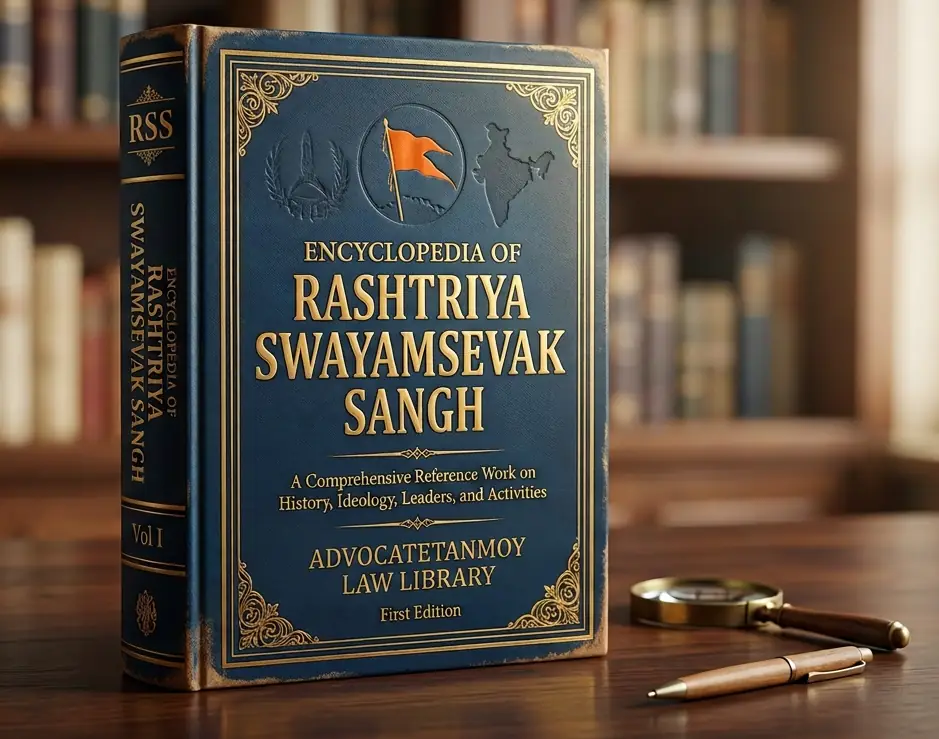
Encyclopedia of Rashtriya Swayamsevak Sangh
Rashtriya Swayamsevak Sangh (RSS): An Introduction to Its History, Organisation and Civilisational Vision
The Rashtriya Swayamsevak Sangh (RSS), founded at Nagpur on 27 September 1925 by Dr. Keshav Baliram Hedgewar, is best understood not simply as a political-cultural organisation, a Hindu volunteer association, or an auxiliary to any political party, but as a distinctive experiment in the long-term organisation of society around an idea of Indian civilisational nationhood. Its historical development presents an unusual combination of geographical concentration, disciplined voluntary organisation, ideological continuity, cadre formation, social service, educational activity and an expanding family of affiliated institutions. The RSS that emerged from Nagpur in 1925 was not conceived as a conventional political party seeking immediate control of the colonial State. Hedgewar’s fundamental organisational proposition was that a politically weak and socially divided society required organisation before power, character before office, discipline before political mobilisation, and a durable social consciousness capable of surviving changes of government. The distinction remains essential to understanding the institution throughout its subsequent history.
It is believed that during his stay in Calcutta (now Kolkata), Dr. K. B. Hedgewar, founder of the RSS, met Swami Pranabananda (1896–1941) and observed the work of the Bharat Sevashram Sangha and its santans. Swami Pranabananda’s emphasis on discipline, service and Hindu social organisation was later highly appreciated by Dr. Syama Prasad Mukherjee, a leading ideologue of the Bharatiya Jana Sangh, the political organisation associated with the RSS.
The most important feature of the RSS is therefore its organisational method. Its basic unit, the shakha, is neither merely a political meeting nor an ordinary membership office. It is the recurring physical and social environment through which the organisation attempts to form the individual volunteer. Physical exercises, games, drills, collective activities, discussion, prayer and disciplined interaction are combined within a routine. The institution consequently attempts to produce not merely adherents to an ideology but swayamsevaks—volunteers whose relationship with the organisation is expressed through personal discipline, service and continuing participation. The development of the pracharak (missionaries), a full-time dedicated worker, further created a cadre mechanism through which the organisation could reproduce itself geographically without becoming dependent upon electoral cycles or conventional professional bureaucracy.
This structure explains why the history of the RSS cannot be measured adequately by conventional political statistics. A political party is ordinarily examined through votes, seats, governments and electoral alliances. The RSS requires a different historical vocabulary: shakhas, swayamsevaks, pracharaks, training, organisational expansion, affiliated institutions, social projects, intellectual traditions and inter-generational transmission. The distinction is particularly important because the RSS itself has historically presented its primary identity as cultural and social rather than electoral. Political influence emerged through a wider institutional environment rather than through transforming the RSS itself into a political party. The later emergence and development of the Sangh Parivar therefore represents one of the decisive developments in twentieth-century Indian organisational history.
The scale of this development is one of the central subjects of the RSS’s modern history. The organisation began in Nagpur, but its institutional imagination was never confined permanently to the city in which it was founded. During the twentieth century it developed a national network and subsequently became connected with organisations working in politics, education, labour, student affairs, religious mobilisation and social service. The Bharatiya Janata Party (BJP) occupies the political field within this wider ecosystem, while institutions such as the Vishva Hindu Parishad, Akhil Bharatiya Vidyarthi Parishad, Bharatiya Mazdoor Sangh, Vidya Bharati and Rashtriya Sewa Bharati operate in different spheres. The resulting structure is better described as an organisational family than as a single institution. (Read More: Encyclopedia of Contemporary Indian Politics)
This distinction also makes possible a more serious comparison between the RSS and the Catholic Church centred upon Vatican City. The comparison does not mean that the two institutions are theologically or constitutionally equivalent. They are fundamentally different historical formations: the Catholic Church is a universal Christian church possessing an ecclesiastical hierarchy and, through the Holy See, an international diplomatic personality associated with the sovereign territory of Vatican City; the RSS is an Indian voluntary organisation without sovereign territory or state authority. Yet the comparison becomes historically productive when one examines institutional scale, centrality, cadre formation, local units, traditions, educational structures, social-service networks and mechanisms of continuity. Nagpur functions as the principal historical and organisational centre of the RSS in a manner that makes comparison with Vatican-centred Catholic institutional geography intelligible, even though the two centres possess entirely different legal and theological statuses. (Read more: Christianity and Christian Theology)
The analogy becomes still more significant when the question of institutional continuity is examined. Catholicism does not preserve its institutional identity through the Bible alone (New Testament). Its governing and teaching tradition incorporates Sacred Scripture, Sacred Tradition, the Magisterium, councils, theological literature, the Catechism and Canon Law, among other bodies of authoritative material. Canon Law, in particular, provides a sophisticated legal and administrative framework through which an institution extending across continents maintains a degree of institutional coherence. The RSS likewise cannot be understood merely by reading a single text or by identifying a single ideological formula. Its continuity has developed through a combination of civilisational memory, Hindu (Darshan and Manan) traditions, organisational resolutions, leadership decisions, training traditions, prayers, institutional practices and accumulated experience. The comparison is therefore not one of identical doctrine; it is a comparison of how large historical organisations create mechanisms through which an inherited conception of collective identity survives across generations. (Read more: Encyclopedia of Ancient and Modern India)
The sacred geography of India constitutes another important dimension of the RSS worldview. Expressions such as “Vande Mataram” and “Namaste Sada Vatsale” reveal an understanding of the motherland in which geographical territory is invested with cultural and moral significance. India is not approached merely as the territory of a modern administrative State but as a civilisational homeland possessing historical continuity. This conception is fundamental to understanding why RSS nationalism cannot be reduced mechanically to the European model of nineteenth-century territorial nationalism. Its vocabulary draws upon a much older cultural imagination in which land, civilisation, ancestry, duty and collective memory are interconnected. The daily performance of organisational prayer and the repeated use of national-cultural symbols consequently function as mechanisms of institutional memory and identity formation rather than as incidental ceremonial practices. (Read More: Encyclopedia of Strategic Geography)
The place of Vedic and classical Hindu traditions within this framework is similarly broader than the idea of a single authoritative religious book. The RSS’s civilisational vocabulary draws upon the Vedas and the wider inheritance of Hindu thought, while historical debates have also concerned texts such as the Manusmriti and their interpretation by earlier Hindu nationalist thinkers. The modern institutional question, however, must be distinguished from the intellectual history of individual RSS leaders. The supplied material places particular emphasis upon the development of Samajik Samrasta or social harmony, and upon the contemporary recognition of the Constitution of India as the supreme legal framework of the modern Republic, which denied the Western construction of Hindu civilization. The resulting historical problem is therefore not simply whether a particular ancient text was cited at a particular moment, but how an organisation rooted in civilisational memory negotiates the transition from ancient social concepts to the constitutional order of twentieth- and twenty-first-century India.
The service dimension is equally indispensable to an understanding of the RSS. Through the wider Sangh network, volunteers have participated in education, healthcare, rural development, disaster response, welfare and other forms of social work. Rashtriya Sewa Bharati represents an important institutional expression of this orientation. The significance of such activity lies not merely in the number of projects undertaken but in the organisational principle underlying them: the volunteer is expected to transform ideological commitment into seva, or service. This provides the RSS with a mode of social presence that differs substantially from electoral mobilisation. A flood, earthquake, cyclone, epidemic or local social crisis can therefore become an arena in which the organisation demonstrates its conception of disciplined voluntary action. The supplied material identifies this service network as one of the principal reasons why the wider RSS ecosystem must be studied as a social institution rather than solely as an ideological movement.
The history of the RSS is nevertheless inseparable from conflict with the Indian State and from some of the most contested episodes of modern Indian history. Following Mohandas Karamchand Gandhi’s assassination on 30 January 1948, the Congress Government led by Nehru banned the organisation. The lifting of that ban became a formative episode in the institutional history of the Sangh. A second decisive confrontation occurred during the Emergency of 1975–1977 imposed by the Congress Government led by Indira Gandhi, when the RSS was again banned, and its cadres participated in the broader resistance to authoritarian rule and political persecution. The Organisation grew in number and strength.
The post-independence history subsequently carried the RSS into increasingly complicated relations with successive Prime Ministers and governments. The Sarvarthapedia framework supplied for this study identifies the periods associated with Jawaharlal Nehru, the 1975 Emergency, the Ayodhya movement and the events of 1992, the government of P. V. Narasimha Rao, the Vajpayee period, and the governments led by Narendra Modi as distinct phases requiring separate examination. Questions surrounding Ayodhya, Article 370, the Ram Mandir and the relationship between the RSS and the BJP demonstrate that the organisation’s influence cannot be studied independently of the political transformation of post-independence India. At the same time, the RSS should not be institutionally collapsed into the BJP: their relationship is historically close, but they occupy different organisational fields.
The transformation from a Nagpur organisation of 1925 into a national and international network by 2026 is therefore the central historical fact from which an encyclopedic study must begin. K. B. Hedgewar’s foundation, M. S. Golwalkar’s expansion of the organisation after 1940, the post-1948 reconstruction, the experience of the 1975–1977 Emergency, the development of the Sangh Parivar, the growth of educational and service institutions, the emergence of an international presence and the increasingly consequential relationship with Indian political power represent successive stages of one longer organisational process. The supplied 13-volume architecture accordingly extends from pre-1925 civilisational foundations to the RSS of 2026, covering its history, ideology, organisation, affiliated institutions, political relationships, controversies, economic and educational activities, cadre training and international relations.
The RSS (Apx 4 to 60 million active volunteers/participants) consequently occupies an unusual position in the history of modern India. It is simultaneously an organisation, cadre system, cultural movement, social-service network, civilisational project and source of political influence. Its history cannot be adequately explained by the label “Hindu nationalist organisation” alone, just as its influence cannot be understood merely through the electoral fortunes of the BJP. The scale of the RSS extends far beyond its shakhas through the Sangh Parivar. Vidya Bharati runs more than 12,000 schools; the Bharatiya Mazdoor Sangh (BMS) is India’s largest trade-union organisation; and the Akhil Bharatiya Vidyarthi Parishad (ABVP) has a nationwide student presence. The RSS-linked Seva network is estimated to cover 130,000–150,000 service projects, including hospitals, mobile medical units, blood banks, Sanskar Kendras, tuition centres, rural-development programmes and more than 2,400 self-help groups. Unlike organisations whose strength is measured through central membership registers and dues, the RSS maintains no central formal membership register or membership-fee system; its scale is therefore reflected principally in its shakhas, institutions, affiliated organisations and service activities.
Sarvarthapedia Conceptual Node: RSS and Its Civilisational-Organisational Architecture
Foundational Concepts
- Rashtriya Swayamsevak Sangh (RSS) — See also: K. B. Hedgewar; Nagpur; 27 September 1925; Swayamsevak; Shakha; Hindu Civilisation; Indian Civilisational Nationhood
- K. B. Hedgewar — See also: RSS Foundation; Calcutta; Swami Pranabananda; Bharat Sevashram Sangha; Organisational Nationalism
- Nagpur — See also: RSS Headquarters; Maharashtra; Hedgewar; Sangh Organisational Geography
- Organisation Before Power — See also: Cadre Formation; Social Organisation; Character Formation; Political Mobilisation
- Indian Civilisational Nationhood — See also: Hindu Civilisation; Sacred Geography of India; Vande Mataram; National Identity; Cultural Nationalism
Organisational Method
- Shakha — See also: Swayamsevak; Daily Discipline; Physical Training; Collective Practice; Organisational Reproduction
- Swayamsevak — See also: Seva; Shakha; Pracharak; Volunteerism; Cadre Formation
- Pracharak — See also: Full-Time Worker; Cadre System; Geographical Expansion; Organisational Continuity
- Cadre Formation — See also: Training; Pracharak; Swayamsevak; Leadership Formation; Inter-generational Transmission
- Discipline — See also: Shakha; Character Formation; Seva; Organisational Culture
- Seva — See also: Social Service; Rashtriya Sewa Bharati; Disaster Relief; Healthcare; Rural Development
Sangh Parivar
- Sangh Parivar — See also: RSS; Bharatiya Janata Party; Vishva Hindu Parishad; ABVP; BMS; Vidya Bharati; Rashtriya Sewa Bharati
- Bharatiya Janata Party (BJP) — See also: Bharatiya Jana Sangh; RSS-BJP Relationship; Indian Electoral Politics; Political Influence
- Bharatiya Jana Sangh — See also: Syama Prasad Mukherjee; RSS; BJP; Post-Independence Indian Politics
- Vishva Hindu Parishad — See also: Hindu Mobilisation; Sangh Parivar; Ayodhya Movement; Religious Organisation
- Akhil Bharatiya Vidyarthi Parishad (ABVP) — See also: Student Organisation; Campus Politics; Youth Mobilisation; Sangh Parivar
- Bharatiya Mazdoor Sangh (BMS) — See also: Labour Movement; Trade Unions; Working-Class Organisation; Communist Trade Unions
- Vidya Bharati — See also: Education; School Networks; Saraswati Shishu Mandir; Cultural Education
- Rashtriya Sewa Bharati — See also: Seva; Charitable Institutions; Healthcare; Rural Development; Disaster Response
Bengal, Hedgewar and Pranabananda
- Swami Pranabananda (1896–1941) — See also: Bharat Sevashram Sangha; Hindu Social Organisation; Seva; Calcutta; Syama Prasad Mukherjee
- Bharat Sevashram Sangha — See also: Swami Pranabananda; Santans; Hindu Service Organisations; Social Discipline
- Calcutta and the RSS — See also: Hedgewar; Bengal; Revolutionary Nationalism; Pranabananda
- Syama Prasad Mukherjee — See also: Bharatiya Jana Sangh; Bengal Politics; Pranabananda; Hindu Nationalism
Civilisational Thought
- Hindu Civilisation — See also: Vedic Tradition; Dharma; Indian Civilisational Nationhood; Sacred Geography
- Vedic Tradition — See also: Vedas; Hindu Intellectual Tradition; Dharma; Civilisational Memory
- Dharma — See also: Hindu Philosophy; Social Order; Duty; Civilisational Ethics
- Darshan and Manan — See also: Hindu Philosophy; Intellectual Tradition; Civilisational Thought
- Manusmriti — See also: Dharmashastra; Hindu Social Thought; Modern Interpretations; Legal History
- Samajik Samrasta — See also: Social Harmony; Caste Relations; Social Reform; Hindu Social Organisation
Sacred Geography and National Identity
- Sacred Geography of India — See also: Bharat Mata; Vande Mataram; National Identity; Pilgrimage Geography
- Vande Mataram — See also: Bankim Chandra Chattopadhyay; Bengal Renaissance; Nationalism; Motherland
- Namaste Sada Vatsale — See also: RSS Prayer; Shakha; Institutional Memory; Sangh Identity
- Civilisational Homeland — See also: Bharat; Hindu Civilisation; National Consciousness; Cultural Geography
RSS and the Constitutional State
- Constitution of India — See also: Republic of India; Fundamental Rights; Constitutionalism; RSS and the State
- RSS and the Indian State — See also: 1948 Ban; 1975 Emergency; Political Regulation; Civil Liberties
- 1948 RSS Ban — See also: Gandhi Assassination; Nehru Government; Sardar Patel; RSS-State Relations
- 1975–1977 Emergency — See also: Indira Gandhi; Civil Liberties; Political Opposition; RSS Resistance
- Emergency and Organisational Resistance — See also: Underground Organisation; Political Prisoners; Democratic Restoration
RSS and Political Power
- RSS–BJP Relationship — See also: Bharatiya Jana Sangh; BJP; Political Influence; Sangh Parivar
- Bharatiya Jana Sangh — See also: Syama Prasad Mukherjee; Deendayal Upadhyaya; RSS; BJP
- Narendra Modi and the RSS — See also: BJP Government; Sangh Parivar; Political Leadership
- Vajpayee Period — See also: BJP; NDA; RSS-BJP Relations; Coalition Politics
- Narasimha Rao Period — See also: Ayodhya; 1992; Congress Government; Indian Political Transformation
- Ayodhya Movement — See also: Ram Janmabhoomi; VHP; BJP; RSS; 6 December 1992
- Ram Mandir — See also: Ayodhya; Hindu Mobilisation; Indian Politics; Civilisational Memory
- Abolition of Article 370 — See also: Jammu and Kashmir; Bharatiya Jana Sangh; BJP; Constitutional Change
Social-Service Network
- RSS Seva Network — See also: Rashtriya Sewa Bharati; Swayamsevak; Healthcare; Education; Disaster Relief
- 130,000–150,000 Service Projects — See also: Seva Karya; Social Service; Rural Development; Welfare Institutions
- Healthcare Service — See also: Charitable Hospitals; Mobile Medical Units; Blood Banks; Seva
- Education Service — See also: Sanskar Kendras; Tuition Centres; Vidya Bharati; Social Development
- Self-Help Groups — See also: Self-Reliance; Skill Development; Rural Development; Seva
Institutional Scale
- RSS Organisational Scale — See also: Shakhas; Swayamsevaks; Sangh Parivar; Seva Network
- Membership Without Central Register — See also: Swayamsevak; Shakha; Volunteer Organisation; Organisational Measurement
- 12,000+ Vidya Bharati Schools — See also: Education Network; Cultural Education; Sangh Parivar
- BMS Labour Network — See also: Trade Unionism; Working-Class Politics; Labour Organisation
- ABVP Student Network — See also: Student Politics; Youth Organisation; University Politics
Comparative Institutional Studies
- RSS and Catholic Church — See also: Institutional Continuity; Cadre Formation; Education; Social Service; Religious Organisation
- Vatican City — See also: Holy See; Catholic Church; Ecclesiastical Sovereignty; International Diplomacy
- Catholic Ecclesiastical Hierarchy — See also: Pope; Holy See; Canon Law; Magisterium
- Canon Law — See also: Catholic Church; Ecclesiastical Administration; Institutional Continuity
- Sacred Scripture and Tradition — See also: Catholic Theology; Magisterium; Canon Law
- Institutional Continuity — See also: RSS Organisational Memory; Catholic Tradition; Training; Inter-generational Transmission
Historical Development
- RSS 1925–1940 — See also: Hedgewar; Nagpur; Early Shakhas; Organisational Foundation
- M. S. Golwalkar Period — See also: RSS Expansion; Organisational Consolidation; Hindu Nationalism
- RSS 1948–1975 — See also: 1948 Ban; Post-Independence India; Organisational Reconstruction
- RSS 1975–1977 — See also: Emergency; Resistance Politics; Civil Liberties
- RSS 1977–1992 — See also: Janata Period; BJP Formation; Ayodhya Movement
- RSS 1992–2014 — See also: Ayodhya; BJP Expansion; Coalition Era
- RSS 2014–2026 — See also: Narendra Modi; BJP Governments; Ram Mandir; Article 370; Sangh Parivar Expansion
Global and International Dimension
- RSS International Presence — See also: Indian Diaspora; Hindu Organisations Abroad; Global Hindu Networks
- Indian Diaspora — See also: Hindu Civilisation; Cultural Networks; Transnational Organisation
- Transnational Sangh Networks — See also: Diaspora Organisations; Global Hindu Identity; International Relations
Core Sarvarthapedia Cluster
- RSS → Hedgewar → Nagpur → Shakha → Swayamsevak → Pracharak → Cadre Formation
- RSS → Sangh Parivar → BJP → Bharatiya Jana Sangh → Indian Political Transformation
- RSS → Seva → Rashtriya Sewa Bharati → Healthcare → Education → Rural Development
- RSS → Hindu Civilisation → Vedic Tradition → Dharma → Civilisational Nationhood
- RSS → Sacred Geography → Bharat → Vande Mataram → National Identity
- RSS → 1948 Ban → State Relations → 1975 Emergency → Democratic Resistance
- RSS → VHP → Ayodhya Movement → Ram Janmabhoomi → Ram Mandir
- RSS → ABVP → Youth Mobilisation → Campus Politics
- RSS → BMS → Labour Organisation → Trade Union Movement
- RSS → Vidya Bharati → School Network → Cultural Education
- RSS ↔ Catholic Church → Institutional Continuity → Organisational Memory → Education → Service
- RSS ↔ Indian Constitution → Civilisational Identity → Modern Republic → Constitutional Order
Principal Cross-Reference Hubs
Hedgewar
Hedgewar → Nagpur → 1925 Foundation → Shakha → Swayamsevak → Pracharak → Sangh Parivar
Shakha
Shakha → Daily Practice → Discipline → Character Formation → Cadre Formation → Organisational Continuity
Sangh Parivar
Sangh Parivar → BJP → VHP → ABVP → BMS → Vidya Bharati → Rashtriya Sewa Bharati
Civilisational Nationhood
Civilisational Nationhood → Hindu Civilisation → Dharma → Sacred Geography → Bharat → National Identity
Seva
Seva → Swayamsevak → Social Service → Healthcare → Education → Disaster Response → Rural Development
Political Transformation
RSS → Bharatiya Jana Sangh → BJP → Ayodhya → 1992 → Ram Mandir → 2014 → 2026
State and Constitutional Order
RSS → 1948 Ban → 1975 Emergency → Civil Liberties → Indian Constitution → RSS-State Relations
Comparative Institutional Network
RSS ↔ Catholic Church → Institutional Continuity → Tradition → Cadre/Clergy Formation → Education → Social Service → Transnational Organisation
Comparative Institutional Network
Catholic Church and RSS
Catholic Church ↔ RSS
→ Institutional Continuity
→ Local Units
→ Cadre Formation / Clerical Formation
→ Education
→ Social Service
→ Doctrinal and Cultural Transmission
→ Inter-generational Organisation
→ Transnational / National Networks
Holy See and Nagpur
Holy See ↔ Nagpur
→ Institutional Centre
→ Historical Memory
→ Organisational Authority
→ But Different Legal Statuses
→ Vatican City as Sovereign Territory / Nagpur as Organisational Centre
Canon Law and RSS Organisational Tradition
Canon Law ↔ RSS Organisational Practice
→ Institutional Rules
→ Leadership
→ Training
→ Discipline
→ Organisational Continuity
Catholic Tradition and Hindu Civilisational Memory
Sacred Tradition ↔ Hindu Civilisational Memory
→ Transmission Across Generations
→ Ritual Practice
→ Institutional Memory
→ Texts and Interpretation
→ Community Identity
Catholic Social Service and RSS Seva
Catholic Charities ↔ RSS Seva
→ Healthcare
→ Education
→ Disaster Relief
→ Poverty Relief
→ Volunteerism
→ Community Organisation
Catholic Missions and Sangh Expansion
Catholic Missions ↔ RSS Organisational Expansion
→ Local Institutions
→ Education
→ Social Service
→ Volunteer / Missionary Personnel
→ Geographical Reproduction
→ Institutional Continuity