Trump and Putin Align on Iran Ceasefire as Conflict Costs Hit $25 Billion
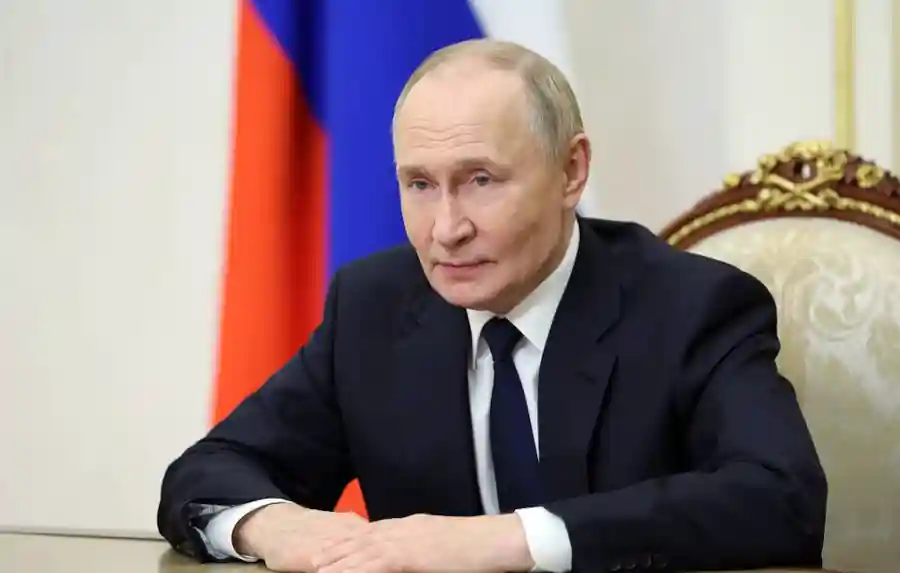
On 30 April 2026, amid escalating tensions in the Persian Gulf and the broader Middle East, a significant diplomatic development unfolded when Russian President Vladimir Putin expressed support for US President Donald Trump’s decision to extend a ceasefire involving Iran. The statement, delivered in Moscow and relayed through Kremlin aide Yury Ushakov, came at a moment marked by recent US-Israeli strikes on Iran and heightened fears of a wider regional conflict. The extension of the ceasefire was framed not merely as a tactical pause in hostilities but as an opportunity to revive negotiations and restore a measure of stability to an increasingly volatile geopolitical landscape.
According to Ushakov’s briefing on April 29, the conversation between the two leaders focused heavily on the situation around Iran and the Gulf, reflecting the urgency and complexity of the crisis. Putin’s endorsement of Trump’s move was articulated in pragmatic terms, emphasizing that the continuation of the ceasefire could “give negotiations a chance” and help “stabilize the situation in general.” This marked a notable moment of alignment between Washington and Moscow, two powers whose relations have often been strained, particularly in the context of Middle Eastern conflicts since the early 21st century.
The backdrop to this diplomatic exchange includes a recent phase of military confrontation involving Iran, in which US-Israeli coordinated strikes targeted strategic installations believed to be linked to Iran’s defense and nuclear infrastructure. These operations, while not unprecedented, represented a significant escalation in 2026, drawing comparisons to earlier confrontations such as the 2019 tanker incidents in the Gulf and the 2020 assassination of Iranian General Qassem Soleimani in Baghdad. The latest strikes prompted immediate retaliation threats from Tehran, raising concerns among regional actors including Saudi Arabia, the United Arab Emirates, and Turkey.
In this context, Trump’s decision to extend the ceasefire appears to have been influenced by both military assessments and diplomatic calculations. Ushakov noted that Trump provided Putin with his “assessment of the outcome of the recent phase of military confrontation,” suggesting that the US administration viewed the strikes as having achieved certain strategic objectives without necessitating further immediate escalation. At the same time, Trump reportedly acknowledged the “difficult situation facing Iran and its leadership,” an indication of awareness regarding the internal and external pressures confronting the Iranian government.
The phone call between Putin and Trump on April 29, 2026, marked their 12th conversation since Trump’s return to the White House in early 2025, underscoring the frequency of high-level communication during this period of renewed global tension. Their previous conversation on March 9, 2026, had already touched on issues related to regional security and energy markets, both of which are closely tied to developments in the Persian Gulf, a region that accounts for a significant share of the world’s oil supply.
Historically, Russia has maintained a complex relationship with Iran, characterized by strategic cooperation in areas such as Syria and energy, alongside cautious balancing to avoid direct confrontation with Western powers. Putin’s support for the ceasefire extension can thus be seen as consistent with Moscow’s longstanding interest in preventing large-scale conflict in the region, which could disrupt global markets and undermine Russia’s own geopolitical positioning. By backing the ceasefire, Russia positions itself as a mediating force, potentially enhancing its diplomatic leverage in any future negotiations involving Iran, the United States, and regional stakeholders.
The economic dimension of the conflict is also significant. Acting Pentagon Comptroller Jules Hurst disclosed that the United States has spent approximately $25 billion on military operations against Iran to date, a figure that highlights the scale and intensity of the ongoing engagement. This expenditure reflects not only direct operational costs but also the broader logistical and strategic commitments required to sustain a military presence in the region. Historically, such financial burdens have influenced US policy decisions, as seen in the gradual drawdown of forces in Iraq and Afghanistan during the 2010s and early 2020s.
From a chronological perspective, the events of late April 2026 can be understood as part of a longer trajectory of US-Iran tensions dating back to the 1979 Iranian Revolution, the subsequent hostage crisis, and decades of sanctions, proxy conflicts, and intermittent diplomacy. The Joint Comprehensive Plan of Action (JCPOA) signed in 2015, and its later unraveling, remains a key reference point in discussions about Iran’s nuclear ambitions and the international community’s efforts to contain them. The current ceasefire, while limited in scope, echoes earlier attempts at de-escalation, such as the temporary agreements reached during the Iran-Iraq War (1980–1988) and later diplomatic initiatives in the Gulf.
Geographically, the Persian Gulf remains central to these developments, serving as both a strategic chokepoint and a symbol of regional rivalry. Control over shipping lanes, particularly the Strait of Hormuz, has long been a focal point of contention, with any disruption carrying global economic implications. The recent ceasefire extension reduces the immediate risk of maritime incidents, which had surged during the weeks preceding April 30, 2026, when reports of drone activity and naval confrontations heightened alarm among international observers.
Politically, the alignment between Putin and Trump on this issue may signal a temporary convergence of interests rather than a broader shift in relations. Both leaders have, at different times, advocated for strong national sovereignty, pragmatic diplomacy, and a cautious approach to prolonged military entanglements. Their shared support for the ceasefire could thus be interpreted as a reflection of these overlapping priorities, even as disagreements persist on other aspects of international policy.
The emphasis on negotiations as a pathway forward is particularly noteworthy. While no formal talks have been announced as of April 30, 2026, the extension of the ceasefire creates a window for potential diplomatic engagement, whether through direct US-Iran channels or via intermediaries such as Russia, China, or European states. Historically, such windows have been fleeting, often closing as quickly as they open due to shifts in political will or unforeseen incidents on the ground.
The events surrounding Putin’s approval of Trump’s ceasefire decision represent a moment of cautious optimism within a broader pattern of conflict and competition. The interplay of military action, economic cost, and diplomatic maneuvering continues to shape the trajectory of the crisis, with outcomes that will likely influence not only the immediate region but also the global balance of power in the years to come.
Sarvertapedia Conceptual Node: Putin Approves Trump’s Ceasefire Extension Around Iran (April 2026)
This node represents a diplomatic convergence between Vladimir Putin and Donald Trump, centered on the extension of a ceasefire involving Iran following US-Israeli strikes on Iran in late April 2026. It links military escalation with attempts at strategic stabilization through negotiation.
Cluster: US–Iran Conflict Continuum
US-Israeli Strikes on Iran (April 2026)
- Connected to: Ceasefire Extension Decision, Military Expenditure ($25 billion), Persian Gulf Security
- See also: Assassination of Qassem Soleimani, Iran tanker incidents
- Conceptual link: escalation → deterrence → negotiation window
Iranian Strategic Position
- Connected to: Leadership Pressure, Regional Alliances, Nuclear Program Context
- See also: Iranian Revolution, Joint Comprehensive Plan of Action
- Conceptual link: sovereignty vs international pressure
- Non-Proliferation of Nuclear Weapons
Cluster: US–Russia Diplomatic Interaction
Putin–Trump Communications (2025–2026)
- Connected to: 12th Phone Call (April 29, 2026), March 9, 2026 Call
- See also: White House, Kremlin
- Conceptual link: bilateral diplomacy during crisis cycles
Role of Yury Ushakov
- Connected to: Kremlin Messaging, Policy Interpretation
- See also: Yury Ushakov
- Conceptual link: mediation of executive communication
Cluster: Military–Economic Dimensions
US Military Spending on Iran Operations
- Connected to: $25 Billion Estimate, Operational Sustainability
- See also: Pentagon
- Conceptual link: cost-benefit analysis in prolonged engagements
Strategic Outcomes of Limited Strikes
- Connected to: Trump’s Assessment, Deterrence Strategy
- See also: Air Campaign Doctrine, Precision Strike Policy
- Conceptual link: achieving objectives without full-scale war
Cluster: Persian Gulf Geopolitics
Persian Gulf Security Framework
- Connected to: Ceasefire Stability, Naval Risk Reduction
- See also: Persian Gulf, Strait of Hormuz
- Conceptual link: global energy security dependency
Regional Actors
- Connected to: Saudi Arabia, UAE, Turkey Responses
- See also: Saudi Arabia, United Arab Emirates, Turkey
- Conceptual link: proxy alignment and strategic balancing
Cluster: Ceasefire and Negotiation Dynamics
Ceasefire as Diplomatic Instrument
- Connected to: Negotiation Opportunity, Conflict De-escalation
- See also: Armistice Theory, Conflict Resolution Models
- Conceptual link: temporary pause enabling structured dialogue
Prospects for Negotiations (Post-April 2026)
- Connected to: Russian Mediation Role, Multilateral Talks
- See also: China, European Union Diplomatic Channels
- Conceptual link: multipolar negotiation frameworks
Historical Contextual Layer
Long-term US–Iran Relations
- Connected to: Sanctions Regimes, Proxy Conflicts
- See also: Iran hostage crisis
- Conceptual link: cyclical hostility and intermittent diplomacy
Iran-Iraq War Legacy (1980–1988)
- Connected to: Regional Militarization, Ceasefire Precedents
- See also: Iran-Iraq War
- Conceptual link: precedent for prolonged war ending via ceasefire
Cross-Link Summary
Central Interconnections
- Ceasefire Extension (2026) ↔ US-Israeli Strikes (2026) ↔ Negotiation Window
- Putin–Trump Dialogue ↔ Global Power Coordination ↔ Diplomacy, International Relations and Diplomatic Communication
- Military Spending ↔ Strategic Restraint Decisions
- Persian Gulf Stability ↔ Global Economic Impact
Conceptual Axes
- Escalation vs Stabilization
- Military Action vs Diplomatic Engagement
- Defense Manufacturing
- Regional Conflict vs Global Consequences
- American Law
- Jewish Library
- Historical Precedent vs Contemporary Strategy
- Contemporary World History