Encyclopedia of Ancient and Modern India
Encyclopedia of Contemporary Indian Politics
34 Years of Left Front Rule in West Bengal: A Complete Political Encyclopedia
This encyclopedic project sponsored by Sarvarthapedia examines Jyoti Basu, Buddhadeb Bhattacharjee, CPI(M) leadership, coalition politics, agrarian reform, industrial development, legislative proceedings, administrative institutions, and social movements. Across thirty-four annual volumes, Sarvarthapedia reconstructs the rise, consolidation, transformation, controversies, and electoral decline of one of India’s longest-running elected communist-led governments through historical documentation and cross-referenced political analysis.
Introduction to the 34-volume historical series
The political history of West Bengal between 1977 and 2011 occupies a distinctive place in the history of parliamentary democracy, communist politics, coalition government and social transformation. For thirty-four years, the Communist Party of India (Marxist)-led Left Front governed the state through successive electoral victories, making West Bengal one of the most important examples of a communist-led political formation exercising prolonged power within a constitutional, multiparty democratic system. The government did not emerge in a political vacuum. It inherited a society shaped by colonial economic structures, Partition, refugee displacement, agrarian inequality, industrial unrest, ideological conflict and the turbulent politics of the 1960s and 1970s. Its arrival in office in 1977 marked not merely a change of government but the beginning of a sustained experiment in the relationship between class politics, electoral legitimacy, land reform, decentralised administration and the organisation of political power.
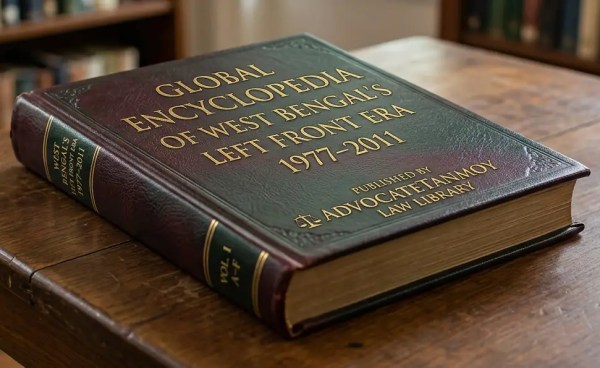
The Global Encyclopedia of West Bengal’s Left Front Era, 1977–2011 has been conceived as a comprehensive historical and political compendium of that experience. Its purpose is to reconstruct the period year by year, examining the people, institutions, policies, legislative proceedings, party decisions, social movements and conflicts through which the Left Front established, exercised, transformed and eventually lost power. The encyclopedia will not treat the period as a single, undifferentiated episode of communist rule. It will investigate the changes that occurred within the regime itself: the passage from opposition politics to government, from agrarian mobilisation to institutional consolidation, from electoral confidence to organisational rigidity, and from the search for industrial renewal to the political crisis that culminated in the 2011 Assembly election.
The choice of an annual structure is fundamental to this undertaking. Political systems rarely rise or decline because of one isolated decision. Their development is cumulative. A land policy adopted in one year may transform rural relationships over a decade; an administrative practice may gradually become a political convention; a successful electoral strategy may eventually produce institutional complacency; and a development policy intended to revive an economy may generate resistance when it collides with established livelihoods and expectations. The meaning of 1977 can only be fully understood in relation to 2011, just as the defeat of 2011 cannot be explained without reconstructing the preceding thirty-four years. Each volume therefore forms an independent historical account while contributing to the interpretation of the entire period.
The first six volumes establish the foundations of the Left Front state. Volume 1, covering 1977, examines the formation of the first government under Jyoti Basu, the composition of the coalition, the appointment of ministers, the initial cabinet decisions and the political circumstances in which the new administration assumed responsibility. The volume must investigate the transition from the politics of agitation to the obligations of constitutional government. It must also document the expectations placed upon the new administration by workers, peasants, refugees, political activists and sections of the urban middle class. The central problem was how a political formation committed to socialist transformation would exercise authority within the constitutional and economic framework of the Indian Union.
Volume 2, devoted to 1978, examines the two programmes that became closely associated with the early Left Front years: Operation Barga and the strengthening of Panchayati Raj institutions. The registration and protection of sharecroppers, the redistribution of vested land and the institutionalisation of elected rural government altered the relationship between cultivators, landholders and the state. These measures also helped establish a durable political connection between the government and sections of the rural population. Their importance, however, must be assessed through implementation records, landholding patterns, agricultural outcomes and the experiences of beneficiaries, not merely through official declarations. Volume 3, covering 1979, follows the consequences of agrarian reform into rural administration, tenancy disputes, agricultural wages, land records, credit and peasant organisation. It investigates whether the early redistribution of power produced a lasting transformation in the economic position of rural households.
Volume 4, covering 1980, turns to industrial relations, trade unions, public-sector enterprises and the organisation of labour. It examines the tensions between workers’ demands, industrial management, production, investment and the long-term viability of employment. Volume 5, covering 1981, considers coalition expansion, regional identity, Centre–state relations and the political management of regional demands, including the emerging question of Darjeeling. Volume 6, covering 1982, examines the Assembly election and the consolidation of the second Left Front government. Together, these volumes investigate the conversion of an electoral victory into a durable governing system and the emergence of an institutional relationship among party organisation, cabinet government and local political structures.
Volumes 7 to 11 cover 1983–1987, when the Left Front’s governing arrangements became increasingly established. Volume 7 examines the relationship between party committees, panchayats, peasant organisations, local administration and the distribution of public resources. It asks how political authority operated beyond the formal boundaries of government departments. Volume 8 places West Bengal within the national political changes of 1984, examining the Lok Sabha election, relations with the Union government, infrastructure and industrial policy. Volume 9 investigates municipal institutions, urban services, housing, transport and the problems of governing Kolkata and other growing urban centres. Volume 10 examines education, teachers’ organisations, universities, student politics, youth mobilisation and the expectations generated by expanded educational access. Volume 11, covering 1987, studies the third consecutive Assembly victory and the political conditions underlying the Left Front’s continuing electoral strength. These years require an examination of both the achievements of institutional continuity and the risks inherent in a political system whose leading organisation increasingly shaped the institutions through which local life was administered.
Volumes 12 to 15, covering 1988–1991, examine regional conflict, leadership transition and the changing national economic environment. Volume 12 investigates the Gorkhaland movement, the Gorkha National Liberation Front and the agreement establishing the Darjeeling Gorkha Hill Council. It explores the possibilities and limitations of regional autonomy within the state. Volume 13 considers the 1989 general election, national opposition politics and the changing relationship between the Left Front and regional political forces. Volume 14 documents the death of Saroj Mukherjee in 1990 and the organisational succession that followed, examining how party leadership, administrative continuity and coalition management interacted. Volume 15, covering 1991, studies the fourth Left Front government against the background of India’s economic liberalisation. The central issue is the changing relationship between socialist political commitments and the economic requirements of investment, employment, infrastructure and industrial renewal.
Volumes 16 to 20, spanning 1992–1996, examine the mature regime and the emerging questions of governance, accountability and social performance. Volume 16 studies the state’s response to the post-liberalisation economy, including industry, agriculture, urban administration and public finance. Volume 17 examines the 21 July 1993 police firing, protest politics, policing, civil liberties and questions of executive responsibility. Volume 18 investigates education, health, government employment and the delivery of public services. Volume 19 considers human rights institutions, security controversies and the Purulia arms-drop case, distinguishing allegations, official findings and established legal outcomes. Volume 20 examines the fifth Left Front government, elected in 1996, and the question of political renewal after nearly two decades of continuous rule. Across these volumes, the encyclopedia must determine how far institutional durability translated into administrative effectiveness, social development and public accountability.
Volumes 21 to 24 cover 1997–2000, a period in which the limitations of the earlier economic model and the search for a new industrial direction became increasingly important. Volume 21 returns to agrarian Bengal, examining productivity, fragmented holdings, rural employment, land distribution and the long-term position of small cultivators. Volume 22 studies industrial revival, factory closures, investment, labour relations and the emergence of the Trinamool Congress as a significant opposition force. Volume 23 examines Kolkata’s urban transformation, municipal government, infrastructure, information technology and the growing importance of urban redevelopment. Volume 24 records the transition from Jyoti Basu to Buddhadeb Bhattacharjee in 2000. This succession was more than a change of chief minister. It raised questions about generational renewal, administrative modernisation, industrial policy and the capacity of a long-established political organisation to respond to a changing economy.
Volumes 25 to 30, covering 2001–2006, examine the reformist turn of the Buddhadeb Bhattacharjee government. Volume 25 analyses the sixth Left Front government’s electoral mandate and its efforts to promote investment, information technology and industrial expansion. Volume 26 investigates infrastructure, power supply, capital formation, employment and the political economy of development. Volume 27 examines industrial restructuring, labour relations and the changing relationship between the state and private capital. Volume 28 places West Bengal within the national political realignment of 2004 and considers the implications for state development strategy. Volume 29 focuses on land acquisition, compensation, rehabilitation and the competing claims of industrial development and agrarian security. Volume 30, covering 2006, examines the Left Front’s decisive Assembly victory and the beginning of the Singur industrialisation controversy surrounding the proposed Tata Motors Nano factory. The volume must investigate the assumptions behind the government’s development strategy, the administrative decisions through which it was pursued, and the concerns of landowners, cultivators and other affected residents.
The next three volumes reconstruct the crisis of the regime. Volume 31, covering 2007, centres on Nandigram, the proposed chemical hub, opposition to land acquisition, the police firing of 14 March and the subsequent political consequences. It examines the conduct of the administration, the actions of political organisations, the experiences of affected communities and the wider debate over consent, public order and state authority. Volume 32, covering 2008, studies the Singur dispute, the withdrawal of the Tata Motors project, the Left Front’s setbacks in panchayat elections and the changing political climate in rural Bengal. It also examines Lalgarh and the security and political challenges associated with Maoist activity. The volume must explore the relationship between local grievances and the weakening of the party’s established rural support. Volume 33, covering 2009, investigates the Lok Sabha election setback, the expansion of the Trinamool Congress, the changing opposition coalition and the erosion of the Left Front’s parliamentary dominance. These developments must be examined not as isolated electoral reversals but as evidence of a broader change in political allegiance and organisational effectiveness.
Volume 34 covers 2010–2011, bringing the historical narrative to its conclusion. It examines the municipal election results of 2010, the final months of the Buddhadeb Bhattacharjee government and the Assembly election of 2011, which ended the Left Front’s uninterrupted tenure. The volume studies the role of Mamata Banerjee and the Trinamool Congress, the political consequences of Singur and Nandigram, the condition of the CPI(M)’s organisational network, and the reasons the coalition could no longer sustain its earlier electoral dominance. The final account must distinguish the immediate causes of defeat from the longer processes that made the defeat possible. It must also consider the transfer of power and the subsequent historical interpretation of the Left Front era.
The encyclopedia’s scope extends beyond chief ministers and party leaders. Its subject is the entire political society of West Bengal under Left Front rule. It must document ministers, legislators, party officials, district committees, trade unions, peasant organisations, student bodies, women’s organisations, civil servants, local representatives, opposition parties, social movements and affected communities. Legislative proceedings must be reconstructed from Assembly debates, bills, Acts, questions, committee reports and government notifications. Party proceedings must be examined through resolutions, conference documents and contemporary statements. Social movements must be documented through their demands, leadership, organisational structures, participants, state responses and outcomes. Where disputes remain contested, the encyclopedia must identify the competing claims and the evidence available to assess them.
The same discipline must govern its economic and social history. Land reform and decentralisation deserve close examination because they were central to the Left Front’s early achievements and political legitimacy. Their consequences must nevertheless be assessed alongside agricultural productivity, rural inequality, employment, education, health, industrial development, migration and the condition of marginalised communities. The political significance of panchayats cannot be understood solely through their electoral structure; it also requires investigation of how authority, public resources and opportunities for participation operated in practice. Equally, the industrialisation strategy of the final years cannot be understood merely as a contest between investment and protest. It requires examination of land rights, compensation, administrative procedure, public consent, employment expectations and the credibility of government commitments. Scholarship on the period has emphasised both the transformative promise of early reforms and the later strains of party–state relations, patronage and economic stagnation.
The work will therefore maintain a distinction between documented fact, contemporary allegation, party interpretation, official finding and historical judgement. No political organisation’s account will substitute for documentary verification. No allegation will be presented as a proven offence merely because it became influential in public debate. No official achievement will be accepted without examining implementation and results. The record of the CPI(M) and its coalition partners must be treated with the same evidentiary discipline as the record of their opponents. Such a method does not require political neutrality in the sense of avoiding conclusions; it requires conclusions to be proportionate to the evidence.
The final purpose is to establish a durable historical record of a distinctive experiment in Indian government. The Left Front’s rise, its agrarian reforms, its system of decentralised administration, its long electoral success, its industrial policy, its internal institutional relationships and its eventual defeat all belong to the same history. The thirty-four volumes will make it possible to trace these developments without reducing the period either to a narrative of communist achievement or to an indictment of communist rule.
The central question is not simply why the Left Front remained in power for thirty-four years, nor merely why it lost power in 2011. It is how the institutions, policies, social relationships and political practices that sustained its government were created, how they changed over time, and why they ultimately ceased to secure the same degree of public confidence. By answering that question through annual reconstruction, documentary research and cross-referenced analysis, the Global Encyclopedia of West Bengal’s Left Front Era, 1977–2011 seeks to become a lasting reference work on the history of political power, democratic governance and social transformation in modern West Bengal.
Sarvarthapedia: Cross-Referenced Conceptual Network
Global Encyclopedia of West Bengal’s Left Front Era, 1977–2011
A 34-Volume Political, Institutional, Legislative and Socio-Economic Knowledge System
The Global Encyclopedia of West Bengal’s Left Front Era, 1977–2011 is connected to a wider network of concepts concerning political power, communist ideology, electoral democracy, agrarian transformation, party organisation, state administration, industrial development, social movements and the historical decline of governing systems.
Its central subject is the CPI(M)-led Left Front government’s thirty-four-year tenure, from its establishment in 1977 to its electoral defeat in 2011. The conceptual network connects the annual volumes to one another and to the institutional, legal, economic and social structures that shaped the period.
The network is organised around interconnected nodes, thematic clusters and cross-referenced concepts. Each node can function as an independent Sarvarthapedia article while linking to related entries across the encyclopedia.
1. Central Node: The Left Front Era, 1977–2011
Core concept: The political, institutional and socio-economic history of West Bengal under the CPI(M)-led Left Front government.
The central node connects seven principal dimensions:
- Political power: government formation, leadership, coalition management and electoral legitimacy.
- Party and state: the relationship between CPI(M) organisation, the Left Front coalition and constitutional institutions.
- Agrarian transformation: Operation Barga, land redistribution, tenancy and rural political mobilisation.
- Labour and industrial economy: trade unions, industrial relations, investment and employment.
- Governance and legislation: the Legislative Assembly, cabinet, bureaucracy, panchayats and municipalities.
- Society and political movements: farmers, workers, students, women, regional movements and civil society.
- Political transformation and decline: industrialisation controversies, changing electoral coalitions and the transfer of power in 2011.
See also
- Political History of West Bengal
- Communist Party of India (Marxist)
- Left Front Government of West Bengal
- Jyoti Basu
- Buddhadeb Bhattacharjee
- Parliamentary Democracy in India
- Coalition Government
- State Government and Political Power
- Electoral Legitimacy
- Political Economy of West Bengal
- Singur Land Acquisition Controversy
- Nandigram Violence
- 2011 West Bengal Legislative Assembly Election
2. Cluster A: Historical Foundations and Government Formation
Central question: How did the Left Front come to power, and what political conditions enabled it to establish a durable government?
Core nodes
- West Bengal Before 1977
- The Emergency and Indian Politics
- The 1977 West Bengal Assembly Election
- Formation of the First Left Front Government
- Jyoti Basu and the First Cabinet
- CPI(M) Political Organisation
- Left Front Coalition Agreement
- Congress and Opposition Politics
- Refugee Politics and Partition
- Agrarian Inequality and Rural Conflict
- Industrial Unrest in Postcolonial Bengal
Cross-reference network
West Bengal Before 1977 → Agrarian Inequality → Peasant Mobilisation → CPI(M) Expansion → 1977 Assembly Election → Left Front Government Formation.
The Emergency → Opposition Consolidation → Electoral Realignment → 1977 Election → Jyoti Basu Government.
Partition and Refugee Politics → Land and Housing Demands → Urban and Rural Political Mobilisation → Left Front’s Social Base.
CPI(M) Organisation → Left Front Coalition → Cabinet Formation → Administrative Authority → Electoral Consolidation.
See also
- Communist Movement in India
- Naxalbari Movement
- United Front Governments in West Bengal
- Indian Emergency, 1975–1977
- West Bengal Congress Politics
- Political Mobilisation and Class
- Electoral Realignment
3. Cluster B: Communist Party, Coalition and Political Organisation
Central question: How did party organisation interact with the formal machinery of government?
Core nodes
- Communist Party of India (Marxist)
- CPI(M) West Bengal State Committee
- CPI(M) State Conferences
- CPI(M) Party Congresses
- District Party Committees
- Local Party Committees
- Left Front Coordination Committee
- Coalition Negotiations
- Cabinet and Party Relations
- Political Cadres and Local Administration
- Trade Union Organisations
- Peasant Organisations
- Party Discipline and Internal Democracy
- Political Patronage and Organisational Networks
Cross-reference network
CPI(M) State Committee → District Committees → Local Party Organisation → Cadre Networks → Political Mobilisation.
Left Front Coordination Committee → Constituent Parties → Coalition Negotiation → Seat Allocation → Cabinet Stability.
Party Organisation → Panchayat Representation → Local Administration → Public Resource Allocation → Political Accountability.
Cabinet Decisions ↔ Party Resolutions ↔ Legislative Proceedings ↔ Departmental Implementation.
The network should distinguish the constitutional authority of the government from the organisational authority of the party. Their relationship is a central subject for historical investigation, especially where party influence, administrative discretion and public accountability intersect.
See also
- Democratic Centralism
- Communist Party Organisation
- Political Cadres
- Party-State Relations
- Coalition Politics
- Intra-Party Democracy
- Political Patronage
- Organisational Continuity
- Political Accountability
4. Cluster C: Land Reform, Operation Barga and Agrarian Society
Central question: How did land reform alter rural property relations, agricultural production and political participation?
Core nodes
- Operation Barga
- Bargadars and Sharecroppers
- Land Ceiling Legislation
- Vesting of Surplus Land
- Distribution of Vested Land
- Tenancy Rights
- Agricultural Labour
- Rural Credit
- Agricultural Productivity
- Land Records and Revenue Administration
- Small and Marginal Farmers
- Rural Class Relations
- Peasant Organisations
- Agrarian Political Mobilisation
Cross-reference network
Operation Barga → Sharecropper Registration → Tenancy Security → Bargadar Rights → Rural Political Participation.
Land Ceiling Laws → Vested Land → Land Distribution → Changes in Landholding → Rural Social Relations.
Panchayati Raj ↔ Agrarian Reform ↔ Local Administration ↔ Rural Development ↔ Electoral Participation.
Agricultural Reform → Farm Productivity → Rural Employment → Agricultural Income → Rural Poverty and Inequality.
Land Reform → Rural Political Consolidation → Long-Term Electoral Support → Changing Rural Expectations.
These relationships should be assessed through legislation, implementation records, agricultural data, landholding evidence and historical scholarship. The network must distinguish the intended objectives of agrarian reform from its measured outcomes.
See also
- West Bengal Land Reforms Act
- Operation Barga
- Bargadar Registration
- Land Redistribution
- Agricultural Tenancy
- Rural Class Structure
- Panchayati Raj in West Bengal
- Agricultural Productivity
- Agrarian Political Economy
- Rural Development
5. Cluster D: Panchayati Raj and Decentralised Governance
Central question: How did elected local government redistribute administrative responsibility and political influence?
Core nodes
- Three-Tier Panchayati Raj
- Gram Panchayat
- Panchayat Samiti
- Zilla Parishad
- Panchayat Elections
- Rural Development Planning
- Local Public Finance
- Local Infrastructure
- District Administration
- Elected Representatives
- Local Party Networks
- Decentralised Public Services
- Political Participation
- Accountability in Local Government
Cross-reference network
Panchayat Elections → Local Representation → Development Planning → Public Expenditure → Service Delivery.
Panchayati Raj ↔ Operation Barga ↔ Rural Political Mobilisation ↔ CPI(M) Organisation.
Local Government → District Administration → State Government Departments → Implementation of Public Policy.
Decentralisation ↔ Administrative Accountability ↔ Public Participation ↔ Political Competition.
Panchayat Institutions → Local Political Dominance → Electoral Resistance → Panchayat Setbacks of 2008.
The final connection is especially important: the same local institutions that helped consolidate the Left Front’s rural position must also be examined in relation to the changing political loyalties that became visible in its later years.
See also
- 73rd Constitutional Amendment
- Local Self-Government
- Democratic Decentralisation
- Rural Development Administration
- Gram Sabha
- District Planning
- Local Government Finance
- Political Representation
- Panchayat Elections in West Bengal
6. Cluster E: Trade Unions, Industrial Relations and Labour Politics
Central question: How did the Left Front’s relationship with organised labour influence industrial performance, employment and political identity?
Core nodes
- Trade Union Movement in West Bengal
- Centre of Indian Trade Unions
- Industrial Labour
- Factory Employment
- Industrial Disputes
- Strikes and Lockouts
- Labour Legislation
- Public-Sector Enterprises
- Factory Closures
- Small-Scale Industries
- Industrial Investment
- Labour Productivity
- Industrial Relations
- Worker Political Mobilisation
Cross-reference network
CPI(M) Labour Politics → Trade Union Organisation → Collective Bargaining → Industrial Relations → Production and Employment.
Trade Union Strength ↔ Worker Protection ↔ Industrial Costs ↔ Investment Decisions ↔ Industrial Competitiveness.
Factory Closures → Employment Losses → Labour Displacement → Economic Insecurity → Political Dissatisfaction.
Industrial Decline → Search for Investment → Industrial Policy Reform → Private Capital → Land Acquisition Controversies.
The network should avoid assuming that trade unions alone explain industrial decline. Industrial performance must be investigated alongside infrastructure, investment conditions, labour productivity, national economic restructuring, management decisions and state policy.
See also
- Trade Unionism in India
- Centre of Indian Trade Unions
- Industrial Disputes Act, 1947
- Industrial Relations
- Public-Sector Industry
- Deindustrialisation
- Employment and Unemployment
- Labour Rights
- Political Economy of Industrial Development
7. Cluster F: Industrialisation, Investment and Land Acquisition
Central question: Why did the renewed industrialisation strategy become a defining political conflict during the final phase of Left Front rule?
Core nodes
- Buddhadeb Bhattacharjee’s Industrial Policy
- Industrial Investment
- Industrial Infrastructure
- Tata Motors Nano Project
- Singur Land Acquisition
- Nandigram Chemical Hub Proposal
- Land Acquisition and Compensation
- Rehabilitation and Resettlement
- Farmers’ Rights
- Industrial Employment
- Private Capital and the State
- Public Consultation
- Local Consent
- Development and Displacement
Cross-reference network
Industrial Decline → Industrial Revival Strategy → Investment Proposals → Land Requirements → Land Acquisition.
Singur → Tata Motors Project → Land Acquisition → Farmers’ Opposition → Political Mobilisation → Withdrawal of the Project.
Nandigram → Proposed Chemical Hub → Resistance to Land Acquisition → Police Action → Civil Society Mobilisation → Political Crisis.
Industrialisation ↔ Agricultural Livelihoods ↔ Land Rights ↔ Compensation ↔ Rehabilitation ↔ Public Legitimacy.
Development Policy → Administrative Implementation → Public Consent → Political Response → Electoral Consequences.
This cluster should connect economic policy to the legal, social and political dimensions of land. It should also distinguish the Singur and Nandigram cases, which involved different projects, circumstances and sequences of events.
See also
- Singur Land Acquisition Controversy
- Nandigram Violence
- Land Acquisition Act, 1894
- Land Acquisition, Rehabilitation and Resettlement
- Industrial Policy of West Bengal
- Tata Motors Nano Project
- Farmers’ Rights
- Development-Induced Displacement
- Public Consultation
- Economic Development and Social Conflict
8. Cluster G: Legislature, Law and Administrative Institutions
Central question: How did the Left Front exercise governmental authority through legislation, executive decisions and public administration?
Core nodes
- West Bengal Legislative Assembly
- Legislative Bills and Acts
- Assembly Questions
- Budget and Appropriation
- Cabinet Decisions
- Chief Minister’s Office
- State Secretariat
- Government Departments
- Civil Services
- District Magistrates
- Police Administration
- Municipal Administration
- Government Notifications
- Judicial Review
- Statutory Commissions
- Public Accountability
Cross-reference network
Election Results → Legislative Composition → Cabinet Formation → Government Programme → Legislative Proceedings.
Assembly Debates → Bills → Acts → Rules and Notifications → Administrative Implementation.
Budget → Departmental Allocations → Public Expenditure → Programme Delivery → Performance Assessment.
Executive Authority ↔ Constitutional Limitations ↔ Judicial Review ↔ Legislative Oversight.
Police Administration → Public Order → Protest Management → Civil Liberties → Accountability.
Every major legislative entry should link to its relevant bill, enacted law, amendment, rule, notification and subsequent judicial interpretation where applicable.
See also
- Constitution of India
- Legislative Procedure
- State Legislature
- Executive Government
- Civil Service Administration
- Judicial Review
- Administrative Law
- Public Finance
- Police Accountability
- Rule of Law
9. Cluster H: Social Movements, Regional Identity and Civil Society
Central question: How did social groups organise around political representation, economic interests, regional identity and civil liberties?
Core nodes
- Peasant Movements
- Trade Union Movements
- Student Politics
- Teachers’ Organisations
- Women’s Movements
- Refugee Organisations
- Tribal Communities
- Religious Minorities
- Darjeeling Gorkhaland Movement
- Gorkha National Liberation Front
- Civil Society Organisations
- Human Rights Campaigns
- Political Protest
- Opposition Mobilisation
- Media and Public Opinion
Cross-reference network
Regional Identity → Gorkhaland Movement → Regional Autonomy → Darjeeling Gorkha Hill Council.
Student Politics ↔ University Governance ↔ Teachers’ Organisations ↔ Education Policy.
Women’s Organisations → Political Representation → Labour Participation → Social Policy.
Civil Society → Public Protest → Media Coverage → Government Response → Public Accountability.
Peasant Organisations ↔ Land Reform ↔ Rural Administration ↔ Agrarian Conflict.
This cluster should record the changing relationship between independent social organisations and party-affiliated movements, without assuming that every organisation acted under the control of a political party.
See also
- Gorkhaland Movement
- Darjeeling Gorkha Hill Council
- Civil Society in India
- Student Movements
- Women’s Political Participation
- Refugee Rehabilitation in West Bengal
- Tribal Rights
- Minority Representation
- Social Movements and the State
- Regional Autonomy
10. Cluster I: Education, Health and Human Development
Central question: What changes occurred in public services and human development during the Left Front era?
Core nodes
- School Education
- Higher Education
- University Administration
- Teachers’ Employment
- Student Organisations
- Public Health Services
- Rural Healthcare
- Maternal and Child Health
- Literacy
- Public Distribution System
- Social Welfare
- Poverty Reduction
- Public Employment
- Human Development Indicators
Cross-reference network
Government Expenditure → Education and Health Budgets → Public Institutions → Service Delivery → Human Development Outcomes.
Education Policy → Literacy → Higher Education → Employment Expectations → Youth Politics.
Rural Development ↔ Public Health ↔ Local Government ↔ Poverty and Inequality.
Social Welfare → Beneficiary Identification → Administrative Implementation → Access and Exclusion.
The encyclopedia should compare policy commitments with measurable outcomes, including regional differences, access to services, quality of provision and changes over time.
See also
- Human Development in West Bengal
- Education Policy in India
- Public Health Administration
- Literacy and Social Change
- Poverty and Inequality
- Public Distribution System
- Social Welfare Programmes
- Rural Healthcare
- Education and Political Participation
11. Cluster J: Policing, Civil Liberties and Political Accountability
Central question: How did the government respond to protest, political violence, security threats and demands for accountability?
Core nodes
- Police Administration in West Bengal
- Political Violence
- 21 July 1993 Police Firing
- Civil Liberties
- Public Protest
- State Human Rights Commission
- Purulia Arms-Drop Case
- Law Enforcement
- Executive Responsibility
- Judicial Proceedings
- Commission Inquiries
- Political Accountability
- Freedom of Assembly
- Public Order
Cross-reference network
Political Protest → Police Response → Injuries and Deaths → Investigation → Judicial or Commission Proceedings → Accountability.
Civil Liberties ↔ Freedom of Assembly ↔ Public Order ↔ Police Powers ↔ Constitutional Rights.
Purulia Arms-Drop Case → Security Investigation → National Institutions → Legal Proceedings → Public Debate.
Political Violence → Party Responsibility Questions → Administrative Response → Public Confidence → Electoral Consequences.
Each entry must differentiate allegations, investigation findings, judicial conclusions and political interpretations. The network should never treat a contested claim as a proven fact without supporting evidence.
See also
- Fundamental Rights in India
- Article 19 of the Constitution
- Police Powers and Accountability
- State Human Rights Commission
- Judicial Commissions of Inquiry
- Political Violence in West Bengal
- Freedom of Assembly
- Public Order and Civil Liberties
- Criminal Investigation and Evidence
12. Cluster K: Elections, Opposition and the Decline of the Left Front
Central question: Why did a coalition that repeatedly won elections eventually lose its governing position?
Core nodes
- 1977 Assembly Election
- 1982 Assembly Election
- 1987 Assembly Election
- 1991 Assembly Election
- 1996 Assembly Election
- 2001 Assembly Election
- 2006 Assembly Election
- 2008 Panchayat Elections
- 2009 Lok Sabha Election
- 2010 Municipal Elections
- 2011 Assembly Election
- Trinamool Congress
- Mamata Banerjee
- Electoral Realignment
- Rural Political Change
- Opposition Consolidation
- Leadership Succession
- Electoral Decline
Cross-reference network
Land Reform → Rural Political Support → Repeated Electoral Victories → Institutional Consolidation.
Long-Term Government → Leadership Continuity → Organisational Entrenchment → Challenges of Renewal.
Industrialisation Strategy → Singur and Nandigram → Opposition Mobilisation → Panchayat Setbacks → Parliamentary Decline.
2008 Panchayat Elections → Rural Electoral Change → 2009 Lok Sabha Election → Opposition Consolidation.
2010 Municipal Elections → Urban Political Realignment → 2011 Assembly Election → Transfer of Power.
CPI(M) Leadership ↔ Buddhadeb Bhattacharjee ↔ Jyoti Basu’s Legacy ↔ Party Renewal ↔ Electoral Performance.
The final analysis should investigate economic, social, organisational and political explanations together rather than treating the 2011 defeat as the inevitable result of a single controversy.
See also
- Election Commission of India
- West Bengal Legislative Assembly Elections
- Trinamool Congress
- Mamata Banerjee
- Jyoti Basu
- Buddhadeb Bhattacharjee
- Electoral Behaviour
- Anti-Incumbency
- Political Realignment
- Electoral Geography
- Decline of Political Parties
13. Cluster L: Political Economy and the Long-Term Record
Central question: What was the cumulative effect of thirty-four years of Left Front government on West Bengal’s economy and society?
Core nodes
- Agricultural Growth
- Industrial Output
- Employment and Unemployment
- Public Investment
- Private Investment
- State Finances
- Infrastructure Development
- Urbanisation
- Rural Poverty
- Income Distribution
- Migration
- Human Development
- Industrial Competitiveness
- Public Service Delivery
- Regional Economic Inequality
Cross-reference network
Land Reform → Agricultural Structure → Rural Income → Poverty and Inequality.
Labour Policy → Industrial Relations → Investment Conditions → Employment → Household Welfare.
Public Finance → Infrastructure and Services → Productivity → Economic Growth.
Industrial Policy ↔ Land Acquisition ↔ Agricultural Livelihoods ↔ Investment ↔ Employment.
Human Development ↔ Education ↔ Health ↔ Labour Productivity ↔ Household Income.
Economic Performance → Voter Expectations → Government Evaluation → Electoral Behaviour.
This cluster should use comparable statistical series and explain changes in measurement, data coverage and national economic conditions. It should distinguish correlation from causation and avoid attributing every economic outcome exclusively to the state government.
See also
- Political Economy of West Bengal
- Agricultural Economics
- Industrial Development
- State Finances in India
- Employment Statistics
- Poverty Measurement
- Income Inequality
- Economic Liberalisation in India
- Urbanisation
- Migration and Labour Markets
- Human Development
14. Cluster M: Leadership, Succession and Historical Memory
Central question: How did the leadership of Jyoti Basu and Buddhadeb Bhattacharjee reflect different phases of the Left Front’s political development?
Core nodes
- Jyoti Basu
- Buddhadeb Bhattacharjee
- Saroj Mukherjee
- Sailen Dasgupta
- CPI(M) State Leadership
- Cabinet Leadership
- Generational Succession
- Party Renewal
- Political Legacy
- Leadership and Electoral Strategy
- Left Front Historical Memory
Cross-reference network
Jyoti Basu → Government Formation → Agrarian Reform → Coalition Stability → Long-Term Political Dominance.
Buddhadeb Bhattacharjee → Leadership Transition → Industrial Modernisation → Land Acquisition Controversies → Electoral Defeat.
Saroj Mukherjee → Party Organisation → Leadership Succession → Coalition Continuity.
Leadership Renewal ↔ Party Structure ↔ Policy Change ↔ Public Confidence ↔ Electoral Outcomes.
See also
- Political Leadership in India
- Communist Leadership
- Jyoti Basu’s Political Career
- Buddhadeb Bhattacharjee’s Government
- Political Succession
- Leadership and Institutional Continuity
- Historical Memory and Political Legacy
15. Cluster N: The 34-Volume Annual Chronology
The annual volumes form the chronological spine of the entire knowledge network.
| Volume | Year | Principal conceptual connection |
|---|---|---|
| 1 | 1977 | Government formation and political transition |
| 2 | 1978 | Operation Barga and Panchayati Raj |
| 3 | 1979 | Agrarian transformation |
| 4 | 1980 | Trade unions and industrial relations |
| 5 | 1981 | Regional identity and state autonomy |
| 6 | 1982 | Electoral consolidation |
| 7 | 1983 | Party organisation and rural administration |
| 8 | 1984 | National politics and infrastructure |
| 9 | 1985 | Urban governance |
| 10 | 1986 | Education and youth politics |
| 11 | 1987 | Electoral strength and institutional expansion |
| 12 | 1988 | Darjeeling and regional autonomy |
| 13 | 1989 | National political realignment |
| 14 | 1990 | Party leadership and succession |
| 15 | 1991 | Economic liberalisation and state policy |
| 16 | 1992 | Governance after liberalisation |
| 17 | 1993 | Police firing and civil liberties |
| 18 | 1994 | Public services and administration |
| 19 | 1995 | Human rights and security controversies |
| 20 | 1996 | Fifth government and political renewal |
| 21 | 1997 | Agrarian outcomes |
| 22 | 1998 | Industrial revival and opposition politics |
| 23 | 1999 | Urban transformation |
| 24 | 2000 | Leadership transition |
| 25 | 2001 | Reform agenda and new government |
| 26 | 2002 | Investment and infrastructure |
| 27 | 2003 | Industrial restructuring |
| 28 | 2004 | National political change |
| 29 | 2005 | Land acquisition and development conflict |
| 30 | 2006 | Electoral victory and industrialisation |
| 31 | 2007 | Nandigram and political crisis |
| 32 | 2008 | Singur, panchayat setbacks and rural change |
| 33 | 2009 | Parliamentary decline and opposition consolidation |
| 34 | 2010–2011 | Final crisis and transfer of power |
Each annual volume should connect to the relevant thematic clusters rather than operate as an isolated historical account.
16. Master “See Also” Knowledge Web
The following relationships provide a compact map of the encyclopedia’s principal conceptual architecture.
Left Front Era, 1977–2011
Political Power
CPI(M), coalition, leadership, elections
State Institutions
Legislature, cabinet, bureaucracy, courts
Economic Transformation
Land, labour, industry, investment
Political Society
Peasants, workers, regional and social movements
Governance Outcomes and Political Feedback
Public services, economic performance, accountability, social consent and electoral change
Historical Transformation, 1977–2011
Formation → Consolidation → Reform → Conflict → Electoral Decline → Transfer of Power
17. The Integrative Thesis
The encyclopedia’s conceptual network rests on a single historical proposition: a governing system must be understood through the relationships among its political organisation, institutions, economic policies, social foundations and mechanisms of accountability.
The Left Front’s rise cannot be understood without agrarian reform, peasant mobilisation, party organisation and the political circumstances of 1977. Its prolonged dominance cannot be explained without examining the coalition, panchayats, trade unions, electoral participation and the relationship between party and state. Its late industrialisation strategy cannot be separated from labour relations, investment requirements, land acquisition and the demands of affected communities. Its eventual defeat must be investigated through the cumulative interaction of these factors, including Singur, Nandigram, changing rural politics, opposition consolidation and the 2011 election.
The Global Encyclopedia of West Bengal’s Left Front Era, 1977–2011 should therefore function as a connected historical knowledge system: thirty-four annual volumes, linked to thematic clusters, institutional records, biographies, legislation, social movements and comparative political analysis. Its purpose is not simply to preserve the chronology of a government, but to reconstruct the mechanisms through which political power was acquired, institutionalised, exercised, challenged and ultimately transferred.