Skip to content

ADVOCATETANMOY LAW LIBRARY

Research & Library Database

Primary Menu
  • News
  • Opinion
  • Countries198
    • National Constitutions: History, Purpose, and Key Aspects
  • Judgment
  • Book
  • Legal Brief
    • Legal Eagal
  • LearnToday
  • HLJ
    • Supreme Court Case Notes
    • Daily Digest
  • Sarvarthapedia
    • Sarvarthapedia (Core Areas)
    • Systemic-and-systematic
    • Volume One
03/04/2026
  • News

Supreme Court Stays UGC Regulations 2026: Order in Mritunjay Tiwari v. Union of India (29 Jan 2026)

In the case of Mritunjay Tiwari vs. Union of India, filed at the Supreme Court on January 29, 2026, the petitioner challenges the 2026 UGC Regulations, specifically Clause 3(c), which they argue is restrictively framed and neglects individuals in non-reserved categories facing caste-based discrimination. During the proceedings, the court raised substantial legal questions concerning the regulations' alignment with constitutional protections, particularly relating to the handling of discrimination and the omission of issues like ragging. Furthermore, the court ordered the 2026 regulations to be suspended, allowing the continued operation of older regulations pending further hearings.
advtanmoy 29/01/2026 4 minutes read

© Advocatetanmoy Law Library

  • Share on WhatsApp (Opens in new window) WhatsApp
  • Share on X (Opens in new window) X
  • Share on Facebook (Opens in new window) Facebook
  • Share on Telegram (Opens in new window) Telegram
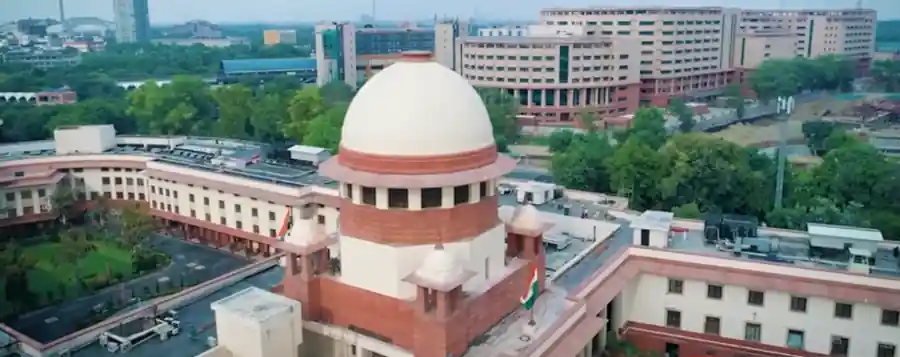
Supreme Court of India

Home » Law Library Updates » Sarvarthapedia » News » Supreme Court Stays UGC Regulations 2026: Order in Mritunjay Tiwari v. Union of India (29 Jan 2026)

MRITUNJAY TIWARI v. UNION OF INDIA

Date: 29 January 2026

ITEM NOS. 34, 35 & 45
COURT NO. 1 | SECTION: PIL-W

SUPREME COURT OF INDIA

Record of Proceedings

Read Next

  • EU to Transfer €1.4 Billion from Frozen Russian Assets to Ukraine
  • US Permits Russian Tanker Carrying 730,000 Barrels of Oil to Cuba
  • Modi Addresses West Asia Crisis in Lok Sabha: India’s Energy and Security Strategy

Writ Petition(s) (Civil) No. 101 of 2026
Mritunjay Tiwari … Petitioner
Versus
Union of India & Anr. … Respondents

(I.A. No. 27410 of 2026 – Stay Application)

With:

  • Item No. 35: W.P. (Civil) No. 109 of 2026
    (I.A. No. 28911 of 2026 – Stay Application)
  • Item No. 45: W.P. (Civil) No. 108 of 2026
    (I.A. No. 28861 of 2026 – Grant of Interim Relief)

CORAM

HON’BLE THE CHIEF JUSTICE
HON’BLE MR. JUSTICE JOYMALYA BAGCHI

Read Next

  • EU to Transfer €1.4 Billion from Frozen Russian Assets to Ukraine
  • US Permits Russian Tanker Carrying 730,000 Barrels of Oil to Cuba
  • Modi Addresses West Asia Crisis in Lok Sabha: India’s Energy and Security Strategy

Appearance

(Detailed list of learned counsel and Advocates-on-Record for the respective parties, as recorded)

ORDER

  1. Issue notice, returnable on 19 March 2026.
  2. At the request of the Court, Mr. Tushar Mehta, learned Solicitor General of India, accepts notice on behalf of Respondent Nos. 1 and 2.
  3. We have heard learned counsel appearing for the Petitioner(s), the learned Solicitor General of India, as well as Ms. Indira Jaising, learned Senior Advocate, and have perused the University Grants Commission (Promotion of Equity in Higher Education Institutions) Regulations, 2026 (hereinafter referred to as “the 2026 UGC Regulations” or “the Impugned Regulations”).
  4. The Petitioner(s) have primarily contended that the incorporation of Clause 3(c) in the 2026 UGC Regulations, defining “caste-based discrimination”, is restrictive and exclusionary in its formulation. It is urged that individuals belonging to non-reserved or general categories are rendered remediless under the statutory framework, even if subjected to caste-based discrimination or institutional bias within higher educational institutions. According to the Petitioner(s), the Impugned Regulations proceed on an unfounded presumption that caste-based discrimination is necessarily unidirectional and cannot operate against persons belonging to non-reserved or general categories.
  5. Upon a prima facie consideration, it appears that certain provisions of the Impugned Regulations suffer from ambiguities, and the possibility of misuse cannot be ruled out. We are of the prima facie view that the following substantial questions of law arise for consideration and warrant detailed examination: (i) Whether Clause 3(c) of the Impugned Regulations, defining “caste-based discrimination”, bears a reasonable and rational nexus with the object and purpose of the 2026 UGC Regulations, particularly when no distinct or special procedural mechanism has been prescribed to address caste-based discrimination, as contrasted with the exhaustive and inclusive definition of “discrimination” under Clause 3(e)? (ii) Whether the introduction and operationalisation of “caste-based discrimination” under the Impugned Regulations has any bearing on the existing constitutional and statutory sub-classification of the Most Backward Castes within the Scheduled Castes, Scheduled Tribes, and Other Backward Classes, and whether adequate safeguards exist to protect Extremely Backward Castes against discrimination and structural disadvantage? (iii) Whether the inclusion of the expression “segregation” in Clause 7(d) of the Impugned Regulations, in the context of allocation of hostels, classrooms, mentorship groups, or similar academic or residential arrangements—albeit on transparent and non-discriminatory criteria—amounts to a “separate but equal” classification, thereby infringing the constitutional guarantees of equality and fraternity under Articles 14 and 15, as well as the Preamble to the Constitution of India? (iv) Whether the omission of “ragging” as a specific form of discrimination in the framework of the Impugned Regulations, despite its express recognition under the University Grants Commission (Promotion of Equity in Higher Education Institutions) Regulations, 2012, constitutes a regressive and exclusionary legislative omission; and if so, whether such omission results in unequal treatment of victims of discrimination, thereby violating Articles 14 and 21 of the Constitution of India?(v) Any other ancillary question that may arise or be urged by the parties during the course of the proceedings and which may warrant the intervention of this Court.
  6. During the course of hearing, it has been pointed out that the issues raised in W.P. (Civil) No. 1149 of 2019 would also have a bearing on the examination of the constitutionality and validity of the Impugned Regulations. Accordingly, the present writ petitions are directed to be heard along with W.P. (Civil) No. 1149 of 2019. All matters shall be listed before an appropriate three-Judge Bench on the date fixed.
  7. In the meantime, the University Grants Commission (Promotion of Equity in Higher Education Institutions) Regulations, 2026, shall remain in abeyance.
  8. In exercise of powers under Article 142 of the Constitution of India, it is further directed that the University Grants Commission (Promotion of Equity in Higher Education Institutions) Regulations, 2012, shall continue to operate and remain in force until further orders.

(Nitin Talreja)
Assistant Registrar-cum-P.S.

(Preethi T.C.)
Assistant Registrar

Read Next

  • EU to Transfer €1.4 Billion from Frozen Russian Assets to Ukraine
  • US Permits Russian Tanker Carrying 730,000 Barrels of Oil to Cuba
  • Modi Addresses West Asia Crisis in Lok Sabha: India’s Energy and Security Strategy


Read also

Supreme Court Daily Digest (19th Jan 2026)

Supreme Court Daily Digest (21st Jan 2026)

Supreme Court Daily Digest (26th Jan 2026)

Supreme Court Daily Digest (28th Jan 2026)


Tags: 29th January India-2026 Scheduled Castes and Scheduled Tribes UGC REGULATION

Post navigation

Previous: Supreme Court Daily Digest (28th Jan 2026): Waqf Tribunal, BNSS, Land Acquisition Case Laws
Next: Supreme Court Daily Digest (30th Jan 2026): Arbitration, Professional Misconduct by Advocate, Demolition of Residential Building
Arrest
Sarvarthapedia

Latin Maxims in Criminal Law: Meaning, Usage, and Courtroom Application

Sarvarthapedia
Sarvarthapedia

Research Methodology and Investigation: Concepts, Frameworks, and Emerging Trends

IPS Cadre Strength 2025: State-wise Authorised Strength

Uric Acid: From 18th Century Discovery to Modern Medical Science

Christian Approaches to Interfaith Dialogue: Orthodox, Catholic, Protestant, and Pentecostal Views

Origin of Central Banking in India: From Hastings to RBI and the History of Preparatory Years (1773–1934)

Howrah District Environment Plan: Waste Management, Water Quality & Wetland Conservation

Bharatiya Nyaya Sanhita 2023: Sections (1-358), Punishments, and Legal Framework

Bengali Food Culture: History, Traditions, and Class Influences

West Bengal Court-Fees Act, 1970: Fees, Schedules, and Procedures

WB Land Reforms Tribunal Act 1997: History, Features, Provisions, Structure, Powers and Functions

Civil Procedure Law of the Democratic People’s Republic of Korea (1976)

Knowledge Management in the Modern Era: From History to Digital Transformation

Vedic Interpretation Methodical Style: History, Principles, and Evolution  From Yaska to Aurobindo

  • Sarvarthapedia

  • Delhi Law Digest

  • Howrah Law Journal

  • Amit Arya vs Kamlesh Kumari: Doctrine of merger
  • David Vs. Kuruppampady: SLP against rejecting review by HC (2020)
  • Nazim & Ors. v. State of Uttarakhand (2025 INSC 1184)
  • Geeta v. Ajay: Expense for daughter`s marriage allowed in favour of the wife
  • Ram v. Sukhram: Tribal women’s right in ancestral property [2025] 8 SCR 272
  • Naresh vs Aarti: Cheque Bouncing Complaint Filed by POA (02/01/2025)
  • Bharatiya Nagarik Suraksha Sanhita 2023 (BNSS)
  • Bharatiya Sakshya Adhiniyam 2023 (BSA): Indian Rules for Evidence
  • Bharatiya Nyaya Sanhita (BNS) 2023
  • The Code of Civil Procedure (CPC)
  • Supreme Court Daily Digest
  • U.S. Supreme Court Orders
  • U.k. Supreme Court Orders
Indian Government

IPS Cadre Strength 2025: State-wise Authorised Strength

Sarvarthapedia

Uric Acid: From 18th Century Discovery to Modern Medical Science

Christian Education

Christian Approaches to Interfaith Dialogue: Orthodox, Catholic, Protestant, and Pentecostal Views

Reserve Bank Of India

Origin of Central Banking in India: From Hastings to RBI and the History of Preparatory Years (1773–1934)

2026 © Advocatetanmoy Law Library

  • About
  • Global Index
  • Judicial Examinations
  • Indian Statutes
  • Glossary
  • Legal Eagle
  • Subject Guide
  • Journal
  • SCCN
  • Constitutions
  • Legal Brief (SC)
  • MCQs (Indian Laws)
  • Sarvarthapedia (Articles)
  • Contact Us
  • Privacy Policy
  • FAQs
  • Library Updates