CHAPTER 9
The Decline and Fall of Buddhism.
The disappearance of Buddhism from IndiaIndia Hind/ hend >hindia. Bharat Varsha (Jambudvipa used in Mahavamsha) is the name of this land mass. The people of this land are Sanatan Dharmin and they always defeated invaders. Indra (10000 yrs) was the oldest deified King of this land. Manu's jurisprudence enlitened this land. Vedas have been the civilizational literature of this land. Guiding principles of this land are : सत्यं वद । धर्मं चर । स्वाध्यायान्मा प्रमदः । The place also been called Hindusthan in Pesia. The word Hendu is mentioned in Avesta. Read more has been a matterMatter Normal matter is made of molecules, which are themselves made of atoms. Inside the atoms, electrons are spinning around the nucleus. The nucleus is made of protons and neutrons. Inside the protons and neutrons, exist indivisible quarks, like the electrons. All matter around us is made of elementary particles. ( building blocks of matter > quarks and leptons). All stable matter in the universe is made from particles that belong to the first-generation. Fundamental forces result from the exchange of force-carrier particles, which belong to a broader group called “bosons”. The strong force is carried by the “gluon”, electromagnetic force is carried by the “photon.” of great surprize to everybody who cares to think about the subject and is also a matter of regret. But it lives in China, Japan, Burma, Siam, Annam, Indo-China, Ceylon and parts of Malaya-Archipalego. In India alone, it has ceased to exist. Not only it has ceased to live in India but even the name of BuddhaBuddha It started with Kashyapa (Son of King of Kashi) and ended with Siddhartha Goutam (c. 490-410 BCE) during the period of Bimbisara. Sanatanis accepted Kashyapa as the Avatar of Vishnu. The primary source of Teaching: Tipitaka > Anguttara Nikaya, Digha Nikaya, Majjhima Nikaya, Saṃyutta Nikaya. 2nd century CE Maha Parinirvana Sutra (2nd Cen CE) was first Recorded about Gautama. Buddha Charitra of Asvaghosa (150 CE) is the First Biography of Gautama. Read Tipitaka, has gone out of memoryMemory It is the process of storing and then remembering this information. Forgetting may be a sign of a more serious problem, such as: Alzheimer's disease, Other types of dementia, Stroke, Depression, Head injuries, Blood clots or tumors in the brain, Kidney, liver, or thyroid problems, Reactions to certain medicines, of most Hindus. How could such a thing have happened? This is an important question for which there has been no satisfactory answer. Not only there is no satisfactory answer, nobody has made an attempt to arrive at a satisfactory answer. In dealing with this subject peopleMen Ανθρωποι (People), a woman (γυναίκα), Man (Ανδρας) > Adama, Manu > No proof to establish that due to mutation a monkey turned into a human being. fail to make a very important distinction. It is a distinction between the fall of Buddhism and the decline of Buddhism. It is necessary to make this distinction because the fall of Buddhism is one, the reasons for which are very different from those which brought about its downfall. For the fall is due to quite obvious causes while the reasons for its decline are not quite so obvious.
There can be no doubt that the fall of Buddhism in India was due to the invasions of the Musalmans. Islam came out as the enemy of the ‘But’. The wordWord Λόγος ‘But’ as everybody knows is an ArabicArabic Most widely spoken Semitic language, is an official language in 27 countries. Since 1971, it has been one of the UN's official languages. The term "Arabic" encompasses both regional dialects and Modern Standard Arabic (MSA), used across the Arab world for formal and written communication. ا Alif अ (A) ب Bā ब (Ba) ت Tā त (Ta) ث Thā थ (Tha) ج Jīm ज (Ja) ح Ḥā ह (Hard H) خ Khā ख़ (Kha, as in ख़बर) د Dāl द (Da) ذ Dhāl ज़ (Za/Dha, as in ज़ेहर) ر Rā र (Ra) ز Zā ज़ (Za) س Sīn स (Sa) ش Shīn श (Sha) ص Ṣād स (Hard Sa) ض Ḍād द (Hard Da) ط Ṭā ट (Hard Ta) ظ Ẓā ज़ (Za, heavy sound) ع ʿAyn अ (Glottal A, deeper throat) غ Ghayn ग़ (Gha, as in ग़लत) ف Fā फ (Fa) ق Qāf क़ (Qa, deeper Ka sound) ك Kāf क (Ka) ل Lām ल (La) م Mīm म (Ma) ن Nūn न (Na) ه Hā ह (Ha) و Wāw व/उ/ओ (Wa/U/O, depending on use) ي Yā य (Ya) word and means an idol. Not many people however knowKnowledge Knowledge is derived from the process of an informed person integrating data from sense organs or intuition into their psyche. This concept is explored in the Vedic Nasadiya Sukta, which questions the possibility of ultimate truth or knowledge. In different languages, such as Greek, Latin, Sanskrit, and Chinese, knowledge is expressed as "η γνώση," "Scientia," "ज्ञानम् ," and "知识 Zhīshì," respectively. what the derivation of the word ‘But’ is ‘But’ is the Arabic corruption of Buddha. Thus the origin of the word indicates that in the Moslem mindMind We know nothing about its origin, growth, or demise. Where it lives, can it live without a brain? Possibly, the mind is the soul and spirit. See Consciousness idol worship had come to be identified with the ReligionReligion ‘The word ( θρησκεία) -Re Legion (Latin)- A group or Collection or a brigade, is a social-cultural construction and substantially doesn’t exist. Catholic religion (संघवाद) is different from the Protestant religion (संघवाद). Dharma is not Religion (धार्मिक संगठन). "Religion" occurs 5 times in 5 verses in the KJV. Hindu Religion means in the indian language is हिंदू धार्मिक संगठन. Deen in Islam. of the Buddha. To the MuslimsMuslim A community gathered around Muhammad (d. 632 CE) and confessed that Muhammad was the last of Prophets and he received Quran through Zibreel Farista from Allah. Hadith of Sahih Bukhari faithfully recorded the commands of Muhammad. He acknowledged the contribution of Jesus to the Abrahamic Religion. Muslim Sect: Sunni, Twelver Shia, Ismā‘īlī Shī‘ī, Ahmadi, Ibadi, Ḥanafi, Shafi‘ī, Maliki, Hanbali, Wahhabi, Salafi, Deobandi, Barelvī, and so many., they were one and the same thing. The mission to break the idols thus became the mission to destroy Buddhism. Islam destroyed Buddhism not only in India but wherever it went. Before Islam came into being Buddhism was the religion of Bactria, Parthia, Afghanistan, Gandhar and Chinese Turkestan, as it was of the whole of Asia.1 In all these countriesCountries A Afghanistan Albania Algeria Andorra Angola Antigua and Barbuda Argentina Armenia Australia Austria Azerbaijan B Bahamas Bahrain Bangladesh Barbados Belarus Belgium Belize Benin Bhutan Bolivia Bosnia and Herzegovina Botswana Brazil Brunei Darussalam Bulgaria Burkina Faso Burundi C Cambodia Cameroon Canada Chile China Colombia Comoros Costa Rica Côte d'Ivoire Croatia Cuba Cyprus Czech Republic D Denmark Djibouti Dominica Dominican Republic E Ecuador Egypt El Salvador Eritrea Estonia Ethiopia F Fiji Finland France G Gambia Georgia Germany Ghana Greece Grenada Guatemala Guyana H Haiti Honduras Hungary I Iceland India Indonesia Iran Ireland Israel Italy J Jamaica Japan K Kenya L Latvia Lesotho Liberia Liechtenstein Lithuania Luxembourg M Macedonia Malawi Malaysia Malta Marshall Islands Mauritania Mauritius Mexico Moldova Mozambique N Namibia New Zealand Nigeria Norway P Pakistan Palau Panama Peru Poland Portugal R Republic of Congo Russia S Saint Kitts and Nevis Saint Lucia Saint Vincent and the Grenadines São Tomé and Príncipe Senegal Serbia Sierra Leone Singapore Slovenia Slovakia South Africa Spain Sri Lanka Swaziland (Eswatini) Sweden Switzerland Syria T Taiwan Tanzania The Netherlands The Philippines The Republic of Korea (South Korea) The United Kingdom The United States of America Timor Togo Trinidad and Tobago Tunisia Turkey U Uganda Ukraine Uruguay Uzbekistan V Vanuatu Vietnam Z Zambia Zimbabwe Islam destroyed Buddhism. As Vicent Smith2 points out :
“The furious massacre perpetrated in many places by Musalman invaders were more efficacious than Orthodox HinduHindu הִנְדּוּאָה (hinĕḋẇʼáh), ινδουϊσμός: Hend (Hendu). The establishment of a satellite state of the Ghaznavid Empire (capital: Lahore) in the Punjab (first half of the 11th century) was known as Hindustan—a geographical name given by the Persians, who came to visit Bharatvarsha (हिन्दुस्तान). Asadi’s Garsasp-nama, expeditions to Hend and Sarandib (Sri Lanka) have been featured. Sanatan Dharma is the actual Dharmic tradition of the Hindus. People who live in Hindusthan are Hindu (The word is an original word), whether they follow Islam, Christianity, Buddhism, Mahavira, or Nanaka. In this way, Tribals are also Hindu. Indian sword (šamšir-e hendi in zaḵm-e hendi). Anbar-e hendi (India perfumes) by Farroki. Ebn Battuta (Toḥfat al-noẓẓār fi ḡarāʾeb al-amṣārwa ʿajāʾeb al-asfār: ca. 1330) first mentioned 'Hindu Kush.' persecutions, and had a great deal to do with the disapperance of Buddhism in several provinces (of India),”
Not all will be satisfied with this explanation. It does seem inadequate. Islam attacked both, Bramhanism and Buddhism. It will be asked why should one survive and the other perish. The argumentArguments It is not quarreling. It can be divided into Deductive, inductive, and conductive > Functional includes include: “because”, “since”, “for”, and “as”; typical conclusion indicators include “therefore”, “thus”, “hence”, and “so”. पंच अवयव तर्कः प्रतिज्ञा हेतू उदाहरणम् निगमनम् अवयवाः > premises to conclusion or conclusion to premises to Proof something. Proof is a derivation of a conclusion from premises through a valid argument. is plausible but not destructive of the validity of the thesis. To admit that Bramhanism survived, it does not mean that the fall of Buddhism was not due to the sword of Islam. All that it means is that, there were circumstances which made it possible for Bramhanism and impossible for Buddhism to survive the onslaught of Islam. Fortunately for Bramhanism and unfortunately for Buddhism that was the factFact Something तथ्य (In-formation) that truly exists or happens or some-thing that has actual existence. Circumstances: a fact or event that makes a situation the way it is. Indian Evidence Act: It means and includes— (i) anything, state of things, or relation of things, capable of being perceived by the senses; (ii) any mental condition of which any person is conscious. “facts in issue” means and includes any fact from which, either by itself or in connection with other facts, the existence, non-existence, nature or extent of any right, liability or disability, asserted or denied in any suit or proceeding, necessarily follows..
Those who will pursue the matter will find that there were three special circumstances which made it possible for Bramhanism and impossible for Buddhism to survive the calamity of MuslimMuslim A community gathered around Muhammad (d. 632 CE) and confessed that Muhammad was the last of Prophets and he received Quran through Zibreel Farista from Allah. Hadith of Sahih Bukhari faithfully recorded the commands of Muhammad. He acknowledged the contribution of Jesus to the Abrahamic Religion. Muslim Sect: Sunni, Twelver Shia, Ismā‘īlī Shī‘ī, Ahmadi, Ibadi, Ḥanafi, Shafi‘ī, Maliki, Hanbali, Wahhabi, Salafi, Deobandi, Barelvī, and so many. invasions. In the first place Bramhanism at the timeTime χρόνος. Judicial: Where any expression of it occurs in any Rules, or any judgment, order or direction, and whenever the doing or not doing of anything at a certain time of the day or night or during a certain part of the day or night has an effect in law, that time is, unless it is otherwise specifically stated, held to be standard time as used in a particular country or state. (In Physics, time and Space never exist actually-“quantum entanglement”) यमः , पुं, (यमयति नियमयति जीवानां फलाफलमिति । यम् + अच् । विश्वे च कलयत्येव यः सर्व्वायुश्च सन्ततम् । अतीव दुर्निवार्य्यञ्च तं कालं प्रणमाम्यहम् ॥यमैश्च नियमैश्चैव यः करोत्यात्मसंयमम् । स चादृष्ट्वा तु मां याति परं ब्रह्म सनातनम् ॥ of the Muslim invasions had the support of the State. Buddhism had no such support. What is however more important is the fact that this State support to Bramhanism lasted till Islam had become a quiet religion and the flames of its original fury as a mission against idolatory had died out. Secondly the Buddhist priesthood perished by the sword of Islam and could not be resusciated. On the other hand it was not possible for Islam to annihilate the Bramhanic priesthood. In the third place the Buddhist laity was persecuted by the Bramhanic rulers of India and to escape this tyranny the mass of the Buddhist population of India embraced Islam and renounced Buddhism.
Of these circumstances there is not one which is not supported by history.
Among the Provinces of India which came Under Muslim domination, Sind was the first. It was ruled by a Shudra king. But the throne was usurped by a Brahmin who established his own dynasty
Modern researches go to show that Buddhism had spread over EuropeEurope EU and Countries - Albania Andorra Austria Belarus Belgium Bosnia and Herzegovina Bulgaria Croatia Cyprus Czech Denmark Estonia Finland France Germany Greece Hungary Iceland Ireland Italy Latvia Liechtenstein Lithuania Luxembourg Malta Moldova Monaco Montenegro Netherlands North Macedonia Norway Poland Portugal Romania Russia San Marino Serbia Slovakia Slovenia Spain Sweden Switzerland Ukraine United Kingdom Vatican City. and that the Cells in Britain were Buddhist—Sec “Buddhism in pre-ChristianChristian A person who believes that Jesus died to remission his/her sin/debt. The People of Antioch were called for the first time as 'Christians', in or around 300 CE. Britain” by Donald A. Mackenzie.
Early History of India (1924) pages.
which naturally supported the Brahmnic religion at the time of the invasion of Sind by Ibne Kassim in 712 A.D. The ruler of Sind was Dahir. This Dahir belonged to the dynasty of Brahmin rulers.
Heuen Tsang had noticed that the Punjab was in his time ruled by a Kshatriya Buddhist dynasty. This dynasty ruled Punjab till about 880 A.D. In that year the throne was usurped by a Brahmin armyArmy The Army of the Islamic Republic of Iran shall be an Islamic army, which is an ideological and peoples army and which shall recruit competent individuals faithful to the objectives of the Islamic Revolution and ready to make sacrifices for attaining the same. (Art-144) commander by name Lalliya who founded the Brahmin Shahi dynasty. This dynasty ruled the Punjab from 880 A.D. to 1021 A.D. It will thus be seen that at the time when the invasions of the Punjab were commenced by Sabuktagin and Mohammad, the native rulers belonged to the Bramhanic religion and Jayapala (960-980 A.D.) Anandpal (980-1000 A.D.) and Trilochanpal (1000-21 A.D.) of whose struggles with Sabuktagin and Mahammad we read so much were rulers belonging to the Bramhanic faithFaith πίστει..
Central India began to be infested by Muslim invasions which commenced from the time of Mohammad and continued under the leadership of Shahabuddin Ghori. At that time Central India consisted of different kingdoms. Mewad (now known as Udepur) ruled by the Gulohits, Sambhar (now divided into Bundi, Kota and Sirohi) ruled by the Chauhans, Kanauj1 ruled by the Pratihars, Dhar ruled by the Parmars, Bundelkhand ruled by Chandellas, Anhilwad ruled by the Chavdas, Chedi ruled by the Kalachuris. Now the rulers of all these kingdoms were Rajputs and the Rajputs for reasons which are mysterious and which I will discuss later on had become the staunchest supporters of the Bramhanic religion.
‘About the time of these invasions, BengalWest Bengal Bengal derived its name from Vedic king Vanga (Son of Vali). Banga was part of the Magadha Kingdom of Jarasandha and later Nanda dynasty. After the Garuda Dynasty ( history lost) the region was named Gouda Bhumi. Districts North 24 Parganas South 24 Parganas Bankura Birbhum CoochBihar Dakshin Dinajpur Darjeeling Hooghly Howrah Jalpaiguri Jhargram Kalimpong Kolkata Malda Murshidabad Nadia Paschim Burdwan Purba Burdwan Paschim Medinipur Purba Medinipur Purulia Uttar Dinajpur Alipurduar Govt Site Calcutta High Court KMC had fallen into two kingdoms, Eastern and Western. West BengalWest Bengal Bengal derived its name from Vedic king Vanga (Son of Vali). Banga was part of the Magadha Kingdom of Jarasandha and later Nanda dynasty. After the Garuda Dynasty ( history lost) the region was named Gouda Bhumi. Districts North 24 Parganas South 24 Parganas Bankura Birbhum CoochBihar Dakshin Dinajpur Darjeeling Hooghly Howrah Jalpaiguri Jhargram Kalimpong Kolkata Malda Murshidabad Nadia Paschim Burdwan Purba Burdwan Paschim Medinipur Purba Medinipur Purulia Uttar Dinajpur Alipurduar Govt Site Calcutta High Court KMC was ruled by the Kings of the Pal dynasty and East Bengal was ruled by the Kings of the Sena dynasty.
The Palas were Kshatriyas. They were Buddhist but as Mr. Vadiya says2 “probably only in the beginning or in name”. As to the Sena kings there is a difference of opinionOpinion A judge's written explanation of a decision of the court. In an appeal, multiple opinions may be written. The court’s ruling comes from a majority of judges and forms the majority opinion. A dissenting opinion disagrees with the majority because of the reasoning and/or the principles of law on which the decision is based. A concurring opinion agrees with the end result of the court but offers further comment possibly because they disagree with how the court reached its conclusion.. Dr. Bhandarkar says they were Brahmins who had taken to the military profession of the Kshatriyas. Mr. Vaidya insists that the Sena Kings were AryanArya Ἀριάνης (OInd. āˊrya-, Ir. *arya, in Old Pers. ariya-, Avesta. airiia-, etc.) >The word is used 32 times in Rigveda. It means A learned person, an intelligent person, or any high ranking person in society. Before the 1850s (Arthur de Gobineau) the term was never used to denote any race. Mleccha is one who was not able to speak the Vedic language (5000 BCE). आर्यावर्त (Identified in Manu Samhita). Ērān (Iran) and Ireland derived from Sanskrit आर्य (ऋ+यत्). अर्य (ऊरव्या ऊरुजा अर्या वैश्या भूमिस्पृशो विशः । आजीवो जीविका वार्ता वृत्तिर्वर्तनजीवने ॥ (Amar Kosa-२.९.१ ). अर्य (पर्जन्यौ रसदब्देन्द्रौ स्यादर्यः स्वामिवैश्ययोः । तिष्यः पुष्ये कलियुगे पर्यायोऽवसरे क्रमे ॥ (Amar Kosa--३.३.१५५ ). Ref: Saraswati. Kshatriyas or Rajputs belonging to the Lunar raceRace It is a major subdivision of mankind, regarded as having a common origin, and is made up of individuals who have a relatively constant combination of physical traits that are handed on from parents to children. Ethnicity and race are often thought of as one and the same, but they do not consistently have the same meaning. Ethnicity refers to cultural features while race has biological as well as cultural components.. In any case there is no doubt that the Senas like the Rajputs were supporters of the orthodox faith.3
“South of the river Nerbudda, then existed about the time of the Muslim invasions four kingdoms (1) The Deccan Kingdom of Western Chalukyas, (2) The Southern Kingdom of the Cholas (3) The Silahara
Nothing remains of Kanauj. It was completely destroyed by Mohammad although it was most gallantly defended by Prithviraj.
History of Medieval Hindu India Vol, II. p. 142.
Ibid Vol, III. Chap. x.
Kingdom in Konkan on the West Coast and (4) The Ganga Kingdom of Trikalinga on the East Coast. These Kingdoms flourished during 1000-1200 A.D. which is the period of the Muslim invasions. There were under them, certain feudatory Kingdons which rose to powerPower The amount of energy transferred or converted per unit of time. In the International System of Units, the unit of it is the watt, equal to one joule per second. The capacity of energy infrastructure is rated using watts, which indicate its potential to supply or consume energy in a given period of time. A Power-plant rated at 100 MW has the potential to produce 100 MWh if it operates for one hour. in the 12th Century A.D. and which became independent and powerful in the 13 the Century. They are (1) Devagiri ruled by the Yadavas, (2) Warangal ruled by Kakatiyas (3) Halebid ruled by Hoyasalas (4) Madura ruled by the Pandyas and (5) Travancore ruled by the Cheras.
All these ruling dynasties were followers of orthodox Brahmanism.
The Muslim invasions of India commenced in the year 1001 A.D. The last wave of these invasions reached Southern India in 1296 A.D. when Allauddin Khilji subjugated the Kingdom of Devagiri. The Muslim conquest of India was really not completed by 1296. The warsWar Whenever Christians wage a war, it is a Just war (City of God). Jesus asked his followers to purchase swords (Luke 22: 35-36). Those who legitimately hold authority also have the right to use arms to repel aggressors against the civil community entrusted to their responsibility (Catechism 2265). Without Jihad there is no Islam. In Mahabharata, Krishna tried to stop the War imposed by Kurus. Lord Rama killed Ravan in the war to restore his wife. Deva and Asura battles are not available in Vedas. of subjugation went on between the Muslim conquerors and the local rulers who though defeated were not reduced. But the point which requires to bear in mind is that during this period of 300 years of Muslim Wars of conquests, India was governed all over by princes who professed the orthodox faith of Bramhanism. Bramhanism beaten and battered by the Muslim Invaders could look to the rulers for support and sustenance and did get it. Buddhism beaten and battered by the Muslim invaders had no such hope. It was an uneared for orphan and it withered in the cold blast of the native rulers and was consumed in the fireFire It was created from stones approximately 400,000 years ago, or possibly much earlier. Researchers have discovered the earliest known instance of human-created fire, which took place in the east of England 400,000 years ago (in the village of Barnham). The Rigveda mentions the use of Agni for Yagna much earlier than 10,000 years ago. lit up by the conquerors.
The Musalman invaders sacked the Buddhist Universities of Nalanda, Vikramasila, Jagaddala, Odantapuri to name only a few. They raised to the ground Buddhist monasteries with which the country was studded. The Monks fled away in thousands to Napal, Tibet and other places outside India. A very large numberNumber Αριθμός were killed outright by the Muslim commanders. How the Buddhist priesthood perished by the sword of the Muslim invaders has been recorded by the Muslim historians themselves. Summarizing the evidenceEvidence All the means by which a matter of fact, the truth of which is submitted for investigation, is established or disproved. Bharatiya Sakshya (Second) Adhiniyam 2023 relating to the slaughter of the Budhist Monks perpetrated by the Musalman General in the course of his invasion of BiharBihar 38 Districts > Araria Arwal Aurangabad Banka Begusarai Bhagalpur Bhojpur Buxar Darbhanga Gaya Gopalganj Jamui Jehanabad Kaimur (Bhabua) Katihar Khagaria Kishanganj Lakhisarai Madhepura Madhubani Munger Muzaffarpur Nalanda Nawada Pashchim Champaran Patna Purbi Champaran Purnia Rohtas Saharsa Siwan Supaul Vaishali Samastipur Saran Sheikhpura Sheohar Sitamarhi in 1197 A.D. Mr. Vincent Smith says1 :
“The Musalman General, who had already made his name a terror by repeated plundering expeditions in Bihar, seized the capital by a daring stroke. The almost contemporary historian met one of the survivors of the attacking party in A.D. 1243, and learned from him that the Fort of Bihar was seized by a party of only two hundred horsemen, who boldly rushed the postern gate and gained possession of the place. Great quantities of plunder were obtained,
Early History of India (1924) pp. 419-420.
and the slaughter of the ‘shaven headed Brahmans’ that is to say the Buddhist monks, was so thoroughly completed, that when the victor sought for some one capable of explaining the contents of the booksBook Council of Trent (1545–1563) the Catholic Church created a Congregation of the Index, to declare a writing dangerous and to burn it, till it exists without notice. For Christians, the Bible, and for Muslims Quran, is only good for human guidance and nothing else. After Jesus, St. Peter and St. Paul are the most educated persons in the Christian world. in the libraries of the monasteries, not a living man could be found who was able to read them. ‘It was discovered’ we are told, ‘that the whole of that fortress and city was a college, and in the Hindi tongue they call a college Bihar.”
Such was the slaughter of the Buddhist priesthood perpetrated by the Islamic invaders. The axe was struck at the very root. For by killing the Buddhist priesthood Islam killed Buddhism. This was the greatest disaster that befell the religion of Buddha in India. Religion like any other ideololgy can be attained only by propaganda. If propoganda fails, religion must disappear. The priestly class, however detestable it may be, is necessary to the sustenance of religion. For it is by its propoganda that religion is kept up. Without the priestly class religion must disappear. The sword of Islam fell heavily upon the priestly class. It perished or it fled outside India. Nobody remained to keep the flame of Buddhism burning.
It may be said that the same thing must have happened to the Brahmanic priesthood. It is possible, though not to the same extent. But there is this difference between the constitutionConstitution The Constitution encompasses the global system of rules governing constitutional authority. Simply reading selected provisions of the written text may be misleading. Understanding the underlying principles, such as federalism, democracy, constitutionalism, the rule of law, and respect for minorities, is crucial. Democratic institutions must allow for ongoing discussion and evolution, reflected in the right of participants to initiate constitutional change. This right entails a reciprocal duty to engage in discussions. Democracy involves more than majority rule, existing within the context of other constitutional values. Therefore, a profound understanding of these principles informs our appreciation of constitutional rights and obligations. Read more of the two religions and the difference is so great that it contains the whole reason why Brahmanism survived the attack of Islam and why Buddhism did not. This difference relates to the constitution of the clergy.
The Brahmnic priesthood has a most elaborate organization. A clear and succinct account of it has been given by the late Sir Ramkrishna Bhandarkar in the pages of the IndianIndia Hind/ hend >hindia. Bharat Varsha (Jambudvipa used in Mahavamsha) is the name of this land mass. The people of this land are Sanatan Dharmin and they always defeated invaders. Indra (10000 yrs) was the oldest deified King of this land. Manu's jurisprudence enlitened this land. Vedas have been the civilizational literature of this land. Guiding principles of this land are : सत्यं वद । धर्मं चर । स्वाध्यायान्मा प्रमदः । The place also been called Hindusthan in Pesia. The word Hendu is mentioned in Avesta. Read more Antiquary.1
‘Every Brahmanic family,’ he writes, ‘is devoted to the study of a particular VedaVedas Samhita: Rigveda, Samveda, Yayurveda (Shukla and Krishna), Atharvaveda. Commentary: Rig, Atharva, Shukla Yajurveda, Krishna Yajurveda. Total Manta: 20,380, and a particular Sakha (recension) of a Veda; and the domestic rites of the family are performed according to the ritual described in the Sutra connected with that Veda. The study consists in getting by heart the books forming the particular Veda. In Northern India, where the predominant Veda is the White Yagush and the Sakha that of the Madhyandinas, this study has almost died out, except at Banaras, where Brahmanic families from all parts of India are settled. It prevails to some extent in Gujarat, but to a much greater extent in the Maratha country; and in Tailangana there is a large number of Brahmans who still devote their life to this study. Numbers of these go about to all parts of the country in searchSearch Google SEO: Meaning> Relevance> Quality> Usability> Context of dakshina (fee, alms), and all well-to-do natives patronize them according to their means, by getting them to repeat portions of
Indian Antiquary 1874. p. 132 quoted by Max Muller. Hibbert Lectures (1878) pp. 162-164.
their Veda, which is mostly the Black Yagush, with Apastamba for their Sutra. Hardly a week passes here in Bombay in which no Tailangana BrahmanBrahman ब्रह्म > ब्रह्मसूत्र > ब्रह्मसूत्रभाष्यम् > ब्रह्मजिज्ञासा > जन्माद्यस्य यतः comes to me to ask for dakshina. On each occasion I get the men to repeat what they have learned, and compare it with the printed texts in my possession.
‘With reference to their occupation, Brahmans of each Veda are generally divided into two daises, Grihasthas and Bhikshukas. The former devote themselves to a worldly avocation, while the latter spend their time in the study of their sacred books and the practice of their religious rites.
‘Both these classes have to repeat daily the Sandhya-vandana or twilight-prayers, the forms of which are somewhat different for the different VedasVedas Samhita: Rigveda, Samveda, Yayurveda (Shukla and Krishna), Atharvaveda. Commentary: Rig, Atharva, Shukla Yajurveda, Krishna Yajurveda. Total Manta: 20,380. But the repetition of the GayatriGayatri Gayatri Mantra = ॐ भूर्भुव॒स्सुवः॒ तथ्स॑वि॒तुर्वरे᳚ण्यं॒ भर्गो॑ दे॒वस्य॑ धीमहि । धियो॒ यो नः॑ प्रचोदया᳚त् ॥, Gayatri Chhanda (गायत्री छन्द) = 24 letters in (3 X 8) system. Chhanda ( Vedic Poetic meter): गायत्र्युष्णिगनुष्टुप्च बृहती पङ्क्तिरेव च ॥ १.१९ ॥ त्रिष्टुप्च जगती चैव तथाऽतिजगती मता । शक्वरी साऽतिपूर्वा स्यादष्ट्यत्यष्टी ततः स्मृते ॥ १.२० ॥ (वृत्तरत्नाकरः of Kedar Bhatta)-mantra ‘Tat Savitur Vareynam’ etc., five, then twenty eight, or a hundred and eight times, which forms the principal portion of the ceremony, is common to all.
‘Besides this, a great many perform daily what is called Brahmayagna, which on certain occasions is incumbent on all. This for the RigRig Veda Mandala: ( 1, 2, 3, 4, 5, 6, 7, 8, 9, 10 ) अ आ इ ई उ ऊ ऋ ए ऐ ओ औ क ख ग घ च छ ज त द ध न प ब भ म य र ल व श ष स ह § Alphabetical Index of the Rig Veda Mantras > Rigveda: A Historical Analysis by Shrikant G. Talageri (2000) > Rigveda is at least ninety thousand years old, perhaps more: OSHO > वेदपारायणविधिः-The method of reciting the Vedas > List of the Vedic Rishis > ऋग्वेद भाष्यम् – Rig Veda Bhashyam by Sayanacharya > Core Hindutva Philosophy in the Rig Veda > Read more -Veda consists of the first hymn of the first mandalFirst Mandala ऋग्वेदः मण्डलं (1) > 1 2 3 4 5 6 7 8 9 10 > 11 12 13 14 15 16 17 018 19 20 > 21 22 23 24 25 26 27 28 29 30 > 31 32 33 34 35 36 37 38 39 40 > 41 42 43 44 45 46 47 48 49 50 > 51 52 53 54 55 56 57 58 59 60 > 61 62 63 64 65 66 67 68 69 70 > 71 72 73 74 75 76 77 78 79 80 > 81 82 83 84 85 86 87 88 89 90 > 91 92 93 94 95 96 97 98 99 100 > 101 102 103 104 105 106 107 108 109 110 > 111 112 113 114 115 116 117 118 119 120 > 121 122 123 124 125 126 127 128 129 130 > 131 132 133 134 135 136 137 138 139 140 > 141 142 143 144 145 146 147 148 149 150 > 151 152 153 154 155 156 157 158 159 160 > 161 162 163 164 165 166 167 168 169 170 > 171 172 173 174 175 176 177 178 179 180 > 181 182 183 184 185 186 187 188 189 190 191 , and the opening sentences of the-Aitareya Brahmana, the five parts of the Aitereya Aranyaka, the Yagus-samhitaSamhita अथातः सं हिताया उपनिषदं व्याख्यास्यामः । पञ्चस्वधिकरणेषु । अधिलोकमधिज्यौतिषमधिविद्यमधिप्रजमध्यात्मम् । (तैत्तिरीयोपनिषत्) Atharva Veda Samhita |Sunak Branchnch| (शौनकीय अथर्ववेद संहिता) Sam Veda Samhita | Kouthumiya | Purvarchika-Uttararchika (सामवेदः कौथुमीय) Shukla Yajurveda Kanva Shakha (Samhita) Sukla Yajurveda Samhita (शुक्लयजुर्वेदः) Rigveda Samhita Rigveda Samhita Full Text Taittiriya Samhita Charaka Samhita Manu Samhita , the Sama-samhita, the Atharva-samhita, Asvalayana Kalpa Sutra, Nirukta, Khandas, Nighantu, Jyotisha, Siksha, Panini, Yagnavalkya SmritiSmriti Interpretation of Sruti (Vedas) by the help of Vedangas. Read Sruti. स्मृति Books :- मनु याज्ञवल्क्य अत्रि विष्णु हारीत औशनस अंगिरा यम कात्यायन बृहस्पति पराशर व्यास दक्ष गौतम वशिष्ठ आपस्तम्ब संवर्त शंख लिखित देवल शतातप. Artha Shastra, Ayurveda etc, MahabharataMahabharata महाभारतम् (650-550 BCE): (By Nishada Krishna Dvaipayan Vyasa, Son of Brahmin Parasara and Fisherwoman Satyavati) ०१-आदिपर्व (२६० अध्यायाः) ०२-सभापर्व (१०३ अध्यायाः) ०३-आरण्यकपर्व (३१५ अध्यायाः) ०४-विराटपर्व (७८ अध्यायाः) ०५-उद्योगपर्व (१९६ अध्यायाः) ०६-भीष्मपर्व (१२२ अध्यायाः) ०७-द्रोणपर्व (२०३ अध्यायाः) ०८-कर्णपर्व (१०१ अध्यायाः) ०९-शल्यपर्व (६६ अध्यायाः) १०-सौप्तिकपर्व (१८ अध्यायाः) ११-स्त्रीपर्व (२७ अध्यायाः) १२-शांतिपर्व (३७५ अध्यायाः) १३-अनुशासनपर्व (२७४ अध्यायाः) १४-आश्वमेधिकपर्व (११८ अध्यायाः) १५-आश्रमवासिकपर्व (४१ अध्यायाः) १६-मौसलपर्व (९ अध्यायाः) १७-महाप्रस्थानिकपर्व (३ अध्यायाः) १८-स्वर्गारोहणपर्व (६ अध्यायाः), and the Sutras of Kanada, Jaimini, and Badarayan.’
The point to be remembered is that in the matter of officiation there is no distinction between a Bhikshuka1 and a Grahastha. In Brahmanism both are priestPriest A typical church official cadre receives salary/ maintenance from the church fund. In Sanatan society, there is no concept of ordained priest. In Rig Veda, Agni is called Purohita (1.1) A पुरोहित performs Yagna Karma. In Ramayana and Mahabharata, a पुरोहित is a Minister of the king's administration. Vasistha was पुरोहित to King Dasaratha. and the Grahastha is no less entitled to officiate as a priest than a Bhikshu is. If a Grahastha does not choose to officiate as a priest, it is because he has not mastered the mantras and the ceremonies or because he follows some more lucrative vocation. Under Brahmanic dispensation every Brahmin who is not an outcast has the capacity to be a priest. The Bhikshuka is an actual priest, a Grahastha is a potential priest. All Brahmins can be recruited to form the army of Bramhanic priesthood. Further no particular training or initiation ceremony is necessary for a Brahmin to act as a priest. His will to officiate is enough to make him function as a priest. In Brahmanism the priesthood can never become extinct. Every Brahmin is a potential priest of Brahmanism and be drafted in service
1The Bhikshuks (under Bramhanism) are further sub-divided into (1) Vaidikas (2) Yajniks
Srotriyas and (4) Agnihotris. Vaidikas are those who learn the Vedas by heart and repeat them without a mistake. Yajnikas are those who perform Yajnas and other religious rites and ceremonies. Srottiyas are those who specialize in the art of performing great sacrifices, Agnihotris are those who maintain the three sacrificial fires and perform the Ishtis (fortnightly sacrifices) and Chaturmasyas (sacrifices to be performed every four months).
when the need be. There is nothing to stop the rake’s life and progress. This is not possible in Buddhism. A person must be ordained in accordance with established rites by priests already ordained, before he can act as a priest. After the massacre of the Buddhist priests, ordination became impossible so that the priesthood almost ceased to exist. Some attempt was made to fill the depleted ranks of the Buddhist priests. New recruits for the priesthood had to be drawn from all available sources. They certainly were not the best. According to Haraprasad Shastri,1
“The paucity of Bhiksus brought about a great change in the composition of the Buddhist priesthood. It was the married clergy with families, who were called Aryas, that took the place of the Bhiksus proper, and began to cater to the religious needs of the Buddhists generally. They commenced attaining the normal status of Bhiksus through the performance of some sacraments. (Intro.pp. 19.7, quoting Tatakara Guptas’ Adikarmaracana : 149, pp. 1207-1208). They officiated at the religious ceremonies but at the same time, in addition to their prolusion of priesthood, earned their livelihood through such avocations as those of a mason, painter, sculptor, goldsmith, and carpenter. These artisan priests who were in later times larger in numbers than the Bhiksus proper became the religious guides of the people. Their avocations left them little time and desire for the acquisition of learningLearning Educational learning theories: Cognitive Learning Theory, Behaviorism Learning Theory, Constructivism Learning Theory, Humanism Learning Theory, Connectivism Learning Theory, Transformative Learning Theory, Social Learning Theory, Experiential Learning Theory., for deep thinkingThinking Human beings began conscious thought as far back as sixty million years ago. By around three hundred thousand years ago, humans inhabiting the Indian subcontinent had developed forms of cognition comparable to those of the modern age, including awareness of competition, defense, and collective security. These early communities were capable of abstract observation, such as counting stars in the night sky, and engaged in reflective discussion about everyday experiences, including the flavors and qualities of food, indicating a sophisticated mental and social life., or for devotion to Dhyana and other spiritualSpiritual Inspirational or inspired, energetic, motivated. It is all about earthly potency. It can not be translated as Adhatmya in Sanskrit. 'Christian Spirituality' means being motivated by Christian ideas. An airy or thin, like invisible earthly matter, is also called Spiritual. "Take and receive my spirit" means take courage from me, or just blowing wind from one's mouth. exercises. They could not be expected to raise the declining Buddhism to a higher position through their endeavours nor could they check its course towards its ruin through the introduction of salutary reforms.”
It is obvious that this new Buddhist priesthood had neither dignityDignity αξιοπρέπεια > The basic dignity of a human has been protected by the Constitution and other Human rights Laws. If a man fails to provide it to another man, then he disrespects his existence and standing. nor learning and were a poor match for the rival, the Brahmins whose cunning was not unequal to their learning.2
The reason why Brahmanism rose from the ashes and Buddhism did not, is to be accounted for, not by any inherent superiority of Brahmanism over Buddhism. It is to be found in the peculiar character of their priesthood. Buddhism died because its army of priests died and it was not possible to create. Though beaten it was never completely broken. Every Brahmin alive became priest and took the place of every Brahmin priest who died.
Summary of his views by Narendra Nath LawLaw νόμος: Positive command of sovereign or divine. One can be ruled either by a Statute, a Statue, or a Statement. Legislation is the rule-making process by a political or religious organisation. Physics governs natural law. Logical thinking is a sign of a healthy brain function. Dharma is eternal for Sanatanis. Judiciary > Show me the face, and I will show you the law. Some people know how to bend the law rather than break it. Law Practice. Read a scholarly article in Harprasad Shastri Memorial Volume pp. 363-64.
The reason why the new Buddhist priest could not leave their avocations and devote themselves wholly to the propagation of religion is because as Harprasad Shastri points out. “The decrease in the number of Buddhist laity also resulted in the difficulty of Buddhist monks to receive alms. As a monk could not take alms from more than three householders and could not visit the same household within a month for the same purpose, ninety household are necessary to maintain a monk”. Harprasad Shastri Memorial Volume. p.362.
As to the conversion to the faith of Islam by the Buddhist population as a cause of the fall of Buddhism, there can hardly be much doubt.
In his Presidential address to the early Medieval and Rajput section of the Indian History Congress held at Allahabad in 1938, Prof. Surendra Nath Sen very rightly observed that there were two problems relating to the Medieval History of India for which no satisfactory answers were forthcoming as yet. He mentiond two: one connected with the origin of the Rajputs and the other to the distribution of the Muslim population in India. Referring to the second, he said:
“But I may be permitted to deal with one question that is not wholly of antiquarian interest today. The distribution of Muslim population in India demands some explanation. It is commonly believed that Islam followed the route of conquest and the subjugated people were forced to accept the faith of their rulers. The predominance of the Muslims in the Frontier Province and the Punjab lends some colour to this contention. But this theory cannot explain an overwhelming Muslim majority in Eastern Bengal. It is quite likely that the North-Western Frontier Province was peopled by Turkish folks during the Kushan days, and their easy conversion to Islam may be explained by racialRace It is a major subdivision of mankind, regarded as having a common origin, and is made up of individuals who have a relatively constant combination of physical traits that are handed on from parents to children. Ethnicity and race are often thought of as one and the same, but they do not consistently have the same meaning. Ethnicity refers to cultural features while race has biological as well as cultural components. affinity with the new conquerors; but the Muslims of Eastern Bengal are certainly not racially akin to the Turks and the Afghans, and the conversion of the Hindus of that region must have been due to other reasons.”1
What are these other reasons ? Prof. Sen then proceeds to lay bare these reasons which are found in Muslim Chronicles. He takes the case of Sind for which there is direct testimony and says :2
“According to the Chachnama, the Buddhists of Sind suffered all sorts of indignities and humiliations under their Brahman rulers, and when the Arabs invaded their country, the Buddhists lent their whole hearted suport to them. Later on, when Dahir was slain and a Muslim GovernmentGovernment HM Govt consists of the Prime Minister, their Cabinet, and junior ministers, supported by the teams of non-political civil servants that work in government departments. The American Federal Government consists of the Legislative, Executive, and Judicial branches. was firmly established in his country, the Buddhists found to their dismay that, so far as their rights and privileges were concerned, the Arabs were prepared to restore status quo ante bellum and even under the new order the Hindus received a preferential treatment. The only way out of this difficulty was to accept Islam because the converts were entitled to all the privileges reserved for the ruling classes. So the Buddhists of Sind joined the Muslim fold in large numbers.”
Prof. Sen then adds this significant passage :
1Early Career of Kanhoji Angria and other papers, pp. 188-89.
2Ibid. pp. 188-89.
“It cannot be an accident that the Punjab, Kashmir, the districtDistrict India has 800 districts under 29 federal states and 8 union territories. Adilabad Agar-Malwa Agra Ahilyanagar Ahmedabad Aizawl Ajmer Akola Alappuzha Aligarh Alipurduar Alirajpur Alluri Sitharama Raju Almora Alwar Ambala Ambedkar Nagar Amethi Amravati Amreli Amritsar Amroha Anakapalli Anand Ananthapuramu Anantnag Anjaw Annamayya Anugul Anuppur Araria Ariyalur Arvalli Arwal Ashoknagar Auraiya Aurangabad Ayodhya Azamgarh Bagalkote Bageshwar Baghpat Bahraich Bajali Baksa Balaghat Balangir Baleshwar Ballari Ballia Balod Balodabazar-Bhatapara Balotra Balrampur Balrampur-Ramanujganj Banas Kantha Banda Bandipora Banka Bankura Banswara Bapatla Bara Banki Baramulla Baran Bareilly Bargarh Barmer Barnala Barpeta Barwani Bastar Basti Bathinda Beawar Beed Begusarai Belagavi Bemetara Bengaluru Rural Bengaluru Urban Betul Bhadohi Bhadradri Kothagudem Bhadrak Bhagalpur Bhandara Bharatpur Bharuch Bhavnagar Bhilwara Bhind Bhiwani Bhojpur Bhopal Bichom Bidar Bijapur Bijnor Bikaner Bilaspur Bilaspur Birbhum Bishnupur Biswanath Bokaro Bongaigaon Botad Boudh Budaun Budgam Bulandshahr Buldhana Bundi Burhanpur Buxar Cachar Central Chamarajanagar Chamba Chamoli Champawat Champhai Chandauli Chandel Chandigarh Chandrapur Changlang Charaideo Charkhi Dadri Chatra Chengalpattu Chennai Chhatarpur Chhatrapati Sambhajinagar Chhindwara Chhotaudepur Chikkaballapura Chikkamagaluru Chirang Chitradurga Chitrakoot Chittoor Chittorgarh Chumoukedima Churachandpur Churu Coimbatore Cooch Behar Cuddalore Cuttack Dadra And Nagar Haveli Dahod Dakshin Bastar Dantewada Dakshin Dinajpur Dakshina Kannada Dhenkanal Dholpur Dhubri Dhule Dibang Valley Dibrugarh Didwana-Kuchaman Dima Hasao Dimapur Dindigul Dindori Diu Doda Dr. B.R. Ambedkar Konaseema Dumka Dungarpur Durg East East Garo Hills East Godavari East Jaintia Hills East Kameng East Khasi Hills East Siang East Singhbum Eastern West Khasi Hills Eluru Ernakulam Erode Etah Etawah Faridabad Faridkot Farrukhabad Fatehabad Fatehgarh Sahib Fatehpur Fazilka Ferozepur Firozabad Gadag Gadchiroli Gajapati Ganderbal Gandhinagar Ganganagar Gangtok Ganjam Garhwa Gariyaband Gaurela-Pendra-Marwahi Gautam Buddha Nagar Gaya Ghaziabad Ghazipur Gir Somnath Giridih Goalpara Godda Golaghat Gomati Gonda Gondia Gopalganj Gorakhpur Gumla Guna Guntur Gurdaspur Gurugram Gwalior Gyalshing Hailakandi Hamirpur Hamirpur Hanumakonda Hanumangarh Hapur Harda Hardoi Haridwar Hassan Hathras Haveri Hazaribagh Hingoli Hisar Hnahthial Hojai Hooghly Hoshiarpur Howrah Hyderabad Idukki Imphal East Imphal West Indore Jabalpur Jagatsinghapur Jagitial Jaipur Jaisalmer Jajapur Jalandhar Jalaun Jalgaon Jalna Jalore Jalpaiguri Jammu Jamnagar Jamtara Jamui Jangoan Janjgir-Champa Jashpur Jaunpur Jayashankar Bhupalapally Jehanabad Jhabua Jhajjar Jhalawar Jhansi Jhargram Jharsuguda Jhunjhunu Jind Jiribam Jodhpur Jogulamba Gadwal Jorhat Junagadh Kabeerdham Kachchh Kaimur (Bhabua) Kaithal Kakching Kakinada Kalaburagi Kalahandi Kalimpong Kallakurichi Kamareddy Kamjong Kamle Kamrup Kamrup Metro Kancheepuram Kandhamal Kangpokpi Kangra Kannauj Kanniyakumari Kannur Kanpur Dehat Kanpur Nagar Kapurthala Karaikal Karauli Karbi Anglong Kargil Karimganj Karimnagar Karnal Karur Kasaragod Kasganj Kathua Daman Damoh Dangs Darbhanga Darjeeling Darrang Datia Dausa Davanagere Deeg Dehradun Deogarh Deoghar Deoria Devbhumi Dwarka Dewas Dhalai Dhamtari Dhanbad Dhar Dharashiv Dharmapuri Dharwad Dhemaji Katihar Katni Kaushambi Kendrapara Kendujhar Keyi Panyor Khagaria Khairagarh-Chhuikhadan-Gandai Khairthal-Tijara Khammam Khandwa (East Nimar) Khargone (West Nimar) Khawzawl Kheda Kheri Khordha Khowai Khunti Kinnaur Kiphire Kishanganj Kishtwar Kodagu Koderma Kohima Kokrajhar Kolar Kolasib Kolhapur Kolkata Kollam Kondagaon Koppal Koraput Korba Korea Kota Kotputli-Behror Kottayam Kozhikode Kra Daadi Krishna Krishnagiri Kulgam Kullu Kumuram Bheem Asifabad Kupwara Kurnool Kurukshetra Kurung Kumey Kushinagar Lahaul And Spiti Lakhimpur Lakhisarai Lakshadweep District Lalitpur Latehar Latur Lawngtlai Leh Ladakh Leparada Lohardaga Lohit Longding Longleng Lower Dibang Valley Lower Siang Lower Subansiri Lucknow Ludhiana Lunglei MAUGANJ Madhepura Madhubani Madurai Mahabubabad Mahabubnagar Mahasamund Mahendragarh Mahesana Mahisagar Mahoba Mahrajganj Maihar Mainpuri Majuli Malappuram Malda Malerkotla Malkangiri Mamit Mancherial Mandi Mandla Mandsaur Mandya Munger Murshidabad Muzaffarnagar Muzaffarpur Mysuru Nabarangpur Nadia Nagaon Nagapattinam Nagarkurnool Nagaur Nagpur Nainital Nalanda Nalbari Nalgonda Namakkal Namchi Namsai Nanded Nandurbar Nandyal Narayanpet Narayanpur Manendragarh-Chirmiri-Bharatpur(M C B) Mangan Mansa Marigaon Mathura Mau Mayiladuthurai Mayurbhanj Medak Medchal Malkajgiri Meerut Meluri Mirzapur Moga Mohla-Manpur-Ambagarh Chouki Mokokchung Mon Moradabad Morbi Morena Mulugu Mumbai Mumbai Suburban Mungeli Narmada Narmadapuram Narsimhapur Nashik Navsari Nawada Nayagarh Neemuch New Delhi Nicobars Nirmal Niuland Niwari Nizamabad Noklak Noney North North 24 Parganas North And Middle Andaman North East North Garo Hills North Goa North Tripura North West Ntr Nuapada Nuh Pakke Kessang Pakur Pakyong Palakkad Palamu Palghar Pali Palnadu Palwal Panch Mahals Panchkula Pandhurna Panipat Panna Papum Pare Parbhani Parvathipuram Manyam Paschim Bardhaman Paschim Medinipur Pashchim Champaran Patan Pathanamthitta Pathankot Patiala Patna Pauri Garhwal Peddapalli Perambalur Peren Phalodi Phek Pherzawl Pilibhit Pithoragarh Poonch Porbandar Prakasam Pratapgarh Pratapgarh Prayagraj Puducherry Pudukkottai Pulwama Pune Purba Bardhaman Ranipet Ratlam Ratnagiri Rayagada Reasi Rewa Rewari Ri Bhoi Rohtak Rohtas Rudraprayag Rupnagar S.A.S Nagar Sabar Kantha Sagar Saharanpur Saharsa Sahebganj Saitual Sakti Salem Salumbar Samastipur Samba Purba Medinipur Purbi Champaran Puri Purnia Purulia Rae Bareli Raichur Raigad Raigarh Raipur Raisen Rajanna Sircilla Rajgarh Rajkot Rajnandgaon Rajouri Rajsamand Ramanagara Ramanathapuram Ramban Ramgarh Rampur Ranchi Ranga Reddy Sambalpur Sambhal Sangareddy Sangli Sangrur Sant Kabir Nagar Saraikela Kharsawan Saran Sarangarh-Bilaigarh Satara Satna Sawai Madhopur Sehore Senapati Seoni Sepahijala Serchhip Shahdara Shahdol Shahid Bhagat Singh Nagar Shahjahanpur Shajapur Shamator Shamli Sheikhpura Sheohar Sheopur Shi Yomi Shimla Shivamogga Shivpuri Shopian Shrawasti Siaha Siang Siddharthnagar Siddipet Sidhi Sikar Simdega Sindhudurg Singrauli Sirmaur Sirohi Sirsa Sitamarhi Sitapur Sivaganga Sivasagar Siwan Solan Solapur Sonbhadra Sonepur Sonipat Sonitpur Soreng South South 24 Parganas South Andamans South East South Garo Hills South Goa South Salmara Mancachar South Tripura South West South West Garo Hills South West Khasi Hills Sri Muktsar Sahib Sri Potti Sriramulu Nellore Sri Sathya Sai Srikakulam Srinagar Sukma Sultanpur Sundargarh Supaul Surajpur Surat Surendranagar Surguja Suryapet Tamenglong Tamulpur Tapi Tarn Taran Tawang Tehri Garhwal Tengnoupal Tenkasi Thane Thanjavur The Nilgiris Theni Thiruvallur Thiruvananthapuram Thiruvarur Thoothukkudi Thoubal Thrissur Tikamgarh Tinsukia Tirap Tiruchirappalli Tirunelveli Tirupathur Tirupati Tiruppur Tiruvannamalai Tonk Tseminyu Tuensang Tumakuru Udaipur Udalguri Udham Singh Nagar Udhampur Udupi Ujjain Ukhrul Warangal Wardha Washim Wayanad West West Garo Hills West Godavari West Jaintia Hills West Kameng West Karbi Anglong West Khasi Hills West Siang West Singhbhum West Tripura Wokha Y.S.R. Yadadri Bhuvanagiri Yadgir Yamunanagar Yavatmal Zunheboto Umaria Una Unakoti Unnao Upper Siang Upper Subansiri Uttar Bastar Kanker Uttar Dinajpur Uttara Kannada Uttarkashi Vadodara Vaishali Valsad Varanasi Vellore Vidisha Vijayanagara Vijayapura Vikarabad Viluppuram Virudhunagar Visakhapatnam Vizianagaram Wanaparthy around Behar Sharif, North-East Bengal where Muslims now predominate, were all strong Buddhist Centres in the pre-Muslim days. It will not be fair to suggest that the Buddhists succumbed more easily to political temptations than the Hindus and the change of religion was due to the prospects of the improvement of their political status.”
Unfortunately the causes that have forced the Buddhist population of India to abandon Buddhism in favour of Islam have not been investigated and it is therefore impossible to say how far the persecution of the Brahmanic Kings was responsible for the result. But there are not wanting indications which suggest that this was the principal cause. We have positive evidence of two Kings engaged in the campaign of persecuting the Buddhist population.
The first to be mentioned is Mihirkula. He belonged to the Huns who invaded India about 455 A.D. and established their kingdom in Northern India with Sakala, the modern Sialkot in the Punjab as the capital. Mihirkula ruled about 528 A.D. As Vincent Smith says:1
“All Indian traditions agree in representing Mihirkula as a blood thirsty tyrant. ‘The Attila of India’, stained to a more than ordinary degree with ‘implicable crueltyCruelty Physical, mental, social’ noted by historians as characteristic of the Hun temperament.”
Mihirkula, to use the language of Smith,2 :- “exhibited ferocious hostility
against the peaceful Buddhist cult, and remorselessly overthrew the stupas and monasteries, which he plundered of their treasures”.
The other is Sasanka, the King of Eastern India. He ruled about the first decade of the seventh century and was defeated in a conflict with Harsha. In the words of Vincent Smith3
“Sansanka, who has been mentioned as the treacherous murderer of Harsha’s brother, and probably was a scion of the Gupta dynasty, was a worshipper of ShivaHara (हरति पापानीति । हृ + अच् ) शम्भु ईश पशुपति शिव शूलिन् महेश्वर ईश्वर शर्व ईशान शङ्कर चन्द्रशेखर भूतेश खण्डपरशु गिरीश गिरिश मृड मृत्युञ्जय कृत्तिवासस् पिनाकिन् प्रमथाधिप उग्र कपर्दिन् श्रीकण्ठ शितिकण्ठ कपालभृत् वामदेव महादेव विरूपाक्ष त्रिलोचन कृशानुरेतस् सर्वज्ञ धूर्जटि नीललोहित हर स्मरहर भर्ग त्र्यम्बक त्रिपुरान्तक गङ्गाधर अन्धकरिपु क्रतुध्वंसिन् वृषध्वज व्योमकेश भव भीम स्थाणु रुद्र उमापति अहिर्बुध्न्य अष्टमूर्ति गजारि महानट अज शिपिविष्ट नीलकण्ठ वृषाकपि ।, hating Buddhism, which he did his best to extirpate. He dug up and burnt the holyHoly Hebrew root qdš makes the word qōdeš (distinct). "And you shall be to Me a kingdom of priests and a holy nation". (Exodus 19:6a). Distinct, which is not common or ordinary. "Be holy, for I, the YAHA, your ELOHIM, am holy" (Lv 19.2; cf. 11.44; 20.26) > be just, pure, and clean. Greek ἅγιος is " set apart" and is different from Hebrew 'qodes'.καὶ τοῦ ἁγίου πνεύματος (Matt 28.19). 'the holy place' (מִקְדָּשׁ, Ezekiel 37:28). Sanskrit 'pavitra -पवित्र' means sanctified by vedic mantra and rituals and not only cleaned 'something' by clean water or by fire. Folly (Oppo). Bodhi tree at Buddha Gaya, on which, according to legend, Asoka had lavished inordinate devotion; broke the stone marked with the footprints of Buddha at Pataliputra; destroyed the convents, scattered the monks, carrying his persecutions to the foot of the Nepalese hills”.
The seventh century seems to be a century of religious persecution in India. As Smith points out:4
Early History of India (1924) p. 336.
Ibid p. 337.
Ibid p. 360.
Ibid F. N. p. 214.
“A terrible persecution of the cognate religion Jainism occurred in Southern India in the seventh century”.
Coming nearer to the time of the Muslim invasions, we have the instance of Sindh where presecution was undoutedly the cause. That these persecutions continued upto the time of the Muslim invasions may be presumed by the fact that in Northern India the Kings were either Brahmins or Rajputs both of whom were anti-Buddhists. That the Jains were persecuted even in the 12th century is amply supported by history. Smith refers to Ajayadeva, a Saiva King of Gujarat who came to the throne in A.D. 1174-6 and began his reign by a merciless persecution of the Jains, torturing their leader to death. Smith adds, “Several other well-established instances of severe persecution might be cited.”
There is therefore nothing to vitiate the conclusion that the fall of Buddhism was due to the Buddhist becoming coverts to Islam as a way of escaping the tyranny of Brahmanism. The evidence, if it does not support the conclusion, at least makes it probable. If it has been a disaster, it is a disaster for which Brahmanism must thank itself.
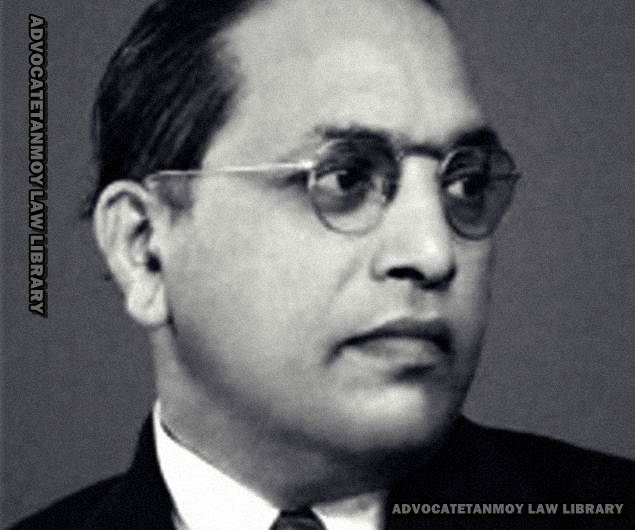
Comment: The inquiry posed by AmbedkarAmbedkar Bhimrao Ramji Sakpal (April 14, 1891-6th Dec. 1956), Son of Ramji Maloji Sakpal, an army office(Subedar), renamed by his Brahmin Guru Krishna Keshav Ambedkar as Bhim Ram Ambedkar (भीमराव रामजी आंबेडकर), who later received M.A. and Ph.D. degrees from Columbia University in 1915 and 1916 respectively. ‘National Dividend for India — A Historic and Analytical Study’ was his Ph.D thesis, which was published as “Evolution of Provincial Finance in British India.” His D.Sc thesis was “Problem of Rupee Its Origin and Solution”. He became a Barrister in 1923. In 1946, he was elected to the Constituent Assembly from Bengal and published 'Who were Shudras'? On 25/11/1949, Ambedkar in his concluding speech in the constituent assembly said: "The credit that is given to me does not really belong to me. It belongs partly to Sir B.N. Rau the Constitutional Advisor to the Constituent Assembly who prepared a rough draft of the Constitution for the consideration of the Drafting Committee." On 14th Oct. 1956, he converted to Buddhism. For him Sudras were Aryan and he never used the word "Dalit'. Ref is neither sincere nor pedantic as he presumed his conclusion and abruptly jumped on it, despite he had opportunity to compare the persecution factors between Brahmin or Islam, without making his position on the basis of Vincent Smith rejecting his own.
SOURCE: DR. BABASAHEB AMBEDKAR: WRITINGS AND SPEECHES- VOL-3 CHAPTER 10 MAJORITIES AND MINORITIESMinority group A minority is a group of people who are differentiated from others in the same society by ethnicity, race, nationality, or religion, and who occupy subordinate positions in the communities in which they reside. A minority group may be numerically smaller but, on the other hand, may constitute the majority insofar as population size is concerned. In several counties in a few southern states, the black population is by far the larger, but in most states and in the United States as a whole, blacks constitute a far smaller percentage of the total population.-Dr. Ambedkar Foundation