In our opinionOpinion A judge's written explanation of a decision of the court. In an appeal, multiple opinions may be written. The court’s ruling comes from a majority of judges and forms the majority opinion. A dissenting opinion disagrees with the majority because of the reasoning and/or the principles of law on which the decision is based. A concurring opinion agrees with the end result of the court but offers further comment possibly because they disagree with how the court reached its conclusion. a preliminary decree for partition crystallizes the rights of parties for seeking partition to the extent declared, the equities remain to be worked out in final decree proceedings. Till partition is carried out and final decree is passed, there is no question of any limitation running against right to claimA Claim A claim is “factually unsustainable” where it could be said with confidence before trial that the factual basis for the claim is entirely without substance, which can be the case if it were clear beyond question that the facts pleaded are contradicted by all the documents or other material on which it is based. partition as per preliminary decree. Even when application is filed seeking appointment of Commissioner, no limitation is prescribed for this purpose, as such, it would not be barred by limitation, lis continues till preliminary decree culminates in to final decree.
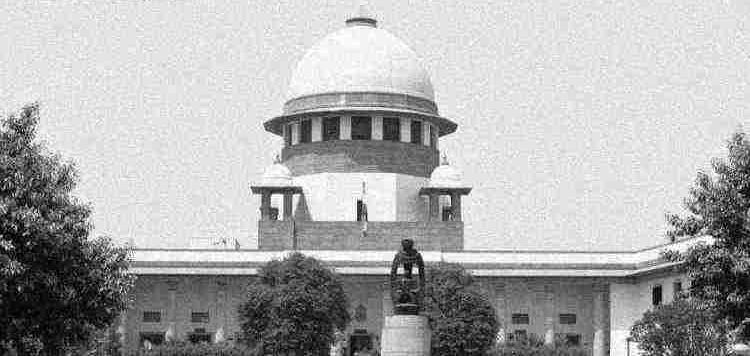
Supreme Court of IndiaArticle 124 of the Constitution of India Constitution of India > 124. Supreme Court (1) There shall be a Supreme Court of India consisting of a Chief Justice of India and, until Parliament by law prescribes a larger number, of not more than seven other Judges. (2) Every Judge of the Supreme Court shall be appointed by the President by warrant under his hand and seal and shall hold office until he attains the age of sixty-five years: Provided that-- (a) a Judge may, by writing under his hand addressed to the President, resign his office (b) a Judge may be removed from his office in the manner provided in clause (4). (2A) The age of a Judge of the Supreme Court shall be determined by such authority and in such manner as Parliament may by law provide. (3) A person shall not be qualified for appointment as a Judge of the Supreme Court unless he is a citizen of India and-- (a) has been for at least five years a Judge of a High Court or of two or more such Courts in succession; or (b) has been for at least ten years an advocate of a High Court or of two or more such courts in succession; or (c) is, in the opinion of the President, a distinguished jurist. (4) A Judge of the Supreme Court shall not be removed from his office except by an order of the President passed after an address by each House of Parliament supported by a majority of the total membership of that House and by a majority of not less than two-third of the members of the House present and voting has been presented to the President in the same session for such removal on the ground of proved misbehavior or incapacity. (5) Parliament may by law regulate the procedure for the presentation of an address and for the investigation and proof of the misbehavior or incapacity of a Judge under clause (4): (6) Every person appointed to be a Judge of the Supreme Court shall, before he enters upon his office, make and subscribe before the President, or some person appointed in that behalf by him, an oath or affirmation according to the form set out for the purpose in the Third Schedule. (7) No person who has held office as a Judge of the Supreme Court shall plead or act in any court or before any authority within the territory of India.
Venu vs Ponnusamy Reddiar (Dead) Thr. Lrs …
Decided on : 27 April, 2017
Acts:- Article 181 of the Limitation Act, 1908
IN THE SUPREME COURT OF INDIA
CIVIL APPELLATE JURISDICTIONJurisdiction Authority by which courts receive and decide cases. Limited Jurisdiction: the authority over only particular types of cases, or cases under a prescribed amount in controversy, or seeking only certain types of relief, the District Court is a court of limited jurisdiction. Original Jurisdiction: Jurisdiction of the first court to hear a case.
CIVIL APPEALCivil Appeal Vasant Ganesh Damle vs. Shrikant Trimbak Datar (AIR 2002 SC 1237) in the following words: "The appeal is considered to be an extension of the suit because U/S. 107 of the Code of Civil Procedure, the appellate Court has the same powers as are conferred by the Code on Courts of original jurisdiction in respect of suits instituted therein. Such a power can be exercised by the appellate Court "as nearly as may be" exercised by the trial Court under the Code. If the powers conferred upon the trial Court are under a specified statute and not under the Code, it has to be ascertained as to whether such a power was intended to be exercised by the appellate Court as well. Such a position can be ascertained by having a reference to the specified law by keeping in mind the legislative intention of conferment of power on the appellate Court either expressly or by necessary implication." No(s). 4187 OF 2008
VENU VERSUS PONNUSAMY REDDIAR (DEAD) THR. LRS & ANR.
O R D E R
Only question raised in the present appeal is with respect to the limitation for execution of preliminary decree for partition. In the instant case, the application for execution of the decree was filed after thirty years of the preliminary decree. That too in the shape for the appointment of an court Commissioner so as to carry out the preliminary decree which has been passed on 23.11.1959. The application for the execution of the decree was filed on 3.10.1989 i.e. after thirty years.
Learned counsel appearing on the appellant has submitted that since the application had been filed for appointment of court commissioner, it ought to be governed by provisions of Article 137 of the Limitation Act, 1963.
On the other hand, learned counsel appearing on behalf of the decree holder has urged that in substance an application has been filed for final decree proceedings and the cost of the final proceedings is paid then the preliminary decree is executed, thus application for execution of preliminary decree for partition could not be said to be barred by limitation.
In our opinion a preliminary decree for partition crystallizes the rights of parties for seeking partition to the extent declared, the equities remain to be worked out in final decree proceedings. Till partition is carried out and final decree is passed, there is no question of any limitation running against right to claim partition as per preliminary decree. Even when application is filed seeking appointment of Commissioner, no limitation is prescribed for this purpose, as such, it would not be barred by limitation, lis continues till preliminary decree culminates in to final decree.
The matterMatter Normal matter is made of molecules, which are themselves made of atoms. Inside the atoms, electrons are spinning around the nucleus. The nucleus is made of protons and neutrons. Inside the protons and neutrons, exist indivisible quarks, like the electrons. All matter around us is made of elementary particles. ( building blocks of matter > quarks and leptons). All stable matter in the universe is made from particles that belong to the first-generation. Fundamental forces result from the exchange of force-carrier particles, which belong to a broader group called “bosons”. The strong force is carried by the “gluon”, electromagnetic force is carried by the “photon.” is no more res integra. The Division Bench of the High Court of CalcuttaHigh Court at Calcutta The High Court at Calcutta (High Court of Judicature at Fort William>opened on 1st July 1862, with Sir Barnes Peacock as its first Chief Justice) was established by the Letters Patent dated 14th May 1862 (High Court's Act, 1861), which provided the jurisdiction and powers of the High Court. in In Bhusan Chandra Mondal vs. Chhabimoni Dasi,[AIRAIR All India Reporter 1948 CALCUTTA 363] considered the question when a preliminary decree was passed in a suit for partition in courts, the court consider the applicability of Article 181 of the Limitation Act, 1908 (in short ‘the old Act’) the court has laid down thus :
“(6) Article 181 is the residuary Article relating to applications. In a mortgage suit it has been held that the application for a final decree has to be made within 3 years by reason of Article 181,Limitation Act. But those decisions are not helpful because O.34 R.4 Civil P.C.expressly requires the mortageee to make an application for a final decree, either for foreclosure or for sale. In a suit for partition and/or accountsAccounting It is the process of recording, summarizing, analyzing, and reporting financial transactions of a business or individual. Types of Accounts > Assets- Things you own (cash, property) Liabilities- Things you owe (loans, bills) Equity- Owner’s stake in the business Revenue- Money you earn (sales, services) Expenses- Costs to run the business a party need not make an application for making the decree final. After the preliminary decree is in such a suit has been passed it is the usual practice for the plaintiff to make an application for the appointment of the Commissioner but there were no legal bar in the court appointing the commissioner suo motu and asking the plaintiff to deposit the commissioner’s fee in Court. If he does not deposit the fees any other party to the suit can do so and take upon himself the carriage of the proceedings if the plaintiff and none of the other parties make the deposit the factFact Something तथ्य (In-formation) that truly exists or happens or some-thing that has actual existence. Circumstances: a fact or event that makes a situation the way it is. Indian Evidence Act: It means and includes— (i) anything, state of things, or relation of things, capable of being perceived by the senses; (ii) any mental condition of which any person is conscious. “facts in issue” means and includes any fact from which, either by itself or in connection with other facts, the existence, non-existence, nature or extent of any right, liability or disability, asserted or denied in any suit or proceeding, necessarily follows. that the court would not be able to dismiss the suit is, however, another matter.
(7) We therefore do not see our way to accept the petitioner’s contentions on this point also.” Similar is the view adopted by a Single judge of the High CourtHigh Court High Court Judges in England and Wales handle complex and tough cases, sitting in London and traveling to court centers around the country. They preside over serious criminal and important civil cases, and support the Lord and Lady Justices in hearing appeals. High Court Judges are commonly referred to as ‘Mr/Mrs/Ms Justice surname’ and are given the prefix ‘The Honourable’. They are assigned to the King’s Bench Division, the Family Division, or the Chancery Division. The King’s Bench Division focuses on civil wrongs and judicial review, the Family Division deals with family law, and the Chancery Division handles various cases including company law and probate. Judges are appointed through a rigorous process overseen by the Judicial Appointments Commission. of Kerala in Laxmi & Ors. vs. A. Sankappa Alwa & Ors. [AIR 1989 KERALA 289] the logicLogic What is logic > Glossary of Indian Logic (Sanskrit)-तर्क शब्दावली > Logical Reasoning - Set One given by the High Court of Kerala that the preliminary decree does not completely dispose of the suit. The suit continues till the final decree is passed. Suit is pending till the passing of the final decree. There is no necessity of filing an application to apply for the final decree proceedings by litigants, then there is an obligation on the court for drawing up a final decree. The court had held thus : “15.I turn to consider the question of obligation of the Court and the parties after a preliminary decree is given in a partition suit. I do not propose to discuss that matter elaborately. In my view a preliminary decree conclusively determines the rights and liabilities of the parties with regard to all or some of the matters in controversy in the suit although it does not completely dispose of the suit. Further proceedings await the suit to work out and adjust the rights of the parties. The Court cannot dismiss a suit for default when once a preliminary decree is passed in a partition suit. The parties to the suit have acquired rights or incurred liabilities under the decree. They are final, unless or until the decree is varied or set aside. The lawLaw νόμος: Positive command of sovereign or divine. One can be ruled either by a Statute, a Statue, or a Statement. Legislation is the rule-making process by a political or religious organisation. Physics governs natural law. Logical thinking is a sign of a healthy brain function. Dharma is eternal for Sanatanis. Judiciary > Show me the face, and I will show you the law. Some people know how to bend the law rather than break it. Law Practice. Read a scholarly article being so, if the plaintiff does not take any steps after a preliminary decree is passed, the Court should adjourn the proceedings sine die with liberty to the parties concerned to end the torpor and suspended animation of the suit by activising it by taking appropriate proceedings. In Thomas v. Bhavani Amma, 1969 Ker LT 729, KrishnaKrishna Author of Bhagavad Gita (3227-3102 BCE) > “कृषिर्भूवाचकः शब्दः णश्च निर्वृतिवाचकः । तयोरैक्यं परं ब्रह्म कृष्णैत्यभिधीयते”| (“कृषेर्व्वर्णे” । उणां ३ । ४ । इति नक् ततो णत्वम् । Similar: विष्णु नारायण कृष्ण वैकुण्ठ विष्टरश्रवस् दामोदर हृषीकेश केशव माधव स्वभू दैत्यारि पुण्डरीकाक्ष गोविन्द गरुडध्वज पीताम्बर अच्युत शार्ङ्गिन् विष्वक्सेन जनार्दन उपेन्द्र इन्द्रावरज चक्रपाणि चतुर्भुज पद्मनाभ मधुरिपु वासुदेव त्रिविक्रम देवकीनन्दन शौरि श्रीपति पुरुषोत्तम वनमालिन् बलिध्वंसिन् कंसाराति अधोक्षज विश्वम्भर कैटभजित् विधु श्रीवत्सलाञ्छन पुराणपुरुष यज्ञपुरुष नरकान्तक जलशायिन् विश्वरूप मुकुन्द मुरमर्दन लक्ष्मीपति मुरारि अज अजित अव्यक्त वृषाकपि बभ्रु हरि वेधस् | Iyer, J. observed :
“It is correct law that in a suit for partition, after the passing of a preliminary decree it is the duty of the Court to pass a final decree and what is called an application for final decree is but a reminder to the Court of its duty. If so, it is the Court’s duty to give notice to the parties.”
19.No rule provides for the filing of an application by the party for passing a final decree. The preliminary decree will not dispose of the suit. The suit continues. The position being so, it is more appropriate for the Court to adjourn the case sine die. It is difficult for me to say that there is an obligation on the part of the Court to “pass the final decree after necessary enquiries” as observed by Paripoornan, J. in 1985 Ker LT 940 (Sreedevi Amma v. Nani Amma).
20. I am of the opinion that an application for drawing up a final decree in a partition suit is in no way an application contemplated under the Limitation Act. It is a reminder to the Court that something which the Court is obliged to do has not been done and so, such an application, is not governed by any provision of the Limitation Act. When once the rights of the parties have been finally determined in a preliminary decree, an application by a party thereto or the legal representatives, for effecting the actual partition in accordance with the directions contained in the preliminary decree can never be construed to be an application within the meaning of the Limitation Act. It shall be taken to be an application in a pending suit and therefore the question of limitation does not arise.
Similar is the view taken by the Single Bench of High Court of Punjab & Haryana in Naresh Kumar & Anr. vs. Smt. Kailash Devi & Ors. [AIR 1999 Punjab and Haryana 102] in which reliance has been placed upon the decision of High Court of Madras in Ramanathan Chetty v. Alagappa Chetty [AIR 1930 Mad. 528] in which it was held that until final decree is passed in a partition suit, limitation will not come into play because the suit continues, till final decree is passed. Reliance is also placed on a decision of High Court of Peshawar in Faqir Chand v. Mohammad Akbar Khan [AIR 1933 Peshawar 101(2)], in which it has been observed that there is no obligation of a litigant to apply for final decree proceedings. As such there is no question of application of the limitation. Another decision of the High Court of Orissa had been referred in Sudarsan Panda vs. Laxmidhar Panda [AIR 1983 Orissa 121] in which also similar view had been taken.
In the instant case, the other ground which was taken by the appellant with respect to the preliminary decree being worked out by way of compromise. However, the factum of compromises has not been found to be established. Thus there is no satisfaction of the preliminary decree which had been passed in the instant case. The decision in Varatharajulu Reddiar vs. Venkatakrishna Reddiar & Ors. [1967 (2) Madras Law Journal 342] is pertinent in this regard, in which it has been observed that in case parties had affected partition by metes and bounds as per the preliminary decree, it would not be necessary to undertake the final decree proceedings but in the instant case, it has not been found to be established that parties have worked out their rights by mutual agreementContract An agreement enforceable by law is a contract. All agreements are contracts if they are made by the free consent of parties competent to contract, for a lawful consideration and with a lawful object, and are not hereby expressly declared to be void. Indian Contract Act.. Thus the final decree has to be drawn in accordance with law. We appreciate the fairness with which the case has been argued by the learned counsel appearing for the appellant.
Thus we find no merit in this appeal which is hereby dismissed. No order as to costsCosts Subject to any written law, costs are at the discretion of the Court, and the Court has the power to determine all issues relating to the costs of or incidental to all proceedings, including by whom and to what extent the costs are to be paid, at any stage of the proceedings or after the conclusion of the proceedings. Generally “Costs” includes charges, disbursements, expenses, fees, and remuneration. Costs in any matter are payable from the date of the order of the Court unless the parties otherwise agree. The costs of a third-party funding contract are not recoverable as part of the costs of, or costs..
(ARUN MISHRA)
(AMITAVA ROY)
NEW DELHINew Delhi Indraprastha, the capital of Emperor Yudhisthira and Pandavas constructed by Mayasura, where Rajasuya Yagna was performed under the guidance of Krishna Dvaipayana and the protection of Vasudeva Krishna in the present-day Raja Ghat area. Prtvi Rajaj was the last Hindu king of Delhi.;
APRIL 27, 2017
More Stories
Supreme Court Daily Digest (26th Jan 2026)
Analysis of Section 8(1)(j), Right to Information Act, 2005
Judicial office is essentially a public trust: Supreme Court