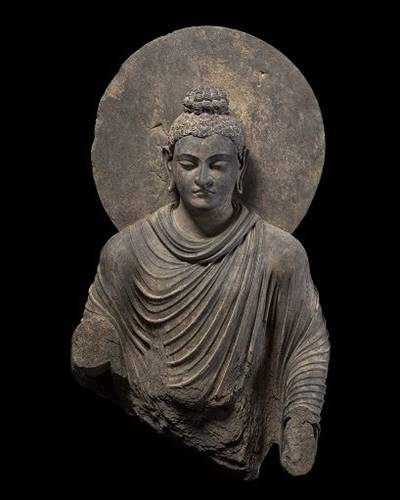
Ghata Jataka (454)
Once upon a timeTime χρόνος. Judicial: Where any expression of it occurs in any Rules, or any judgment, order or direction, and whenever the doing or not doing of anything at a certain time of the day or night or during a certain part of the day or night has an effect in law, that time is, unless it is otherwise specifically stated, held to be standard time as used in a particular country or state. (In Physics, time and Space never exist actually-“quantum entanglement”) यमः , पुं, (यमयति नियमयति जीवानां फलाफलमिति । यम् + अच् । विश्वे च कलयत्येव यः सर्व्वायुश्च सन्ततम् । अतीव दुर्निवार्य्यञ्च तं कालं प्रणमाम्यहम् ॥यमैश्च नियमैश्चैव यः करोत्यात्मसंयमम् । स चादृष्ट्वा तु मां याति परं ब्रह्म सनातनम् ॥, a king named Mahakamsa reigned in Uttarapatha, in the Kamsa districtDistrict India has 800 districts under 29 federal states and 8 union territories. Adilabad Agar-Malwa Agra Ahilyanagar Ahmedabad Aizawl Ajmer Akola Alappuzha Aligarh Alipurduar Alirajpur Alluri Sitharama Raju Almora Alwar Ambala Ambedkar Nagar Amethi Amravati Amreli Amritsar Amroha Anakapalli Anand Ananthapuramu Anantnag Anjaw Annamayya Anugul Anuppur Araria Ariyalur Arvalli Arwal Ashoknagar Auraiya Aurangabad Ayodhya Azamgarh Bagalkote Bageshwar Baghpat Bahraich Bajali Baksa Balaghat Balangir Baleshwar Ballari Ballia Balod Balodabazar-Bhatapara Balotra Balrampur Balrampur-Ramanujganj Banas Kantha Banda Bandipora Banka Bankura Banswara Bapatla Bara Banki Baramulla Baran Bareilly Bargarh Barmer Barnala Barpeta Barwani Bastar Basti Bathinda Beawar Beed Begusarai Belagavi Bemetara Bengaluru Rural Bengaluru Urban Betul Bhadohi Bhadradri Kothagudem Bhadrak Bhagalpur Bhandara Bharatpur Bharuch Bhavnagar Bhilwara Bhind Bhiwani Bhojpur Bhopal Bichom Bidar Bijapur Bijnor Bikaner Bilaspur Bilaspur Birbhum Bishnupur Biswanath Bokaro Bongaigaon Botad Boudh Budaun Budgam Bulandshahr Buldhana Bundi Burhanpur Buxar Cachar Central Chamarajanagar Chamba Chamoli Champawat Champhai Chandauli Chandel Chandigarh Chandrapur Changlang Charaideo Charkhi Dadri Chatra Chengalpattu Chennai Chhatarpur Chhatrapati Sambhajinagar Chhindwara Chhotaudepur Chikkaballapura Chikkamagaluru Chirang Chitradurga Chitrakoot Chittoor Chittorgarh Chumoukedima Churachandpur Churu Coimbatore Cooch Behar Cuddalore Cuttack Dadra And Nagar Haveli Dahod Dakshin Bastar Dantewada Dakshin Dinajpur Dakshina Kannada Dhenkanal Dholpur Dhubri Dhule Dibang Valley Dibrugarh Didwana-Kuchaman Dima Hasao Dimapur Dindigul Dindori Diu Doda Dr. B.R. Ambedkar Konaseema Dumka Dungarpur Durg East East Garo Hills East Godavari East Jaintia Hills East Kameng East Khasi Hills East Siang East Singhbum Eastern West Khasi Hills Eluru Ernakulam Erode Etah Etawah Faridabad Faridkot Farrukhabad Fatehabad Fatehgarh Sahib Fatehpur Fazilka Ferozepur Firozabad Gadag Gadchiroli Gajapati Ganderbal Gandhinagar Ganganagar Gangtok Ganjam Garhwa Gariyaband Gaurela-Pendra-Marwahi Gautam Buddha Nagar Gaya Ghaziabad Ghazipur Gir Somnath Giridih Goalpara Godda Golaghat Gomati Gonda Gondia Gopalganj Gorakhpur Gumla Guna Guntur Gurdaspur Gurugram Gwalior Gyalshing Hailakandi Hamirpur Hamirpur Hanumakonda Hanumangarh Hapur Harda Hardoi Haridwar Hassan Hathras Haveri Hazaribagh Hingoli Hisar Hnahthial Hojai Hooghly Hoshiarpur Howrah Hyderabad Idukki Imphal East Imphal West Indore Jabalpur Jagatsinghapur Jagitial Jaipur Jaisalmer Jajapur Jalandhar Jalaun Jalgaon Jalna Jalore Jalpaiguri Jammu Jamnagar Jamtara Jamui Jangoan Janjgir-Champa Jashpur Jaunpur Jayashankar Bhupalapally Jehanabad Jhabua Jhajjar Jhalawar Jhansi Jhargram Jharsuguda Jhunjhunu Jind Jiribam Jodhpur Jogulamba Gadwal Jorhat Junagadh Kabeerdham Kachchh Kaimur (Bhabua) Kaithal Kakching Kakinada Kalaburagi Kalahandi Kalimpong Kallakurichi Kamareddy Kamjong Kamle Kamrup Kamrup Metro Kancheepuram Kandhamal Kangpokpi Kangra Kannauj Kanniyakumari Kannur Kanpur Dehat Kanpur Nagar Kapurthala Karaikal Karauli Karbi Anglong Kargil Karimganj Karimnagar Karnal Karur Kasaragod Kasganj Kathua Daman Damoh Dangs Darbhanga Darjeeling Darrang Datia Dausa Davanagere Deeg Dehradun Deogarh Deoghar Deoria Devbhumi Dwarka Dewas Dhalai Dhamtari Dhanbad Dhar Dharashiv Dharmapuri Dharwad Dhemaji Katihar Katni Kaushambi Kendrapara Kendujhar Keyi Panyor Khagaria Khairagarh-Chhuikhadan-Gandai Khairthal-Tijara Khammam Khandwa (East Nimar) Khargone (West Nimar) Khawzawl Kheda Kheri Khordha Khowai Khunti Kinnaur Kiphire Kishanganj Kishtwar Kodagu Koderma Kohima Kokrajhar Kolar Kolasib Kolhapur Kolkata Kollam Kondagaon Koppal Koraput Korba Korea Kota Kotputli-Behror Kottayam Kozhikode Kra Daadi Krishna Krishnagiri Kulgam Kullu Kumuram Bheem Asifabad Kupwara Kurnool Kurukshetra Kurung Kumey Kushinagar Lahaul And Spiti Lakhimpur Lakhisarai Lakshadweep District Lalitpur Latehar Latur Lawngtlai Leh Ladakh Leparada Lohardaga Lohit Longding Longleng Lower Dibang Valley Lower Siang Lower Subansiri Lucknow Ludhiana Lunglei MAUGANJ Madhepura Madhubani Madurai Mahabubabad Mahabubnagar Mahasamund Mahendragarh Mahesana Mahisagar Mahoba Mahrajganj Maihar Mainpuri Majuli Malappuram Malda Malerkotla Malkangiri Mamit Mancherial Mandi Mandla Mandsaur Mandya Munger Murshidabad Muzaffarnagar Muzaffarpur Mysuru Nabarangpur Nadia Nagaon Nagapattinam Nagarkurnool Nagaur Nagpur Nainital Nalanda Nalbari Nalgonda Namakkal Namchi Namsai Nanded Nandurbar Nandyal Narayanpet Narayanpur Manendragarh-Chirmiri-Bharatpur(M C B) Mangan Mansa Marigaon Mathura Mau Mayiladuthurai Mayurbhanj Medak Medchal Malkajgiri Meerut Meluri Mirzapur Moga Mohla-Manpur-Ambagarh Chouki Mokokchung Mon Moradabad Morbi Morena Mulugu Mumbai Mumbai Suburban Mungeli Narmada Narmadapuram Narsimhapur Nashik Navsari Nawada Nayagarh Neemuch New Delhi Nicobars Nirmal Niuland Niwari Nizamabad Noklak Noney North North 24 Parganas North And Middle Andaman North East North Garo Hills North Goa North Tripura North West Ntr Nuapada Nuh Pakke Kessang Pakur Pakyong Palakkad Palamu Palghar Pali Palnadu Palwal Panch Mahals Panchkula Pandhurna Panipat Panna Papum Pare Parbhani Parvathipuram Manyam Paschim Bardhaman Paschim Medinipur Pashchim Champaran Patan Pathanamthitta Pathankot Patiala Patna Pauri Garhwal Peddapalli Perambalur Peren Phalodi Phek Pherzawl Pilibhit Pithoragarh Poonch Porbandar Prakasam Pratapgarh Pratapgarh Prayagraj Puducherry Pudukkottai Pulwama Pune Purba Bardhaman Ranipet Ratlam Ratnagiri Rayagada Reasi Rewa Rewari Ri Bhoi Rohtak Rohtas Rudraprayag Rupnagar S.A.S Nagar Sabar Kantha Sagar Saharanpur Saharsa Sahebganj Saitual Sakti Salem Salumbar Samastipur Samba Purba Medinipur Purbi Champaran Puri Purnia Purulia Rae Bareli Raichur Raigad Raigarh Raipur Raisen Rajanna Sircilla Rajgarh Rajkot Rajnandgaon Rajouri Rajsamand Ramanagara Ramanathapuram Ramban Ramgarh Rampur Ranchi Ranga Reddy Sambalpur Sambhal Sangareddy Sangli Sangrur Sant Kabir Nagar Saraikela Kharsawan Saran Sarangarh-Bilaigarh Satara Satna Sawai Madhopur Sehore Senapati Seoni Sepahijala Serchhip Shahdara Shahdol Shahid Bhagat Singh Nagar Shahjahanpur Shajapur Shamator Shamli Sheikhpura Sheohar Sheopur Shi Yomi Shimla Shivamogga Shivpuri Shopian Shrawasti Siaha Siang Siddharthnagar Siddipet Sidhi Sikar Simdega Sindhudurg Singrauli Sirmaur Sirohi Sirsa Sitamarhi Sitapur Sivaganga Sivasagar Siwan Solan Solapur Sonbhadra Sonepur Sonipat Sonitpur Soreng South South 24 Parganas South Andamans South East South Garo Hills South Goa South Salmara Mancachar South Tripura South West South West Garo Hills South West Khasi Hills Sri Muktsar Sahib Sri Potti Sriramulu Nellore Sri Sathya Sai Srikakulam Srinagar Sukma Sultanpur Sundargarh Supaul Surajpur Surat Surendranagar Surguja Suryapet Tamenglong Tamulpur Tapi Tarn Taran Tawang Tehri Garhwal Tengnoupal Tenkasi Thane Thanjavur The Nilgiris Theni Thiruvallur Thiruvananthapuram Thiruvarur Thoothukkudi Thoubal Thrissur Tikamgarh Tinsukia Tirap Tiruchirappalli Tirunelveli Tirupathur Tirupati Tiruppur Tiruvannamalai Tonk Tseminyu Tuensang Tumakuru Udaipur Udalguri Udham Singh Nagar Udhampur Udupi Ujjain Ukhrul Warangal Wardha Washim Wayanad West West Garo Hills West Godavari West Jaintia Hills West Kameng West Karbi Anglong West Khasi Hills West Siang West Singhbhum West Tripura Wokha Y.S.R. Yadadri Bhuvanagiri Yadgir Yamunanagar Yavatmal Zunheboto Umaria Una Unakoti Unnao Upper Siang Upper Subansiri Uttar Bastar Kanker Uttar Dinajpur Uttara Kannada Uttarkashi Vadodara Vaishali Valsad Varanasi Vellore Vidisha Vijayanagara Vijayapura Vikarabad Viluppuram Virudhunagar Visakhapatnam Vizianagaram Wanaparthy, in the city of Asitañjanā. He had two sons, Kamsa and Upakamsa, and one daughter named Devagabbha. On her birthday the brahmins who foretold the future said of her: “A son born of this girl will one day destroy the country and the lineage of Kamsa.”
The king was too fond of the girl to put her to death; but leaving her brothers to settle it, lived his days out, and then died. When he died Kamsa became king, and Upakaṃsa was viceroy. They thoughtThinking Human beings began conscious thought as far back as sixty million years ago. By around three hundred thousand years ago, humans inhabiting the Indian subcontinent had developed forms of cognition comparable to those of the modern age, including awareness of competition, defense, and collective security. These early communities were capable of abstract observation, such as counting stars in the night sky, and engaged in reflective discussion about everyday experiences, including the flavors and qualities of food, indicating a sophisticated mental and social life. that there would be an outcry were they to put their sister to death, so resolved to give her in marriage to none, but to keep her husbandless, and watch; and they built a single round tower, for her to live in.
Now she had a serving womanMen Ανθρωποι (People), a woman (γυναίκα), Man (Ανδρας) > Adama, Manu > No proof to establish that due to mutation a monkey turned into a human being. named Nandagopa (नन्दगोपा), and the woman’s husband, Andhakavenhu, was the servant who watched her. At that time a king named Mahāsāgara reigned in Upper Madhura (मथुरा), and he had two sons, Sāgara and Upasāgara. At their father’s death, Sāgara became king, and Upasāgara was viceroy. This lad was Upakaṃsa’s friend, brought up together with him and trained by the same teacherTeacher מוֹרֶה Rebbe (“my teacher”) and Rabbeinu Hakadosh (“our holy teacher”). Δάσκαλος (अध्यापकः). But he was intrigued in his brother’s zenana, and being detected, ran away to Upakamsa in the Kaṃsa estate. Upakaṃsa introduced him to King Kaṃsa, and the king had him in great honour.
Upasagara while waiting upon the king observed the tower where dwelt Devagabbhā; and on asking who lived there, heard the story, and fell in love with the girl. And Devagabbha one day saw him as he went with Upakaṃsa to wait upon the king. She asked who that was; and being told by Nandagopa that it was Upasāgara, son of the great king Sagara, she too fell in love with him. Upasāgara gave a present to Nandagopā, saying, “Sister, you can arrange a meeting for me with Devagabbha.” “Easy enough,” said Nandagopa, and told the girl about it.
She being already in love with him, agreed at once. One night Nandagopā arranged a meeting and brought Upasāgara up into the tower, and there he stayed with Devagabbha (देवगर्वा). And by their constant intercourse, Devagabbhā conceived. By and by it became known that she was with child, and the brothers questioned Nandagopā. She made them promise her pardon, and then told the ins and outs of the matterMatter Normal matter is made of molecules, which are themselves made of atoms. Inside the atoms, electrons are spinning around the nucleus. The nucleus is made of protons and neutrons. Inside the protons and neutrons, exist indivisible quarks, like the electrons. All matter around us is made of elementary particles. ( building blocks of matter > quarks and leptons). All stable matter in the universe is made from particles that belong to the first-generation. Fundamental forces result from the exchange of force-carrier particles, which belong to a broader group called “bosons”. The strong force is carried by the “gluon”, electromagnetic force is carried by the “photon.”. When they heard the story, they thought, “We cannot put our sister to death. If she bears a daughter, we will spare the babe also; if a son, we will kill him.” And they gave Devagabbha to Upasagara to wife.
When her full time came to be delivered, she brought forth a daughter. The brothers on hearing this were delighted and gave her the name of Lady Aajana. And they allotted to them a village for their estate, named Govaddhamana (गोबरधमाना). Upasāgara took Devagabbhā and lived with her at the village of Govaḍḍhamāna.
Devagabbhā was again with child, and that very day Nandagopā conceived also. When their time was come, they brought forth on the same day, Devagabbhā a son and Nandagopā a daughter. But Devagabbhā, in fear that her son might be put to death, sent him secretly to Nandagopa, and received Nandagopā’s daughter in return. They told the brothers of the birth. “Son or daughter?” they asked. “Daughter,” was the reply. “Then see that it is reared,” said the brothers. In the same way, Devagabbhā bore ten sons, and Nandagopā ten daughters. The sons lived with Nandagopā and the daughters with Devagabbhā, and not a person knew the secret.
The eldest son of Devagabbha was named Vasu-deva (वासुदेव), the second Baladeva, the third Canda-deva, the fourth Suriya-deva, the fifth Aggi-deva, the sixth Varuṇa-deva, the seventh Ajjuna (अर्जुन), the eighth Pajjuna, the ninth Ghata-Pandita (घट पंडित), the tenth Amkura. They were well known as the sons of Andhakavenhu the servitor, the Ten Slave-Brethren.
In the course of time they grew big, and being very strong, and withal fierce and ferocious, they went about plundering (लुण्ठन), they even went so far as to plunder a present being conveyed to the king. The peopleMen Ανθρωποι (People), a woman (γυναίκα), Man (Ανδρας) > Adama, Manu > No proof to establish that due to mutation a monkey turned into a human being. came crowding in the king’s courtyard, complaining, “Andhakavenhu’s sons, the Ten Brethren, are plundering the land!” So the king summoned Andhakavenhu, and rebuked him for permitting his sons to plunder. In the same way complaint was made three or four times, and the king threatened him. He being in fear of his life craved the boon of safety from the king, and told the secret, that how these were no sons of his, but of Upasagara.
The king was alarmed. “How can we get hold of them?” he asked his courtiers. They replied, “Sire, they are wrestlers. Let us hold a wrestling match in the city, and when they enter the ring we will catch them and put them to death.” So they sent for two wrestlers, Canura and Mutthika, and caused a proclamation to be made throughout the city by the beat of the drum, “that on the seventh day, there would be a wrestling match (मल्ला युद्ध).”
The wrestling ring was prepared in front of the king’s gate; there was an enclosure for the games, the ring was decked out gaily, the flags of victory were ready tied. The whole city was in a whirl; line over line rose the seats, tier above tier. Cānura and Muṭṭhika went down into the ring, and strutted about, jumping, shouting, clapping their hands. The Ten Brethren came too. On their way they plundered the washer men’s street, and clad themselves in robes of bright colours, and stealing perfume from the perfumers’ shops, and wreaths of flowers from the florists, with their bodies all anointed, garlands upon their heads, earrings in their ears, they strutted into the ring, jumping, shouting, clapping their hands.
At that moment, Canura (चाणूर) was walking about and clapping his hands. Baladeva, seeing him, thought, “I won’t touch yon fellow with my hand!” so catching up a thick strap from the elephant stable, jumping and shouting he threw it round Cānura’s belly, and joining the two ends together, brought them tight, then lifting him up, swung him round over his head, and dashing him on the ground rolled him outside the arena. When Cānura was dead, the king sent for Muṭṭhika (मुस्टिका). Up got Muṭṭhika, jumping, shouting, clapping his hands. Baladeva smote him, and crushed in his eyes; and as he cried out—”I’m no wrestler! I’m no wrestler!” Baladeva tied his hands together, saying, “Wrestler or no wrestler, it is all one to me,” and dashing him down on the ground, killed him and threw him outside the arena.
Muṭṭhika in his death-throes, uttered a prayerPraying It can be interpreted as a political idea. It implicitly assumes the existence of the powerful and the powerless, with an intermediate agency positioned between them. This agency, often unquestioned and abstract, functions to preserve the existing balance between power and poverty. In doing so, prayer operates as a mechanism that normalizes hierarchy, encourages acceptance over challenge, and sustains the status quo without requiring conscious awareness from those who participate in it.—”May I become a goblin, and devour him!” And he became a goblin, in a forest called by the name of Kalamattiya. The king said, “Take away the Ten Slave-Brethren.” At that moment, Vāsudeva threw a wheel, which lopped off the heads of the two kingly brothers. The crowd, terrified, fell at his feet, and prayed him to be their protector.
Thus the Ten Brethren, having slain their two uncles, assumed the sovereignty of the city of Asitanjana (अशीतन्जाना), and brought their parents there.
They now set out, intending to conquer all of Bharata Varsha. In a while, they arrived at the city of Ayojjha, the seat of King Kāḷasena. This they encompassed about, and destroyed the jungle around it, breached the wall and took the king prisoner, and took the sovereignty of the place into their hands. Thence they proceeded to Dvaravati (द्वारावती).
Now this city had on one side the sea and on one the mountains. They say that the place was goblin-haunted. A goblin would be stationed on the watch, who seeing his enemies, in the shape of an ass would bray as the ass brays. At once, by goblin magic the whole city used to rise in the air, and deposit itself on an island in the midst of the sea; when the foe was gone, it would come back and settle in its own place again. This time, as usual, no sooner the ass saw those Ten Brethren coming, than he brayed with the bray of an ass. Up rose the city in the air, and settled upon the island. No city could they see, and turned back; then back came the city to its own place again. They returned—again the ass did as before. The sovereignty of the city of Dvaravati they could not take.
So they visited Kanha-dipayana (कृष्ण द्वैपायन), and said: “Sir, we have failed to capture the kingdom of Dvāravatī; tell us how to do it.” He said: “In a ditch, in such a place, is an ass walking about. He brays when he sees an enemy, and immediatelyForthwith In Rao Mahmood Ahmad Khan v. Ranbir Singh , has held that the word ‘forthwith’ is synonymous with the word immediately, which means with all reasonable quickness. When a statute requires something to be done ‘forthwith’ or ‘immediately’ or even ‘instantly’, it should probably be understood as allowing a reasonable time for doing it. The interpretation of the word ‘forthwith’ would depend upon the terrain in which it travels and would take its colour depending upon the prevailing circumstances which can be variable. (Shento Varghese v. Julfikar Husen & Ors [2024] 6 S.C.R. 409). Anwar Ahmad v. State of UP [1976] 1 SCR 779 : AIR (1976) SC 680; Nevada Properties (P) Ltd. v. State of Maharashtra & Anr. [2019] 15 SCR 223 : (2019) 20 SCC 119; State of Maharashtra v. Tapas D. Neogy [1999] Supp. 2 SCR 609 : 1999 INSC 417; Ravinder Kumar & Anr. v. State of Punjab [2001] Supp. 2 SCR 463 : (2001) 7 SCC 690; Bhajan Singh and Ors. v. State of Haryana [2011] 7 SCR 1 : 2011 INSC 422; HN Rishbud v. State of Delhi [1955] 1 SCR 1150 : (1954) 2 SCC 934; Sk. Salim v. State of West Bengal [1975] 3 SCR 394 : (1975) 1 SCC 653; China Apparao and Others v. State of Andhra Pradesh [2002] Supp. 3 SCR 175 : (2002) 8 SCC 440; Navalshankar Ishwarlal Dave v. State of Gujarat [1993] 3 SCR 676 : 1993 Supp. 3 SCC 754; Rao Mahmood Ahmad Khan v. Ranbir Singh [1995] 2 SCR 230 : (1995) Supp. 4 SCC 275; Bidya Deb Barma v. District Magistrate [1969] 1 SCR 562 : (1968) SCC OnLine SC 82. the city rises in the air. You must clasp hold of his feet , and that is the way to accomplish your end.” Then they took leave of the ascetic; and went all ten of then to the ass, and falling at his feet, said, “Sir, we have no help but thee! When we come to take the city, do not bray!” The ass replied, “I cannot help braying. But if you come first, and four of you bring great iron ploughs, and at the four gates of the city dig great iron posts into the ground, and when the city begins to rise, if you will fix on the post a chain of iron fastened to the plough, the city will not be able to rise.”
They thanked him, and he did not utter a sound while they got ploughs, and fixed the posts in the ground at the four gates of the city, and stood waiting. Then the ass brayed, the city began to rise, but those who stood at the four gates with the four ploughs, having fixed to the posts iron chains which were fastened to the ploughs, the city could not rise. Thereupon the Ten Brethren entered the city, killed the king, and took his kingdom.
Thus they conquered all of IndiaIndia Hind/ hend >hindia. Bharat Varsha (Jambudvipa used in Mahavamsha) is the name of this land mass. The people of this land are Sanatan Dharmin and they always defeated invaders. Indra (10000 yrs) was the oldest deified King of this land. Manu's jurisprudence enlitened this land. Vedas have been the civilizational literature of this land. Guiding principles of this land are : सत्यं वद । धर्मं चर । स्वाध्यायान्मा प्रमदः । The place also been called Hindusthan in Pesia. The word Hendu is mentioned in Avesta. Read more, and in three and sixty thousand cities they slew by the wheel all the kings of them, and lived at Dvaravati, dividing the kingdom into ten shares. But they had forgotten their sister, the Lady Añjanā. So “Let us make eleven shares of it,” said they. But Aṁkura answered, “Give her my share, and I will take to some business for a living; only you must remit my taxes each in your own country.” They consented, and gave his share to his sister;
and with her they dwelt in Dvāravatī, nine kings, while Aṁkura embarked in trade.
In course of time, they were all increased with sons and with daughters; and after a long time had gone by, their parents died. At that period, they say that a man’s life was twenty thousand years.
Then died one clearly beloved son of the great King Vāsudeva. The king, half dead with grief, neglected everything, and lay lamenting, and clutching the frame of his bed. Then Ghatapaṇḍita thought to himself, “Except me, no one else is able to soothe my brother’s grief; I will find some means of soothing his grief for him.” So assuming the appearance of madness, he paced through the whole city, gazing up at the sky, and crying out, “Give me a hare! Give me a hare!” All the city was excited: “Ghatapaṇḍita has gone mad!” they said. Just then a courtier named Rohineyya (Son of Rohini), went into the presence of King Vāsudeva, and opened a conversation with him by reciting the first stanza:
“Black Kanha, rise! why close the eyes to sleep? why lying there
Thine own born brother—see, the winds away his wit do bear,
Away his wisdom! Ghata raves, thou of the long black hair!”
When the courtier had thus spoken, the Master perceiving that he had risen, in his Perfect Wisdom uttered the second stanza:
“So soon the long-haired Kesava heard Rohiṇeyya’s cry,
He rose all anxious and distrest for Ghata’s misery.”
Up rose the king, and quickly came down from his chamber; and proceeding to Ghatapaṇḍita, he got fast hold of him with both hands; and speakingSpeech 400 million years ago, the larynx was developed and allowed for communication with other animals. 60 million years ago, human beings talked about Dynosure or like animals in India. The vocal tract was in place to support modern human discourse as early as 300,000 years ago in the Indian subcontinent. to him, uttered the third stanza:
“In maniac fashion, why do you pace Dvāraka all through,
And cry, “Hare, hare!” Say, who is there has taken a hare from you?”
To these words of the king, he only answered by repeating the same cry over and over again. But the king recited two more stanzas:
“Be it of gold, or made of jewels fine,
Or brass, or silver, as you may incline,
Shell, stone, or coral, I declare
I’ll make a hare.
“And many other hares there be, that range the woodland wide,
They shall be brought, I’ll have them caught; say, which do you decide?”
On hearing the king’s words, the wise man replied by repeating the sixth stanza:
“I crave no hare of earthly kind, but that within the moon:
O bring him down, O Kesava! I ask no other boon!”
“Undoubtedly my brother has gone mad,” thought the king, when he heard this. In great grief, he repeated the seventh stanza:
“In sooth, my brother, you will die, if you make such a prayer,
And ask for what no man may pray, the moon’s celestial hare.”
Ghatapaṇḍita, on hearing the king’s answer, stood stock still, and said: “My brother, you knowKnowledge Knowledge is derived from the process of an informed person integrating data from sense organs or intuition into their psyche. This concept is explored in the Vedic Nasadiya Sukta, which questions the possibility of ultimate truth or knowledge. In different languages, such as Greek, Latin, Sanskrit, and Chinese, knowledge is expressed as "η γνώση," "Scientia," "ज्ञानम् ," and "知识 Zhīshì," respectively. that if a man prays for the hare in the moon, and cannot get it, he will die; then why do you mourn for your dead son?”
“If, Kanha, this you know, and can console another’s woe,
Why are you mourning still the son who died so long ago?”
Then he went on, standing there in the street—”And I, brother, pray only for what exists, but you are mourning for what does not exist.” Then he instructed him by repeating two more stanzas:
“My son is born, let him not die!” Nor man nor deity
Can have that boon; then wherefore pray for what can never be?
“Nor mystic charm, nor magic roots, nor herbs, nor moneyMoney Χρήματα, νόμισμα (currency), Old French monoie, Pecunia, Money supply, Reserve money, Monetary System, Money-laundering, Electronic Money, Money Transfer, Promissory notes. Coin of Alexander (330 B.C.E). Dematerialized form is Paper Currency( In USA 1600 CE and in 1861 in India). Money makes men. Balance of Payments, Net borrowing. Euro, Dollar, INR. spent,
Can bring to life again that ghost whom, Kanha, you lament.”
The King, on hearing this, answered, “Your intent was good, dear one. You did it to take away my trouble.” Then in praise of Ghatapaṇḍita he repeated four stanzas:
“MenMen Ανθρωποι (People), a woman (γυναίκα), Man (Ανδρας) > Adama, Manu > No proof to establish that due to mutation a monkey turned into a human being. had I, wise and excellent to give me good advice:
But how hath Ghatapaṇḍita opened this day mine eyes!
“Blazing was I, as when a man pours oil upon a fireFire It was created from stones approximately 400,000 years ago, or possibly much earlier. Researchers have discovered the earliest known instance of human-created fire, which took place in the east of England 400,000 years ago (in the village of Barnham). The Rigveda mentions the use of Agni for Yagna much earlier than 10,000 years ago. ;
Thou didst bring water, and didst quench the pain of my desire.
“Grief for my son, a cruel shaft was lodged within my heart;
Thou hast consoled me for my grief, and taken out the dart.
“That dart extracted, free from pain, tranquil, and calm I keep;
Hearing, O youth, thy words of truthTruth Mathematical 'truth' may not be agreeable with the philosophical 'truth.' A question may be asked on propositional 'truth' on the grounds of physics, that space and time actually don't exist. Vedic injunction Satyam Param Dhimahi, technically Satya is none other than Brahman. For Madhymic Buddhists there is nothing as such to be called 'truth', as all the corresponding facts are only mental projections. Apart from Bio-neuroelectricity nothing exists for Biological Cognition. So-called religious truths are nothing more than a marketing strategy., no more I grieve nor weep.”
And lastly:
“Thus do the merciful, and thus they who are wise indeed:
They free from pain, as Ghata here his eldest brother freed.”
This is the stanza of Perfect Wisdom.
In this manner was Vāsudeva consoled by Prince Ghata.
After the lapse of a long time, during which he ruled his kingdom, the sons of the ten brethren thought: “They say that Kanhadipayana (कृष्ण द्वैपायन) is possessed of divine insight. Let us put him to the test.” So they procured a young lad, and drest him up, and by binding a pillow about his belly, made it appear as though he were with child. Then they brought him into his presence, and asked him, “When, Sir, will this woman be delivered?”
The ascetic perceived that the time was come for the destruction of the ten royal brothers; then, looking to see what the term of his own life should be, he perceived that he must die that very day. Then he said, “Young sirs, what is this man to you?” “Answer us,” they replied persistently. He answered, “This man on the seventh day from now will bring forth a knot of acacia wood. With that he will destroy the line of Vāsudeva, even though ye should take the piece of wood and burn it, and cast the ashes into the river.”
“Ah, false ascetic!” said they, “a man can never bring forth a child!” and they did the rope and string business, and killed him at once. The kings sent for the young men, and asked them why they had killed the ascetic. When they heard all, they were frightened. They set a guard upon the man; and when on the seventh day he voided from his belly a knot of acacia wood, they burnt it, and cast the ashes into the river. The ashes floated down the river, and stuck on one side by a postern gate; from thence sprung an eraka plant.
One day, the kings proposed that they should go and disport themselves in the water. So to this postern gate they came; and they caused a great pavilion to be made, and in that gorgeous pavilion they ate and drank. Then in sport they began to catch hold of hand and foot, and dividing into two parts, they became very quarrelsome. At last one of them, finding nothing better for a club, picked a leaf from the eraka plant, which even as he plucked it became a club of acacia wood in his hand. With this he beat many people. Then the others plucked also, and the things as they took them became clubs, and with them they cudgelled one another until they were killed.
As these were destroying each other, four only—Vāsudeva, Baladeva, the lady Añjanā their sister, and the chaplain—mounted a chariot and fled away; the rest perished, everyone.
Now these four, fleeing away in the chariot, came to the forest of Kāḷamattikā. There Muṭṭhika the Wrestler had been born, having become according to his prayer a goblin. When he perceived the coming of Baladeva, he created a village in that spot; and taking the semblance of a wrestler, he went jumping about, and shouting, “Who’s for a fight?” snapping his fingers the while. Baladeva, as soon as he saw him, said, “Brother, I’ll try a fall with this fellow.” Vāsudeva tried and tried his best to prevent him; but down he got from the chariot, and went up to him, snapping his fingers.
The other just seized him in the hollow of his hand, and gobbled him up like a radish-bulb. Vāsudeva, perceiving that he was dead, went on all night long with his sister and the chaplain, and at sunrise arrived at a frontier village. He lay down in the shelter of a bush, and sent his sister and the chaplain into the village, with orders to cook some food and bring it to him.
A huntsman (his name was Jarā-जरा) noticed the bush shaking. “A pig, sure enough,” thought he; he threw a spear and pierced his feet. “Who has wounded me?” cried out Vāsudeva. The huntsman, finding that he had wounded a man, set off running in terror. The king, recovering his wits, got up, and called the huntsman—”Uncle, come here, don’t be afraid!” When he came—”Who are you?” asked Vāsudeva. “My name is Jarā, my lordLord Adoni in Hebrew (אָדוֹן) and dominions in Larin. άρχοντας / κύριος in NT.” “Ah,” thought the king, “whom Old Age wounds will die, so the ancients used to say. Without doubt I must die today.” Then he said, Fear not, Uncle; come, bind up my wound.” The mouth of the wound bound up, the king let him go.
Great pains came upon him; he could not eat the food that the others brought. Then addressing himself to the others, Vāsudeva said: “This day I am to die. You are delicate creatures, and will never be able to learn anything else for a living; so learn this scienceScience επιστήμη from me.” So saying, he taught them a science, and let them go; and then died immediately.
Thus except the lady Anjana, they perished every one, it is said.
When the Master had ended this discourse, he said, “Lay Brother, thus people have got free from grief for a son by attending to the words of wise men of old; do not you think about it.” Then he declared the Truths (at the conclusion of the Truths the Lay Brother was established in the fruit of the First Path), and identified the Birth: “At that time, Ānanda was Rohiṇeyya, Sāriputta was Vāsudeva, the followers of the BuddhaBuddha It started with Kashyapa (Son of King of Kashi) and ended with Siddhartha Goutam (c. 490-410 BCE) during the period of Bimbisara. Sanatanis accepted Kashyapa as the Avatar of Vishnu. The primary source of Teaching: Tipitaka > Anguttara Nikaya, Digha Nikaya, Majjhima Nikaya, Saṃyutta Nikaya. 2nd century CE Maha Parinirvana Sutra (2nd Cen CE) was first Recorded about Gautama. Buddha Charitra of Asvaghosa (150 CE) is the First Biography of Gautama. Read Tipitaka, were the other persons, and I was Ghatapandita.”