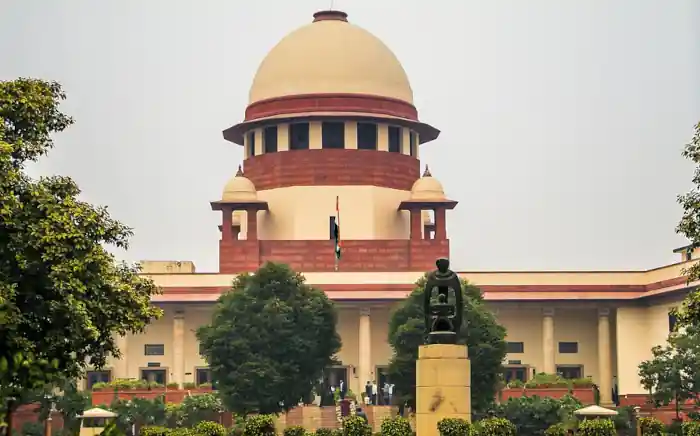
Judicial ReviewJudicial Review It is a court process where a judge examines the legality of a decision made by a public body. It focuses on the decision-making process rather than the actual conclusion. The court does not replace the decision, but ensures the correct procedures were followed. If a decision was deemed incorrect, judicial review may not be the best option. Instead, appealing to a higher court could be an alternative solution. This process allows the public body to make the same decision lawfully. A judge will refuse permission to apply for review unless satisfied that there is an arguable ground for it which has a realistic prospect of success. in New Democracies
Constitutional Courts in Asian Cases
Edition: 2003
Introduction: the decline and fall of parliamentary sovereignty;
- Why judicial review?;
- Constituting judicial powerPower The amount of energy transferred or converted per unit of time. In the International System of Units, the unit of it is the watt, equal to one joule per second. The capacity of energy infrastructure is rated using watts, which indicate its potential to supply or consume energy in a given period of time. A Power-plant rated at 100 MW has the potential to produce 100 MWh if it operates for one hour.;
- Building judicial power;
-
Courts in new democracies;
-
Confucian constitutionalismConstitutionalism The constitutionalism principle requires that all government action comply with the Constitution. The rule of law principle requires that all government action must comply with the law, including the basic governing documents. A democratic political system is an orderly framework within which people may make political decisions. Constitutionalism and the rule of law are not to conflict with democracy; rather, they support it. Indian constitution to a significant extent put a system of Parliamentary supremacy to one of constitutional supremacy on the ground that holiness rests with the people and not with the text created by them.? The grand justices of the RepublicRepublic Res publica> Δημοκρατίας. Having a head of the state. Pope is the head of the Vatican City state. The people execute their power through an Elected (direct/indirect) President. Political parties sponsored their presidential candidates. Indian president is a constitutional puppet under the ruling Cabinet. In the case of the appointment of Indian judges, presidential power is a vanishing point. of China;
-
Distorting democracyDemocracy It is commonly understood as being a political system of majority rule. The evolution of democratic tradition can be traced back to the Magna Carta (1215) and through the long struggle for Parliamentary supremacy which culminated in the English Bill of Rights of 1689, the emergence of representative political institutions in the colonial era, the development of responsible government in the 19th century. In institutional terms, democracy means that each of the provincial legislatures and the federal Parliament is elected by popular vote. These legislatures, are "at the core of the system of representative government". It is a 'power' word. Power rests with the ordinary Citizens. Only educated people understand power. A corrupt or controlled court system can cover failure of it. The religious concept is incompatible with it. Promise to spend more from the public treasury moves to Dictatorship.? The constitutional courtConstitutional Court A Constitutional Court is responsible for verifying compliance with the provisions of the Constitution. In its capacity as a “court of fundamental rights” and based on its powers to review laws and regulations for their constitutionality, it is called upon to enforce and secure the democratic order of the state under the rule of law. All government bodies and other institutions fulfilling government functions are obliged to comply with the Constitution. In the event of an (alleged) infringement of the Constitution by any such body or institution, the Constitutional Court, established based on the Constitution, renders a final decision on the matter and, if necessary, provides for an appropriate remedy. Therefore, it is often referred to as the “guardian of the Constitution”. of Mongolia;
-
Rule by lawLaw νόμος: Positive command of sovereign or divine. One can be ruled either by a Statute, a Statue, or a Statement. Legislation is the rule-making process by a political or religious organisation. Physics governs natural law. Logical thinking is a sign of a healthy brain function. Dharma is eternal for Sanatanis. Judiciary > Show me the face, and I will show you the law. Some people know how to bend the law rather than break it. Law Practice. Read a scholarly article or rule of lawRule of Law It demands equality and accountability for all individuals under clear and predictable justice. This principle applies to both people and the State, emphasizing the need for transparency and openness in decision-making. The European Commission has the role of ensuring respect for the rule of law, as well as upholding EU values and principles. This fundamental value forms the basis of the European Union's foundation, requiring all, including government officials, to be subject to the law, under the control of independent and impartial courts.? The constitutional court of Korea;
-
Conclusion: comparing constitutional courts;