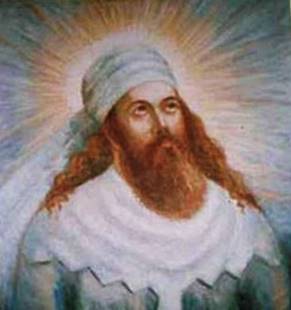
Fravarane (AvestaZend Avesta Zarathushtra (abestāg): Zend (from Hend) The text of the Avesta, as it exists today, is from a single master copy from the Sasanian Empire (224–651 CE). The text is similar to Rigveda Sanskrit. The Yasna (Yagna), The Visperad, The Vendidad, The Yashts, The Siroza, The Nyayeshes, The Gahs, The Afrinagans, Fragments. (Khorda Avesta, Vendidad, Visperad). Zoroastrian Creed. Yashna-12)
[1] I curse the Daevas (दानवः)
I declare myself a Mazda-worshipper, a supporter of ZarathustraZarathustra Ζαρατούστρα: In Babylon > Avesta (800 BCE) is the sacred book of his followers. He was the prophet of Mazda and protector of cow (Ahuramazda) Read the Zoroastrian creed (Christian Church adopted this creed with variations). After 450 CE Zoroastrians started to convert to Christianity. Zoroastrian priest Bahman Kaikobad Sanjan composed the Persian text Qessa-e-Sanjan in 1600 CE. Khordeh Avesta, hostile to the Daevas, fond of Ahura’s teaching, a praiser of the Amesha Spentas, a worshipper of the Amesha Spentas. I ascribe all good to Ahuramazda, “and all the best,” Asha-endowed, splendid, xwarena-endowed, whose is the cow, whose is Asha, whose is the light, “may whose blissful areas be filled with light”.
[2] I choose the good Spenta Armaitinote for myself; let her be mine. I renounce the theft and robbery of the cow, and the damaging and plundering of the Mazdayasnian settlements. I want freedom of movement and freedom of dwelling for those with homesteads, to those who dwell upon this earthEarth Sixty million years ago, the Earth may not have been radically different from the world known today. Vast soils supported dense vegetation, including banyan-like trees across the Indian subcontinent, with flourishing plant life extending through what is now Central Asia. Rivers resembling the modern Amazon may already have sustained abundant fish populations, while reptiles, snakes, turtles, and primates moved freely across diverse ecosystems. Human beings—both intelligent and unintelligent—were present, navigating cycles of stability and catastrophe. Localized cataclysms may have occurred without globally erasing life. Monkeys, snakes, and other familiar animals are assumed to have coexisted with humans, reinforcing the claim that biological continuity, rather than linear evolution, defines Earth’s history. From this perspective, fossil interpretation is seen as fragmentary and imaginative, shaped by academic models rather than complete evidence, with scholars constructing theoretical problems and resolving them through evolving intellectual frameworks rather than absolute historical certainty. with their cattle. With reverence for Asha, and (offerings) offered up, I vow this: I shall nevermore damage or plunder the Mazdayasnian settlements, even if I have to risk life and limb.
[3] I reject the authority of the Daevas, the wicked, no-good, lawless, evil-knowingKnowledge Knowledge is derived from the process of an informed person integrating data from sense organs or intuition into their psyche. This concept is explored in the Vedic Nasadiya Sukta, which questions the possibility of ultimate truth or knowledge. In different languages, such as Greek, Latin, Sanskrit, and Chinese, knowledge is expressed as "η γνώση," "Scientia," "ज्ञानम् ," and "知识 Zhīshì," respectively., the most druj-like of beings, the foulest of beings, the most damaging of beings. I reject the Daevas and their comrades, I reject the yatu (यतुधान in SanskritSanskrit It is the oldest living language and civilizational mark. The language of Rig Veda or Atharva Veda (10000 years old) is a pre-Sanskrit Vedic language. It has its own Pratisakhya (Grammar) and Nirukta (Vocabulary). 40% of Tamil is Sanskrit. Before the written form, it was in the form of oral tradition. Such is the case of Six Kanda Ramayana. Before Valmiki, it was in Oral form. Sanskrit has been the language of Jambudvipa. The mother tongue of Sunok, Vasistha, Viswamitra or grandparents of Zarathustra (Resource person of Abrahamic Religions) was the language of Rig Veda. The legend goes that the origin of Sanskrit is the sky, therefore, it is called Deva Bhasa.) and their comrades; I reject any who harm beings. I reject them with my thoughts, words, and deeds. I reject them publicly. Even as I reject the [evil authorities], so too do I reject the hostile followers of the druj.
[4] As Ahuramazda taught Zarathustra at all discussions, at all meetings, at which Mazda and Zarathustra conversed; – even as Zarathustra rejected the authority of the Daevas, so I also reject, as Mazda-worshipper and supporter of Zarathustra, the authority of the Daevas, even as he, the Asha-endowed Zarathustra, has rejected them.
As the belief of the waters, the belief of the plants, the belief of the well-made [Original] CowCow Zebu (Bos indicus) : Desi Bharatiya Goru is prohibited from killing and eating. It is compared with mother due to cultural and economic factors since time immemorial. The view is supported in Vedas.; as the belief of Ahuramazda who created the cow and the Asha-endowed ManMen Ανθρωποι (People), a woman (γυναίκα), Man (Ανδρας) > Adama, Manu > No proof to establish that due to mutation a monkey turned into a human being.; as the belief of Zarathustra, the belief of Kavi Vishtaspa, the belief of both Frashaostra and Jamaspa; as the belief of each of the Saoshyantsnote – fulfilling destiny and Asha-endowed – so I am a Mazda-worshipper of this belief and teaching.
[5] I profess myself a Mazda-worshipper, a Zoroastrian, having vowed it and professed it. I pledge myself to the well-thoughtThinking Human beings began conscious thought as far back as sixty million years ago. By around three hundred thousand years ago, humans inhabiting the Indian subcontinent had developed forms of cognition comparable to those of the modern age, including awareness of competition, defense, and collective security. These early communities were capable of abstract observation, such as counting stars in the night sky, and engaged in reflective discussion about everyday experiences, including the flavors and qualities of food, indicating a sophisticated mental and social life. thought, I pledge myself to the well-spoken wordWord Λόγος , I pledge myself to the well-done action.
I pledge myself to the Mazdayasnian religionReligion ‘The word ( θρησκεία) -Re Legion (Latin)- A group or Collection or a brigade, is a social-cultural construction and substantially doesn’t exist. Catholic religion (संघवाद) is different from the Protestant religion (संघवाद). Dharma is not Religion (धार्मिक संगठन). "Religion" occurs 5 times in 5 verses in the KJV. Hindu Religion means in the indian language is हिंदू धार्मिक संगठन. Deen in Islam., which causes the attack to be put off and weapons put down; Asha-endowed; which of all religions that exist or shall be, is the greatest, the best, and the most beautiful: Ahuric, Zoroastrian. I ascribe all good to Ahuramazda.
This is the creedCreed Akida > it comes first, then Book. of the Mazdayasnian religion.