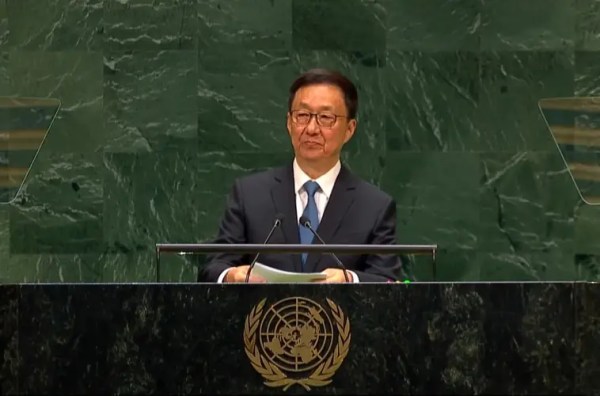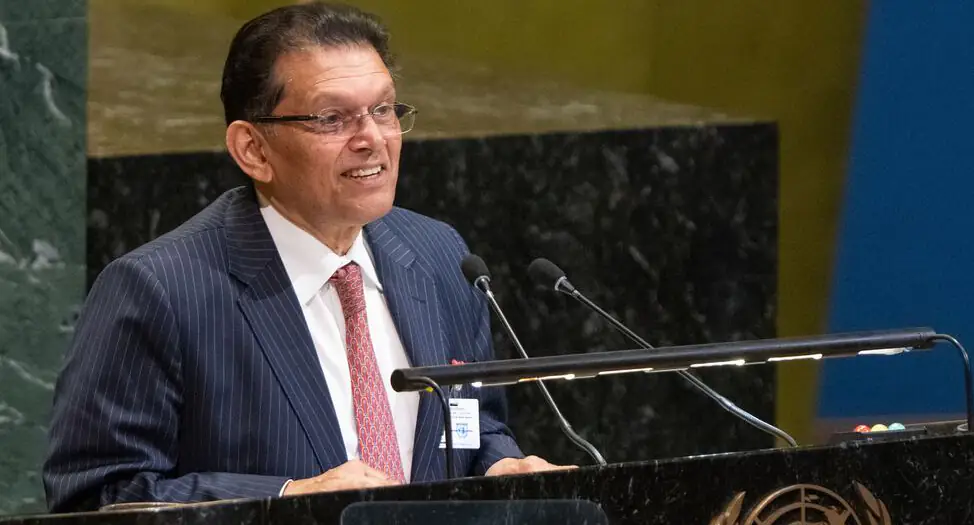
Election of Dr. Khalilur Rahman as President of the 81st Session of the United Nations General Assembly
Dr. Khalilur Rahman of Bangladesh emerged as a prominent figure in contemporary multilateral diplomacy when he was elected President of the Eighty-First Session of the United Nations General Assembly (UNGA). His election marked a significant moment in the history of the United Nations, reflecting both his extensive diplomatic career and Bangladesh’s growing profile in global governance. The election was held on 2 June 2026 in the General Assembly Hall at United Nations Headquarters, New York, in accordance with Rule 30 of the Rules of Procedure of the General Assembly. Following the established principle of regional rotation, the presidency for the eighty-first session was allocated to the Asia-Pacific Group, making candidates from that regional grouping eligible for the office.
The office of the President of the General Assembly occupies a unique position within the United Nations system. Established under the provisions of the UN Charter and governed by the Rules of Procedure of the General Assembly, the President presides over the annual session of the Assembly, guides plenary deliberations, facilitates negotiations among member states, and represents the Assembly in its interactions with other principal organs of the United Nations. Although the office carries no executive authority comparable to that of the Secretary-General, it remains one of the most visible and politically significant positions in international diplomacy.
The election of Dr. Khalilur Rahman took place during a plenary meeting in which member states also voted to elect the Vice-Presidents of the General Assembly and officers of the six Main Committees. The process followed long-established institutional procedures. According to Rule 30, unless otherwise decided by the General Assembly, the Assembly elects a President and twenty-one Vice-Presidents at least three months before the opening of the session over which they are to preside. The elected President and Vice-Presidents formally assume office at the beginning of the session and remain in office until its conclusion.
The framework governing the presidency reflects decades of institutional evolution. Rule 31 provides for the appointment of a Temporary President when required before the election of the President. Rule 32 and Rule 33 establish procedures for an Acting President in circumstances where the President is absent or unable to perform official duties. Rule 34 addresses the replacement of the President should the office become vacant. Rules 35 and 36 define the general powers of the President, including maintaining order during meetings, directing discussions, ruling on procedural matters, and ensuring adherence to the Rules of Procedure. Rule 37 stipulates that the President shall not vote while presiding over the Assembly, underscoring the neutrality expected of the office.
The election procedures themselves have developed through successive amendments. Elections are generally conducted by secret ballot, although in cases where only one candidate is presented, member states may decide otherwise. Candidate nominations are ordinarily limited to a single speaker before the Assembly proceeds directly to voting. The Vice-Presidents are elected only after the election of the Chairs of the six Main Committees in order to ensure the representative character of the General Committee, which plays a central role in organizing the Assembly’s work.
Dr. Khalilur Rahman’s election reflected a distinguished career spanning nearly five decades in diplomacy, international economics, multilateral negotiations, and United Nations affairs. Born in Bangladesh, he belonged to the first generation of diplomats who shaped the foreign policy of the country after its emergence as an independent state in 1971. His academic and professional achievements were notable from an early stage. In 1979, he secured first place in the first regular civil service examination of Bangladesh, a distinction that opened the way for his entry into the diplomatic service. In the same year, he achieved first position in the Master of Arts examinations in Economics at the University of Dhaka, one of South Asia’s leading institutions of higher learning.
The year 1979 thus represented a turning point in his career. Bangladesh at that time was still consolidating its institutions after the turbulent years that followed independence. The Ministry of Foreign Affairs was engaged in expanding diplomatic relations across the world, establishing permanent missions, and enhancing participation in international organizations. Against this backdrop, the young Khalilur Rahman joined the diplomatic service with a strong academic foundation and a reputation for intellectual excellence.
Between 1980 and 1983, he pursued advanced studies in the United States. He attended the Fletcher School of Law and Diplomacy at Tufts University in Medford, Massachusetts, and the Kennedy School of Government at Harvard University in Cambridge, Massachusetts. During this period he earned a Master of Arts in Law and Diplomacy and subsequently completed a Doctor of Philosophy in Economics. The combination of diplomacy, economics, and public policy would later define much of his professional work within both the Government of Bangladesh and the United Nations.
Upon completing his studies, Dr. Rahman returned to public service. From 1983 to 1991, he served in various capacities at the Ministry of Foreign Affairs of Bangladesh and at the Permanent Mission of Bangladesh to the United Nations in New York. This period coincided with important transformations in international politics, including the final phase of the Cold War, debates over development financing, and growing attention to the concerns of developing countries.
At the United Nations, Dr. Rahman represented Bangladesh in the Economic and Financial Committee, commonly known as the Second Committee of the General Assembly. The committee addresses issues related to economic growth, sustainable development, globalization, poverty eradication, and international economic cooperation. His participation in these deliberations brought him into contact with diplomats from every region of the world and provided valuable experience in multilateral negotiations.
During these years he also served as spokesperson for the Least Developed Countries (LDCs), a grouping of states facing severe structural challenges to development. Acting on behalf of dozens of countries, he articulated positions on trade, aid, debt relief, and economic cooperation. This role enhanced his visibility within the United Nations and established his reputation as an advocate for developing nations.
An important milestone occurred during the Forty-First Session of the United Nations General Assembly in 1986–1987, when he served as an aide to the President of the General Assembly. This experience provided him with direct exposure to the functioning of the presidency that he would later occupy. Working closely with the President’s office, he gained firsthand understanding of procedural rules, diplomatic coordination, and the management of Assembly business.
The 1990s witnessed profound changes in global governance following the end of the Cold War. New challenges emerged, including humanitarian crises, peacebuilding operations, environmental concerns, and debates about globalization. Against this backdrop, Dr. Rahman’s expertise in economics and development diplomacy became increasingly valuable.
In 1999, he joined the United Nations Secretariat as a Special Adviser at the United Nations Conference on Trade and Development (UNCTAD) in Geneva, Switzerland. Founded in 1964, UNCTAD serves as the principal UN body dealing with trade, investment, technology, and development issues. His appointment marked the beginning of a twenty-five-year career within the international civil service.
From 1999 to 2024, Dr. Rahman held numerous senior positions within the United Nations system in both New York and Geneva. He participated in policy formulation, economic analysis, and development strategy. He became known as a lead author and substantive contributor to several major United Nations flagship publications, documents that informed international debates on development, globalization, and economic transformation.
Throughout these years he worked alongside diplomats, economists, policymakers, and academics from diverse backgrounds. His expertise contributed to discussions on international trade, sustainable development, financing for development, technology transfer, and the challenges confronting developing economies. These issues occupied a central place in UN deliberations during the first quarter of the twenty-first century.
Parallel to his international career, Dr. Rahman maintained strong links with educational and intellectual institutions in Bangladesh. He was among the founding members of East West University in Dhaka, one of the country’s leading private universities. As a member of the Board of Trustees, he contributed to the institution’s development and governance. His association with the university continued until November 2024, reflecting a long-standing commitment to higher education and knowledge creation.
The political developments in Bangladesh during 2024 and 2025 opened a new chapter in his public service. He was appointed High Representative on the Rohingya Issue, a position involving one of the most complex humanitarian and diplomatic challenges facing South Asia. Since August 2017, Bangladesh had hosted more than one million displaced Rohingya refugees who fled violence in neighboring Myanmar. The issue required sustained engagement with the United Nations, regional organizations, donor countries, and humanitarian agencies.
As High Representative, Dr. Rahman worked to advance international support for refugee assistance and to promote efforts toward a durable solution to the crisis. His responsibilities included diplomatic consultations, policy coordination, and representation of Bangladesh in international forums addressing displacement, humanitarian relief, and regional stability.
Subsequently, he was appointed National Security Adviser in the Interim Government of Bangladesh. This role expanded his responsibilities beyond diplomacy and development into matters of national security, strategic policy, and regional cooperation. The appointment reflected confidence in his judgment, experience, and understanding of international affairs.
On 17 February 2026, Dr. Khalilur Rahman was sworn in as Foreign Minister of Bangladesh. His appointment came at a time of significant geopolitical change marked by evolving regional dynamics in Asia, economic uncertainty, climate challenges, and ongoing debates concerning reform of international institutions. As Foreign Minister, he assumed responsibility for managing Bangladesh’s diplomatic relations and representing the country in global forums.
His candidacy for the presidency of the Eighty-First Session of the General Assembly was rooted in a career that combined national service with extensive experience within the United Nations system. Supporters emphasized his understanding of multilateral diplomacy, development economics, institutional procedures, and the concerns of developing countries. His decades of engagement with UN affairs made him one of the most experienced candidates ever nominated for the position.
The election itself attracted considerable international attention. Another prominent candidate associated with the race for the presidency was Ambassador Andreas S. Kakouris of Cyprus. Ambassador Kakouris brought more than four decades of diplomatic experience encompassing multilateral diplomacy, bilateral relations, and leadership positions within the Ministry of Foreign Affairs of Cyprus. His career had included service at the United Nations in New York, ambassadorships to the United States, Ireland, Sweden, and the United Kingdom, and roles involving the Commonwealth and other international organizations.
Ambassador Kakouris began his diplomatic career in New York during the mid-1980s, serving both at the Consulate General of Cyprus and at the United Nations. He worked successively in the Fourth, Second, and First Committees of the General Assembly. Over the years he occupied senior positions within the Cypriot foreign ministry and eventually became Permanent Secretary, the highest-ranking civil servant in the ministry. He later served as Special Envoy for Multilateralism.
The presence of experienced candidates underscored the importance of the presidency at a time when the United Nations faced multiple challenges. These included climate change, sustainable development financing, armed conflicts, humanitarian emergencies, technological transformation, and debates regarding the future of multilateral cooperation.
The General Assembly itself traces its origins to the founding of the United Nations on 24 October 1945. Composed of all member states, it serves as the principal deliberative, policymaking, and representative organ of the organization. Since the first session convened in London in January 1946, the presidency has rotated among regional groups to ensure equitable geographical representation. Over the decades, presidents have guided debates on decolonization, development, human rights, peacekeeping, environmental protection, and international law.
As President-elect of the Eighty-First Session, Dr. Rahman inherited this rich institutional legacy. His election represented not only personal achievement but also recognition of Bangladesh’s longstanding engagement with multilateral diplomacy. Since joining the United Nations on 17 September 1974, Bangladesh has played an active role in peacekeeping operations, development initiatives, climate advocacy, and South-South cooperation.
Observers noted that Dr. Rahman’s career embodied several key themes in the history of modern diplomacy. His trajectory linked national service with international civil service, economic expertise with diplomatic negotiation, and academic scholarship with practical policymaking. Few individuals have accumulated experience across so many dimensions of the United Nations system.
His academic background in economics provided a distinctive perspective on international issues. Throughout his career he emphasized the interconnected nature of development, trade, finance, and global governance. This focus reflected broader trends within the United Nations, where economic development increasingly became central to discussions of peace, stability, and human welfare.
The presidency of the General Assembly requires balancing diverse interests among 193 member states. The officeholder must facilitate dialogue among countries with differing political systems, economic priorities, and strategic concerns. Success depends largely on diplomatic skill, impartiality, procedural knowledge, and the ability to build consensus. Dr. Rahman’s decades of experience within the United Nations and his familiarity with both developed and developing country perspectives were widely viewed as assets in fulfilling these responsibilities.
Beyond his professional achievements, Dr. Rahman’s personal life reflected continuity and stability. He is married and has two daughters and four grandchildren. Throughout his career, colleagues frequently described him as an intellectual diplomat whose work combined analytical rigor with commitment to international cooperation.
The election of 2 June 2026 represented more than a procedural event within the annual calendar of the United Nations. It symbolized the culmination of nearly half a century of public service, beginning with academic distinction in Dhaka in 1979, continuing through diplomatic assignments in New York and Geneva, expanding through senior responsibilities within the United Nations Secretariat, and culminating in leadership roles within the Government of Bangladesh. As President of the Eighty-First Session of the United Nations General Assembly, Dr. Khalilur Rahman entered office carrying extensive institutional memory, deep knowledge of multilateral diplomacy, and a professional legacy closely intertwined with the history and evolution of the United Nations itself.
Sarvarthapedia Conceptual Network: Dr. Khalilur Rahman
See also
- United Nations General Assembly
- President of the United Nations General Assembly
- Eighty-First Session of the United Nations General Assembly
- Bangladesh Foreign Ministry
- Bangladesh Diplomatic Service
- United Nations Headquarters
- United Nations Conference on Trade and Development (UNCTAD)
- Least Developed Countries (LDCs)
- Economic and Financial Committee (Second Committee)
- Multilateral Diplomacy
- Indo–Pakistan War of 1971
- International Economic Governance
- Rohingya Crisis
- Bangladesh Foreign Policy
- University of Dhaka
- Fletcher School of Law and Diplomacy
- Harvard Kennedy School
- East West University
- United Nations Reform
- South-South Cooperation
- Development Economics
- Global Governance
United Nations General Assembly
Core concepts
- Universal representation of UN member states
- Deliberative diplomacy
- International norm-setting
- Multilateral decision-making
- Consensus-building
Related topics
- President of the United Nations General Assembly
- General Committee
- Six Main Committees
- United Nations Charter
- Rules of Procedure of the General Assembly
- Secretary-General of the United Nations
- Economic and Social Council
- Security Council
- International Law
- Sustainable Development Goals
President of the United Nations General Assembly
Constitutional framework
- Rule 30 – Elections
- Rule 31 – Temporary President
- Rule 32 – Acting President
- Rule 33 – Acting President
- Rule 34 – Replacement of the President
- Rule 35 – General Powers of the President
- Rule 36 – General Powers of the President
- Rule 37 – The President Shall Not Vote
Functions
- Presiding over plenary meetings
- Facilitating negotiations
- Coordinating intergovernmental processes
- Representing the General Assembly
- Building diplomatic consensus
Related persons
- Dr. Khalilur Rahman
- Former Presidents of the General Assembly
- Permanent Representatives to the United Nations
Eighty-First Session of the United Nations General Assembly
Historical significance
- Opened after the election of 2 June 2026
- Presidency allocated to the Asia-Pacific Group
- Election conducted under Rule 30
Associated institutions
- General Assembly Hall
- General Committee
- Main Committees
- United Nations Secretariat
Related topics
- Dr. Khalilur Rahman
- Regional Rotation System
- UN Electoral Procedures
- Vice-Presidents of the General Assembly
Bangladesh Foreign Policy
Core principles
- Multilateral engagement
- Regional cooperation
- Development diplomacy
- Climate diplomacy
- Peacekeeping participation
Related topics
- Dr. Khalilur Rahman
- Bangladesh Foreign Ministry
- South-South Cooperation
- Rohingya Crisis
- Bay of Bengal Diplomacy
- Non-Aligned Movement
- United Nations Peacekeeping
Bangladesh Diplomatic Service
Historical context
- Expansion following Bangladesh’s independence in 1971
- Integration into global diplomatic institutions
- Participation in multilateral organizations
Key connections
- Dr. Khalilur Rahman
- Foreign Ministry of Bangladesh
- United Nations Missions
- International Negotiations
- Economic Diplomacy
Development Economics
Major themes
- Poverty reduction
- Economic growth
- Trade and development
- Structural transformation
- Sustainable development
Connected figures
- Dr. Khalilur Rahman
- Development economists
- UN policy experts
Related institutions
- UNCTAD
- World Bank
- International Monetary Fund
- United Nations Development Programme
United Nations Conference on Trade and Development (UNCTAD)
Areas of work
- International trade
- Investment policy
- Development finance
- Technology transfer
- Economic globalization
Historical links
- Established in 1964
- Headquarters in Geneva
Related topics
- Dr. Khalilur Rahman
- Development Economics
- Least Developed Countries
- Global South
- International Trade System
Least Developed Countries (LDCs)
Defining characteristics
- Low income levels
- Structural economic vulnerability
- Limited human development indicators
Related organizations
- United Nations
- UNCTAD
- Group of 77
Related concepts
- Development assistance
- Debt relief
- Trade preferences
- Sustainable development
Connected figure
- Dr. Khalilur Rahman (former spokesperson for LDCs)
Economic and Financial Committee (Second Committee)
Scope
- Macroeconomic policy
- Sustainable development
- Poverty eradication
- Globalization
- Financing for development
Institutional position
- One of the six Main Committees of the General Assembly
Related topics
- United Nations General Assembly
- Development Economics
- Least Developed Countries
- Dr. Khalilur Rahman
Rohingya Crisis
Historical framework
- Mass displacement beginning in August 2017
- Refugee concentration in southeastern Bangladesh
- International humanitarian response
Key themes
- Forced migration
- Humanitarian assistance
- Repatriation efforts
- Human rights
- Regional security
Related actors
- Bangladesh
- Myanmar
- United Nations High Commissioner for Refugees
- Dr. Khalilur Rahman
Multilateral Diplomacy
Characteristics
- Negotiation among multiple states
- International institution-building
- Consensus-driven governance
- Norm development
Related organizations
- United Nations
- World Trade Organization
- Commonwealth
- Non-Aligned Movement
Connected figures
- Dr. Khalilur Rahman
- Andreas S. Kakouris
- Senior UN diplomats
Andreas S. Kakouris
Professional profile
- Cypriot diplomat
- Candidate associated with the 81st UNGA presidency process
- Former Permanent Secretary of the Cyprus Foreign Ministry
Diplomatic experience
- United States
- United Kingdom
- Ireland
- Sweden
- United Nations
Related topics
- Cyprus Diplomacy
- United Nations General Assembly
- Multilateral Diplomacy
- Commonwealth Diplomacy
East West University
Significance
- Private university in Dhaka
- Founded with participation from leading academics and public figures
Connections
- Dr. Khalilur Rahman
- Higher education in Bangladesh
- Academic governance
University of Dhaka
Importance
- Premier public university of Bangladesh
- Center for political, economic, and intellectual leadership
Related topics
- Dr. Khalilur Rahman
- Economics education
- Bangladesh civil service recruitment
Fletcher School of Law and Diplomacy
Academic focus
- International relations
- Diplomacy
- Security studies
- Development policy
Connections
- Dr. Khalilur Rahman
- Global diplomatic education
- Tufts University
Harvard Kennedy School
Academic focus
- Public administration
- Public policy
- Governance
- International affairs
Connections
- Dr. Khalilur Rahman
- Public leadership
- Global policy networks
Global Governance
Central concepts
- International institutions
- Collective decision-making
- Rule-based international order
- Global public goods
Related topics
- United Nations General Assembly
- Multilateral Diplomacy
- Development Economics
- Sustainable Development Goals
- International Cooperation
- Dr. Khalilur Rahman
South-South Cooperation
Core ideas
- Collaboration among developing countries
- Knowledge sharing
- Economic partnership
- Capacity building
Related entities
- Bangladesh
- Least Developed Countries
- Group of 77
- UNCTAD
Connected figure
- Dr. Khalilur Rahman
Network Summary
Institutional Cluster
- United Nations General Assembly
- President of the General Assembly
- General Committee
- Main Committees
- UNCTAD
- United Nations Secretariat
Bangladesh Cluster
- Dr. Khalilur Rahman
- Bangladesh Foreign Policy
- Bangladesh Diplomatic Service
- University of Dhaka
- East West University
- Rohingya Crisis
Diplomacy Cluster
- Multilateral Diplomacy
- Global Governance
- South-South Cooperation
- Least Developed Countries
- International Negotiations
Economics and Development Cluster
- Development Economics
- UNCTAD
- Second Committee
- Sustainable Development
- Global South
Leadership and Elections Cluster
- Eighty-First Session of the UN General Assembly
- Rule 30
- Vice-Presidents of the General Assembly
- Regional Rotation System
- Andreas S. Kakouris
- Dr. Khalilur Rahman