सूक्तं १.१ (ऋग्वेदः मण्डल १)
ऋग्वेदः – मण्डल १
सूक्तं १.१
मधुच्छन्दा वैश्वामित्रः, दे. अग्निः (गायत्री)
Rigveda Samhita, Sukta 1.1.1, Madhuchhanda Daughter of Viswamitra Rishi, Agni Devata, Chhanda Gayatri
Agni the Purohit and the Rittvik
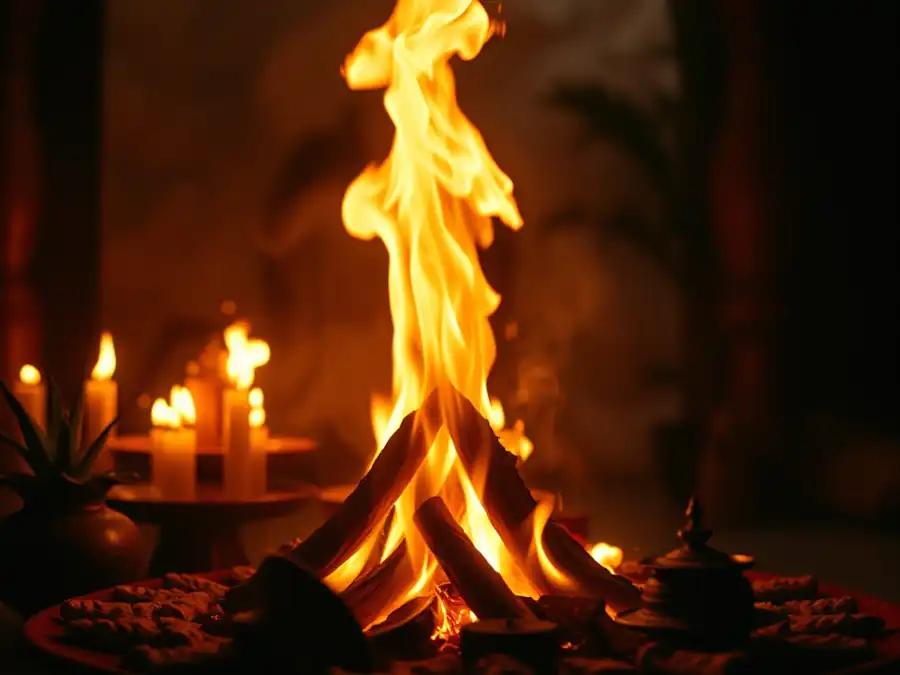
This hymn praises fire as a sacred presence and a divine messenger.
Fire is honored and worshipped (saluted) as the guiding priest of rituals, the one who carries offerings to the divine and brings blessings to people. It is described as wise, radiant, and trustworthy, connecting humans with higher powers.
Through fire, people gain prosperity, nourishment, strength, and honor each day. Fire surrounds and protects sacred ceremonies and ensures that prayers reach the divine realm. It is seen as truthful, inspiring, and rich in wisdom, moving freely between the human and the divine worlds.
The hymn asks fire (Agni) to bring goodness and fulfill sincere offerings, affirming that its blessings are reliable and just. People approach fire daily with respect, devotion, and gratitude, offering praise and humility.
Fire is portrayed as a protector of sacred order, shining within its own home, growing stronger through reverence. Finally, the hymn addresses fire as a caring guardian, like a father to his child, asking for guidance, protection, and well-being for all.
ॐ अग्निमीळे पुरोहितं यज्ञस्य देवमृत्विजम् ।
होतारं रत्नधातमम् ॥१॥
अग्निः पूर्वेभिरृषिभिरीड्यो नूतनैरुत ।
स देवाँ एह वक्षति ॥२॥
अग्निना रयिमश्नवत् पोषमेव दिवेदिवे ।
यशसं वीरवत्तमम् ॥३॥
अग्ने यं यज्ञमध्वरं विश्वतः परिभूरसि ।
स इद्देवेषु गच्छति ॥४॥
अग्निर्होता कविक्रतुः सत्यश्चित्रश्रवस्तमः ।
देवो देवेभिरा गमत् ॥५॥
यदङ्ग दाशुषे त्वमग्ने भद्रं करिष्यसि ।
तवेत् तत् सत्यमङ्गिरः ॥६॥
उप त्वाग्ने दिवेदिवे दोषावस्तर्धिया वयम् ।
नमो भरन्त एमसि ॥७॥
राजन्तमध्वराणां गोपामृतस्य दीदिविम् ।
वर्धमानं स्वे दमे ॥८॥
स नः पितेव सूनवेऽग्ने सूपायनो भव ।
सचस्वा नः स्वस्तये ॥९॥
अग्निम् | ईऌए | पुरः-हितम् | यज्ञस्य | देवम् | ऋत्विजम् | होतारम् | रत्न-धातमम् //
अग्निः | पूर्वेभिः | ऋषि-भिः | ईड्यः | नूतनैः | उत | सः | देवान् | आ | इह | वक्षति //
अग्निना | रयिम् | अश्नवत् | पोषम् | एव | दिवे–दिवे | यशसम् | वीरवत्-तमम् //
अग्ने | यम् | यज्ञम् | अध्वरम् | विश्वतः | परि-भूः | असि | सः | इत् | देवेषु | गच्छति //
अग्निः | होता | कवि-क्रतुः | सत्यः | चित्रश्रवः-तमः | देवः | देवेभिः | आ | गमत् //
यत् | अङ्ग | दाशुषे | त्वम् | अग्ने | भद्रम् | करिष्यसि | तव | इत् | तत् | सत्यम् | अङ्गिरः //
उप | त्वा | अग्ने | दिवे–दिवे | दोषावस्तः | धिया | वयम् | नमः | भरन्तः | आ | इमसि //
राजन्तम् | अध्वराणाम् | गोपाम् | ऋतस्य | दीदिविम् | वर्धमानम् | स्वे | दमे //
सः | नः | पिताइव | सूनवे | अग्ने | सु-उपायनः | भव | सचस्व | नः | स्वस्तये //
Apart from Agni, there is no other power to whom such deep reverence, respect, and devotion are offered, for Agni alone is believed to guide human beings toward prosperity and abundance. This understanding is not a recent belief but a tradition firmly established in ancient times, and its significance has not been diminished by the modern age. The eternal relevance of Agni continues to inspire generations, as those who truly understand the nature of fire and its power are said to attain success and victory. Agni is regarded as the source of yajna, the sacred act that represents creative, collective effort within human society. Ancient poets described this truth with clarity and reverence, recognizing Agni as the vital force behind ritual, transformation, and social progress. Agni is seen as the sole gateway to divinity and spirituality, the bridge between the human and the sacred. To know Agni, therefore, is to possess true knowledge.
Denial of popular Hinduism: Neither Ganesha (popularly called pratham pujya) nor Brahma, Vishnu, or Maheshwara was originally invoked for sacred rites; instead, Agni was revered as the primal principle governing both the visible and invisible worlds. Agni was understood as the true source of prosperity, not Lakshmi, for wealth was believed to arise from fire’s transformative power. Agni is his own priest, requiring no intermediary, and thus stands independent of priestly mediation. From time immemorial, ancient scholars and rishis venerated Agni as the foundational presence of ritual and truth. As Lady Madhuchhanda affirmed, she upheld the golden tradition inherited from her forefather Vishwamitra, rooted in Dharma and reverence for Agni. In sacrifice, Agni offers itself into itself, embodying both the giver and the receiver. Agni is praised as the most beautiful and radiant of all. Beyond Agni, no other force is believed capable of blessing and sustaining the world. Agni is actually the first Avatar of Iswara (Iswara has been mentioned in Yayu 40.1), not the so-called ‘ten Avataras’.