Sun. Jun 7th, 2026

CHURCH HISTORY

Revelation 1 (Greek NT): Patmos, John, and the Vision of Christ

Revelation 1 (Greek NT): Patmos, John, and the Vision of Christ

The opening chapter of the Revelation details a divine disclosure from God to Jesus Christ, conveyed to John while exiled on Patmos. This prologue emphasizes imminent events and offers a blessing to the readers and hearers of the prophecy. Directed toward seven churches in Asia, the text presents a theological perspective, portraying Jesus as the faithful witness and ruler. John experiences a striking vision of Christ, reassuring him of His eternal existence and authority, establishing the symbolic significance of the seven stars and lampstands representing the churches.

Ecclesiology – The Church’s Dissolution into Virtual Communities

Ecclesiology – The Church’s Dissolution into Virtual Communities

The lecture on ecclesiology explores the church’s identity amid technological shifts, questioning its essence beyond mere institutionality. As virtual communities grow, the church faces potential obsolescence yet persists in valuing physical presence and communal practices. Different traditions articulate unique ecclesiological perspectives, emphasizing the importance of embodiment in faith and sacrament. While digital spaces offer opportunities for connection, they risk reducing genuine community to algorithm-driven interactions. Ultimately, ecclesiology in a digital age must embrace both the challenges and enrichments technology offers while affirming the church’s call to embody communal life authentically.

Evolution of Fusion ‘Christology’

Evolution of Fusion ‘Christology’

The New Testament does not explicitly define “Christology,” but it implies teachings about Jesus’ identity and nature through narratives and proclamations. Various texts, such as the Gospels and letters from Paul, reveal both His divinity and humanity, culminating in significant theological developments during early Church councils like Nicaea and Chalcedon. These discussions emerged from different interpretations of Jesus as both divine and human. Diverse portrayals across the Synoptic Gospels and John’s Gospel lead to potential confusion regarding Christ’s nature. This complexity has prompted ongoing theological debates about the relationship between Jesus’ divine and human aspects.

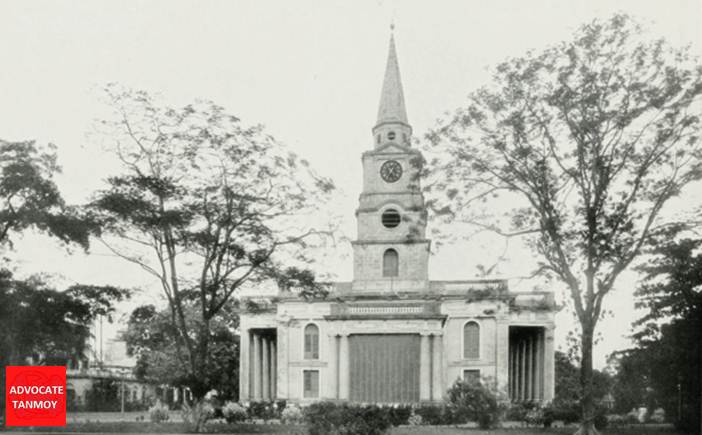
Church life in India, with its dry routine  tending to dwarf than develope a man’s natural talents -Pratt, Archdeacon of Calcutta (1872)
Uncategorized

Church life in India, with its dry routine tending to dwarf than develope a man’s natural talents -Pratt, Archdeacon of Calcutta (1872)

Daniel Wilson, of Islington, had been appointed Bishop of Calcutta in 1832, and, in token of his regard for his old tutor before going to Oxford, and his fellow-labourer in Salisbury Square, Josiah Pratt–in the hope, too, of still more closely cementing the old friendship–he was very anxious to obtain for the son an appointment on the Bengal Ecclesiastical Establishment, and to secure his services as his own domestic chaplain. Some delay had occurred in obtaining the appointment; at length the offer came; and the decision between Cambridge and Calcutta was to be made.

Infallibility of Roman Church

It was always agreed that where the Pope and Bishops were unanimous they were infallible, and their unanimity might be expressed either in a general council, or in a decree of a local council tacitly accepted by the Pope and the rest of the Church, or even in a decree of the Pope alone if the bishops either expressly or tacitly affirmed it.

Abraham Malpan and His Mar Thoma Church

Abraham Malpan and His Mar Thoma Church

It is widely acknowledged that members of the Mar Thoma Church are expected to prioritize the authority of the Malpan family above all else. The Malpan Church, being a privately owned enterprise controlled by the Malpan family, requires individuals to show reverence to the family members and recognize their eminence in religious matters. While the fundamental tenets of faith bear resemblance to those of the Anglican Church, it can be argued that the Malpan Church differs from the traditional Malabar Church.