Trial—Delay in proceeding—Measure to remove such delay—Discussed-Whenever an objection is raised during evidence taking stage regarding the admissibility of any material or item of oral evidence the trial Court can make a note of such objection and mark the objected document tentatively as an exhibit in the case (or record the objected part of the oral evidence) subject to such objections to be decided at the last stage in the final judgment.
AIR 2001 SC 1158 : (2001) 2 SCR 29 : (2001) 3 SCC 1 : JT 2001 (3) SC 120 : (2001) 2 SCALE 167 : (2001) CriLJ SC 1254
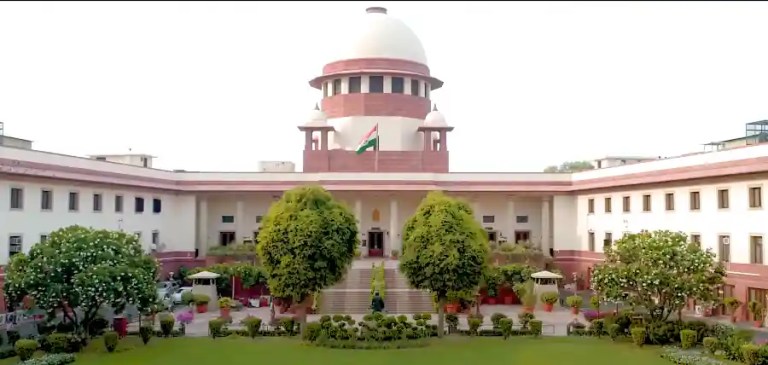
SUPREME COURT OF INDIA
Bipin Shantilal Panchal
Versus
State of Gujarat and Another
(Before : K. T. Thomas, R. P. Sethi And B. N. Agrawal, JJ.)
Criminal Misc. Petn. No. 862 of 2001 in Spl. Leave Petn. (Cri) No. 223 of 2000,
Decided on : 22-02-2001.
Counsel for the Parties:
Mukul Rohtagi, Addl. Solicitor General, H. A. Raichura, Mrs. Saroj H. Raichura, Ms. Hemantika Wahi, Ms. Sunita Hazarika, Ashok Srivastava, B. K. Prasad and P. Parmeswaran, Advocates, for the appearing parties.
Judgment
Thomas, J—This is yet another opportunity to inform the trial Courts that despite the procedural trammels and vocational constraints we have reached a stage when no effort shall be spared to speed up trials in the criminal Courts. It causes anguish to us that in spite of the exhortations made by this Court and a few High Courts, time and again, some of the trial Courts exhibit stark insensitivity to the need for swift action, even in cases where the accused are languishing in prisons for long years as under-trials only on account of the slackness, if not inertia, in accelerating the process during trial stage.
2. We shall narrate, in a brief manner, as to what happened thus far in the present case though this seems to be one of the rare cases in which an under-trial prisoner has been facing a record time for reaching culmination of the trial proceedings.
3. The genesis of the proceedings is interception of a consignment at the Air Warehouse, Mumbai, which was meant for export to Nairobi. The consignment, when opened, was found containing a very huge quantity of Madrex tablets (Methaqualone). Respondent (Dr. Bipin S. Panchal) was arrested on 8-11-1993 in connection with the aforesaid seizure of narcotic or psychotropic substance. It led to the unearthing of a further huge quantity of Mandrex tablets which, added with the earlier interception, is quantified at about 2000 Kgs. The Directorate of Revenue Intelligence, Ahmedabad filed a complaint against certain persons including respondent Bipin S. Panchal, for various offences under the Narcotic Drugs and Psychotropic Substances (NDPS) Act. The said case is being tried before the Court of Additional City Sessions Judge, Ahmedabad.
4. Respondent was detained in prison as he was not bailed out during the trial proceedings despite repeated motions made by him. Once in 1994, when respondent approached for bail, this Court directed the trial Court to expedite the trial. Though the evidence taking started on 4-9-1996, the case is still lingering on as the trial persisted thereafter for years. This is in spite of the permission accorded to the trial Court for holding proceedings inside the jail where some of the accused are being interned, as per Section 268 of the Code of Criminal Procedure.
5. For so many reasons the trial Court could not proceed fast, for which the respondent has also contributed substantially. From the records available with us we have perceived that the respondent moved the High Court of Gujarat for bail on the ground that the Court is not closing the trial despite the direction for speeding up the steps. However, the High Court dismissed the application for bail as per a detailed order passed on 29-10-1999. That order was challenged by the respondent before this Court by seeking special leave to appeal.
6. The said special leave petition was disposed of on 31-3-2000 with the following order:
“As the Special Judge who is trying the case has reported to us that he reasonably expects to close the trial within six months, we dispose of this special leave petition permitting the petitioner to move for bail again in case the trial is not closed within six months.”
7. Even the aforesaid period of six months is over by now, but the culmination of trial is still a far cry. It was in the above background that the present application is made by the Directorate of Revenue Intelligence praying for “modification of the Order dated 31-3-2000 by extending the period for closing of the trial for a further period of six months.”
8. We notice that the immediate impact of the Order dated 31-3-2000 was a positive response as five witnesses were examined on 3-4-2000 itself. But as the Additional Sessions Judge (Shri A. R. Bhatt) expected his retirement two months hence, he chose to remain in limbo in regard to this case and hence no progress was made until 10-7-2000 when his successor (Shri B. N. Jain) took up the matter. The successor Judge appears to have determined to close the trial within the time frame. He therefore, decided to follow the legislative mandate contained in Section 309 of the Code and ordered day-to-day trial for which he made a schedule also.
9. But the initial alacrity shown by the trial Judge did not last long as the swiftness of the trial was bridled on account of trumpery reasons. The defence counsel questioned the admissibility of certain documents and raised objections with regard to the same. Though the trial Court disallowed the objections as per an order passed on 24-7-2000 (presumably after hearing both sides at length) the trial Judge adopted a very unwholesome procedure by stopping the trial for a lengthy period, just to enable the defence to take up that order before the High Court. Even though the prosecution brought witnesses to be examined on 8-8-2000 the trial Judge hesitated to examine them, and extended the stay granted by himself and did not choose to take the evidence of those witnesses on the said date. However, the defence failed to challenge the said order and hence the trial proceedings were resuscitated on 16-8-2000.
10. On that day the defence raised another objection regarding admissibility of another document. The trial Judge heard elaborate arguments thereon and upheld the objection and consequently refused to admit that particular document. What the prosecution did at that stage was to proceed to the High Court against the said order and in the wake of that proceeding respondent filed an application on 9-11-2000, for enlarging him on bail on the strength of the order passed by this Court on 31-3-2000 (extracted above).
11. We are compelled to say that the trial Judge should have shown more sensitivity by adopting all measures to accelerate the trial procedure in order to reach its finish within the time frame indicated by this Court in the Order dated 31-3-2000 since he knew very well that under his Orders an accused is continuing in jail as an under-trial for a record period of more than seven years. Now, we feel that the Additional Judge, whether the present incumbent or his predecessor, was not serious in complying with the directions issued by this Court, though the parties in the case have also contributed their share in bypassing the said direction.
As pointed out earlier, on different occasions the trial Judge has chosen to decide question of admissibility of documents or other items of evidence, as and when objections thereto were raised and then detailed Orders were passed either upholding or overruling such objections. The worse part is that after passing the orders the trial Court waited for days and weeks for the concerned parties to go before the higher Courts for the purpose of challenging such interlocutory orders.
12. It is an archaic practice that during the evidence collecting stage, whenever any objection is raised regarding admissibility of any material in evidence the Court does not proceed further without passing Order on such objection. But the fall out of the above practice is this: Suppose the trial Court, in a case, upholds a particular objection and excludes the material from being admitted in evidence and then proceeds with the trial and disposes of the case finally. If the appellate or revisional Court, when the same question is re-canvassed, could take a different view on the admissibility of that material in such cases the appellate Court would be deprived of the benefit of that evidence, because that was not put on record by the trial Court. In such a situation the higher Court may have to send the case back to the trial Court for recording that evidence and then to dispose of the case afresh. Why should the trial prolong like that unnecessarily on account of practices created by ourselves. Such practices, when realised through the course of long period to be hindrances which impede steady and swift progress of trial proceedings, must be recast or re-moulded to give way for better substitutes which would help acceleration of trial proceedings.
13. When so recast, the practice which can be a better substitute is this: Whenever an objection is raised during evidence taking stage regarding the admissibility of any material or item of oral evidence the trial Court can make a note of such objection and mark the objected document tentatively as an exhibit in the case (or record the objected part of the oral evidence) subject to such objections to be decided at the last stage in the final judgment. If the Court finds at the final stage that the objection so raised is sustainable the Judge or Magistrate can keep such evidence excluded from consideration. In our view there is no illegality in adopting such a course. (However, we make it clear that if the objection relates to deficiency of stamp duty of a document the Court has to decide the objection before proceeding further. For all other objections the procedure suggested above can be followed.
14. The above procedure, if followed, will have two advantages. First is that the time in the trial Court, during evidence taking stage, would not be wasted on account of raising such objections and the Court can continue to examine the witnesses. The witnesses need not wait for long hours, if not days. Second is that the superior Court, when the same objection is re-canvassed and reconsidered in appeal or revision against the final judgment of the trial Court, can determine the correctness of the view taken by the trial Court regarding that objection, without bothering to remit the case to the trial Court again for fresh disposal. We may also point out that this measure would not cause any prejudice to the parties to the litigation and would not add to their misery or expenses.
15. We, therefore, make the above as a procedure to be followed by the trial Courts whenever an objection is raised regarding the admissibility of any material or any item of oral evidence.
16. Now, for disposal of the present application we may state that there is no point in our granting further time to the trial Court to complete the trial. It is for the trial Court to complete it as early as possible. But we would not do anything to deprive the accused in custody of his right to move for bail on account of the delay thus far occasioned. The bail application would be disposed of by the Court concerned on its own merits. With the above observations we dispose of this application.