Skip to content

ADVOCATETANMOY LAW LIBRARY

Research & Library Database

Primary Menu
  • News
  • Opinion
  • Countries198
    • National Constitutions: History, Purpose, and Key Aspects
  • Judgment
  • Book
  • Legal Brief
    • Legal Eagal
  • LearnToday
  • HLJ
    • Supreme Court Case Notes
    • Daily Digest
  • Sarvarthapedia
    • Sarvarthapedia (Core Areas)
    • Systemic-and-systematic
    • Volume One
06/04/2026

Hotel Proprietors Act 1956

In this Act, the expression “hotel” means an establishment held out by the proprietor as offering food, drink and, if so required, sleeping accommodation, without special contract, to any traveller presenting himself who appears able and willing to pay a reasonable sum for the services and facilities provided and who is in a fit state to be received.
advtanmoy 22/02/2020 4 minutes read

© Advocatetanmoy Law Library

  • Share on WhatsApp (Opens in new window) WhatsApp
  • Share on X (Opens in new window) X
  • Share on Facebook (Opens in new window) Facebook
  • Share on Telegram (Opens in new window) Telegram
United Kingdom

Home » Law Library Updates » Hotel Proprietors Act 1956

Act applied (with modifications) (13.7.2004) by London Local Authorities Act 2004 (c. i), ss. 1(1), 24

1956 CHAPTER 62 4 and 5 Eliz 2

An Act to amend the law relating to inns and innkeepers.

2nd August 1956

Read Next

  • Abolition of Slave Trade Act 1807: Facts, Enforcement, and Historical Context
  • Biblical Basis for Slavery: Old and New Testament Laws, Narratives, and Interpretations
  • British Slavery and the Church of England: History, Theology, and the Codrington Estates

1 Inns and innkeepers.

(1) An hotel within the meaning of this Act shall, and any other establishment shall not, be deemed to be an inn; and the duties, liabilities and rights which immediately before the commencement of this Act by law attached to an innkeeper as such shall, subject to the provisions of this Act, attach to the proprietor of such an hotel and shall not attach to any other person.

(2) The proprietor of an hotel shall, as an innkeeper, be under the like liability, if any, to make good to any guest of his any damage to property brought to the hotel as he would be under to make good the loss thereof.

(3) In this Act, the expression “hotel” means an establishment held out by the proprietor as offering food, drink and, if so required, sleeping accommodation, without special contract, to any traveller presenting himself who appears able and willing to pay a reasonable sum for the services and facilities provided and who is in a fit state to be received.

Read Next

  • Abolition of Slave Trade Act 1807: Facts, Enforcement, and Historical Context
  • Biblical Basis for Slavery: Old and New Testament Laws, Narratives, and Interpretations
  • British Slavery and the Church of England: History, Theology, and the Codrington Estates

2 Modifications of liabilities and rights of innkeepers as such.

(1) Without prejudice to any other liability incurred by him with respect to any property brought to the hotel, the proprieter of an hotel shall not be liable as an innkeeper to make good to any traveller any loss of or damage to such property except where—

(a)at the time of the loss or damage sleeping accommodation at the hotel had been engaged for the traveller; and
(b)the loss or damage occurred during the period commencing with the midnight immediately preceding, and ending with the midnight immediately following, a period for which the traveller was a guest at the hotel and entitled to use the accommodation so engaged.

Read Next

  • Abolition of Slave Trade Act 1807: Facts, Enforcement, and Historical Context
  • Biblical Basis for Slavery: Old and New Testament Laws, Narratives, and Interpretations
  • British Slavery and the Church of England: History, Theology, and the Codrington Estates

(2) Without prejudice to any other liablility or right of his with respect thereto, the proprietor of an hotel shall not as an innkeeper be liable to make good to any guest of his any loss of or damage to, or have any lien on, any vehicle or any property left therein, or any horse or other live animal or its harness or other equipment.

(3) Where the proprietor of an hotel is liable as an innkeeper to make good the loss of or any damage to property brought to the hotel, his liability to any one guest shall not exceed fifty pounds in respect of any one article, or one hundred pounds in the aggregate, except where—

(a)the property was stolen, lost or damaged through the default, neglect or wilful act of the proprietor or some servant of his; or
(b)the property was deposited by or on behalf of the guest expressly for safe custody with the proprietor or some servant of his authorised, or appearing to be authorised, for the purpose, and, if so required by the proprietor or that servant, in a container fastened or sealed by the depositor; or
(c)at a time after the guest had arrived at the hotel, either the property in question was offered for deposit as aforesaid and the proprietor or his servant refused to receive it, or the guest or some other guest acting on his behalf wished so to offer the property in question but, through the default of the proprietor or a servant of his, was unable to do so:

Provided that the proprietor shall not be entitled to the protection of this subsection unless, at the time when the property in question was brought to the hotel, a copy of the notice set out in the Schedule to this Act printed in plain type was conspicuously displayed in a place where it could conveniently be read by his guests at or near the reception office or desk or, where there is no reception office or desk, at or near the main entrance to the hotel.

3 Short title, repeal, extent and commencement.

(1)This Act may be cited as the Hotel Proprietors Act 1956.
(2)The M1Innkeepers’ Liability Act 1863, is hereby repealed.
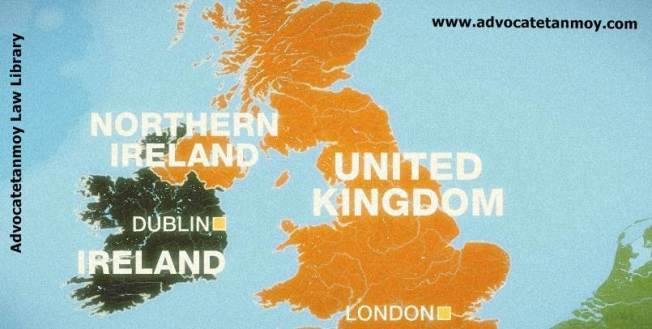
(3)This Act shall not extend to Northern Ireland.
(4)This Act shall come into operation on the first day of January, nineteen hundred and fifty-seven.


Tags: Hospitality Services Hotel Law of England UK Public General Acts

Post navigation

Previous: Singapore Act 1966
Next: Malaysia Act 1963
Communism
Sarvarthapedia

Manifesto of the Communist Party 1848: History, Context, and Core Concepts

Arrest
Sarvarthapedia

Latin Maxims in Criminal Law: Meaning, Usage, and Courtroom Application

Abolition of Slave Trade Act 1807: Facts, Enforcement, and Historical Context

British Slavery and the Church of England: History, Theology, and the Codrington Estates

United States of America: History, Government, Economy, and Global Power

Biblical Basis for Slavery: Old and New Testament Laws, Narratives, and Interpretations

Rule of Law vs Rule by Law and Rule for Law: History, Meaning, and Global Evolution

IPS Cadre Strength 2025: State-wise Authorised Strength

Uric Acid: From 18th Century Discovery to Modern Medical Science

Christian Approaches to Interfaith Dialogue: Orthodox, Catholic, Protestant, and Pentecostal Views

Origin of Central Banking in India: From Hastings to RBI and the History of Preparatory Years (1773–1934)

Howrah District Environment Plan: Waste Management, Water Quality & Wetland Conservation

Bharatiya Nyaya Sanhita 2023: Sections (1-358), Punishments, and Legal Framework

Bengali Food Culture: History, Traditions, and Class Influences

  • Sarvarthapedia

  • Delhi Law Digest

  • Howrah Law Journal

  • Amit Arya vs Kamlesh Kumari: Doctrine of merger
  • David Vs. Kuruppampady: SLP against rejecting review by HC (2020)
  • Nazim & Ors. v. State of Uttarakhand (2025 INSC 1184)
  • Geeta v. Ajay: Expense for daughter`s marriage allowed in favour of the wife
  • Ram v. Sukhram: Tribal women’s right in ancestral property [2025] 8 SCR 272
  • Naresh vs Aarti: Cheque Bouncing Complaint Filed by POA (02/01/2025)
  • Bharatiya Nagarik Suraksha Sanhita 2023 (BNSS)
  • Bharatiya Sakshya Adhiniyam 2023 (BSA): Indian Rules for Evidence
  • Bharatiya Nyaya Sanhita (BNS) 2023
  • The Code of Civil Procedure (CPC)
  • Supreme Court Daily Digest
  • U.S. Supreme Court Orders
  • U.k. Supreme Court Orders
United Kingdom, UK

Abolition of Slave Trade Act 1807: Facts, Enforcement, and Historical Context

British Slavery and the Church of England: History, Theology, and the Codrington Estates

British Slavery and the Church of England: History, Theology, and the Codrington Estates

USA, America

United States of America: History, Government, Economy, and Global Power

Biblical Basis for Slavery, english slave trade

Biblical Basis for Slavery: Old and New Testament Laws, Narratives, and Interpretations

2026 © Advocatetanmoy Law Library

  • About
  • Global Index
  • Judicial Examinations
  • Indian Statutes
  • Glossary
  • Legal Eagle
  • Subject Guide
  • Journal
  • SCCN
  • Constitutions
  • Legal Brief (SC)
  • MCQs (Indian Laws)
  • Sarvarthapedia (Articles)
  • Contact Us
  • Privacy Policy
  • FAQs
  • Library Updates