Regional Instability and Strategic Redirection: Assessing Policy Shifts From the Middle East to the Caribbean
Date: 5th March 2026
American power projection, facing diminishing prospects of engineering political upheaval in Iran, appears increasingly susceptible to redirecting its strategic focus toward the Caribbean, where overturning the Cuban government would represent a far less formidable undertaking. This shift in emphasis emerges from several converging developments reported across Russia’s major newspapers.
Iran continues to maintain a vast stockpile of ballistic missiles—numbering in the thousands—and has revived manufacturing despite heavy wartime damage. The scale of these arsenals, coupled with Iran’s extensive ability to target maritime infrastructure in the Strait of Hormuz, has transformed a localized confrontation into a sprawling regional emergency. Expanding operations in neighboring territories have further widened the conflict’s footprint. Efforts by external powers to trigger internal political restructuring in Tehran have stalled, encountering a society that instinctively mobilizes against what it perceives as threats to sovereignty. Even the states traditionally aligned with Washington now appear reluctant to participate beyond the defense of their own territories, wary of the political costs of deeper entanglement.
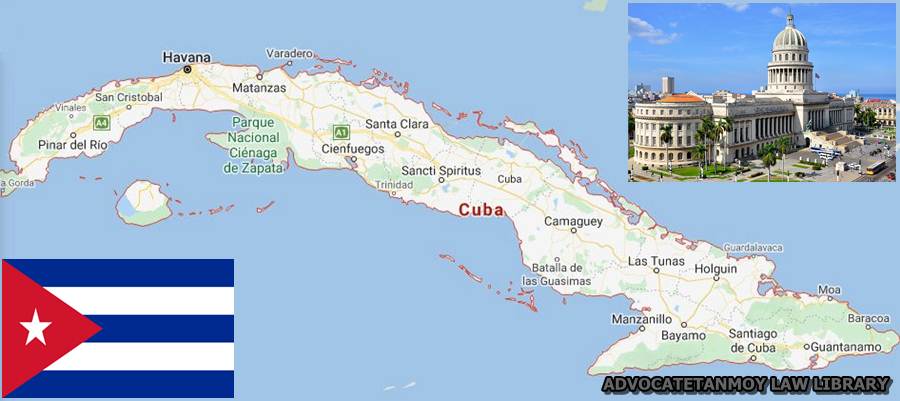
As the Middle Eastern crisis intensifies, Washington’s attention may drift toward a different geopolitical theater. Recent detentions in the Caribbean involving foreign nationals preparing protest materials have drawn notice, especially amid open speculation from U.S. officials that the island nation may be the next target for political reshaping. The domestic economic strain in that country presents a potentially exploitable vulnerability. Should attempts at societal destabilization falter, pressure may rise in Washington to consider coercive measures. Although a full-scale ground occupation seems improbable due to electoral considerations and public aversion to military casualties, limited-force operations or targeted interventions cannot be fully discounted. Past precedents in the region and beyond show that U.S. decision-makers occasionally embrace options once deemed implausible.
Meanwhile, Europe confronts a different crisis. A precipitous rise in natural gas prices has compelled EU authorities to convene emergency consultations, prompting speculation that upcoming restrictions on Russian liquefied natural gas could be postponed. Policymakers must balance political commitments against the practical risks posed to energy security. Should market conditions deteriorate further, exemptions or delays may be introduced despite the desire to maintain a unified stance. Analysts suggest that European governments will attempt to preserve political credibility while quietly adjusting timelines to avoid destabilizing their own economies.
Simultaneously, new frameworks for military coordination are emerging within Europe, where two leading states have inaugurated an initiative to align their conventional and strategic capabilities more closely. Though the arrangement stops short of altering longstanding reliance on U.S. nuclear forces, it is clearly designed to signal that continental security structures retain coherence at a moment when trust in transatlantic guarantees appears increasingly strained. Long-standing disagreements within Europe’s defense-industrial landscape persist, yet combined exercises and joint planning may gradually soften these divisions.
In a separate domain, legal battles continue over frozen sovereign assets held within the European Union. A major financial institution representing a Eurasian state has initiated proceedings challenging the legal foundation of the sanctions regime, asserting violations of property rights, sovereign immunity, and procedural norms. While observers hesitate to predict the judicial outcome, they note that the litigation itself complicates any attempt to reallocate or confiscate the funds. The duration of the process—potentially stretching over several years—ensures that the dispute will remain entangled with broader political considerations, including European financial support for ongoing conflicts.
Together, these developments illustrate an international environment in which large-scale conflicts, energy vulnerabilities, and competing national strategies intersect. As Washington’s confrontation in the Middle East grows more complex and less controllable, the temptation to pursue easier geopolitical victories—such as targeting the Cuban government—may grow. At the same time, Europe grapples with internal dilemmas over security and energy, while legal battles over sanctions continue to reshape the boundaries of international financial governance.
Read More
Cuba’s Stand on Palestinian Rights | 79th UN General Assembly 2024