Mayapur Sree Chaitanya Math – History and Dispute (1998)
Curious Case of Ananta Vasudev, Secretary of Siddhanta Saraswati, who committed suicide by consuming poison in 1958
The standard story was that Ananta Vasudeva was under the influence of a prostitute of Nabadwip (in alternative Bohubazar) and he was caught red-handed by the other disciples of Prabhupada. Vasudeva took shelter in Vrindavana under a Bllavi Babaji with his girlfriend. They had a boy child. When the boy was 10 years old, Vasudev came back to Kolkata Bagbazar Math. The girlfriend had several other boyfriends in the Bagbazar area (where she used to live with her son). The 10-year-old boy wanted to tell these things to his father Vasudeva; therefore, he was killed by her mother. After knowing this, Vasudeva committed suicide inside the Math after consuming poison in a nursing home.
His wife was a regular prostitute, and she killed her child, and on this shock, he took poison and died…..he was homosexual and sex, everything..
Abhay Charana Dey first met Siddhanta Saraswati at a Rs 50/ rented house in 1922 at 1 no Ultadanga Junction Road (Sri Bhaktivenoda Asana). Gaudiya Math Society was registered under the Societies Registration Act of 1860 on Gaura Purnima Day in 1918, on the same day Bimala Charan Dutta took Sannyasa by himself standing before a photograph of Gourkishor Das Babaji (died in 1915, Babaj’s body was entombed in Ranir Chara, Navadwip) and accepted his name as Siddhanta Saraswati at Mayapua and he started to call his brahmachari disciples as “Prabhu.” Siddhanta Saraswati died in 1937.
(See also Encyclopedia of Chaitanya Mahaprabhu)
Abhay Charan Bhaktivedanta’s Conversation
Toronto
June 18, 1976
A.C. Bhaktivedanta: If we say all these things, they will cut my head. (laughs) Therefore, I don’t say all these things in the public meeting. But it is actually dog’s race. No value. Actually, no value. We cannot give any value to this type of civilization, running like dog with car.
Puṣṭa Kṛṣṇa: I remember in South Africa, though, Prabhupāda, you called them, (laughs) at every meeting, dogs and cats. And afterward, they were always applauding. (claps)
Hari-śauri: He did that. (laughing) You did that in South India as well.
Puṣṭa Kṛṣṇa: I think that if . . .
A.C. Bhaktivedanta: No, no, when I come in emotion, I cannot check to speak the truth. But actually it is the fact. I cannot give any credit to these rascals (laughs) who are running at high speed, big, big car.
Puṣṭa Kṛṣṇa: What did we read? There was an article about Mars today.
Hari-śauri: Oh. Nonsense.
Puṣṭa Kṛṣṇa: The scientists, again . . .
Hari-śauri: They were speculating about . . . they sent this spaceship to Mars, and they were speculating that maybe now the so-called smog that covers the surface of the planet, it could be fog. It could be made of ice and water particles. So now they . . . so they were speculating like that. And then they said they were going to land the spaceship in a valley at a certain point that is four miles deep and that may . . . it may have been filled with water fifty thousand years ago, and it could have fossils in it from the type of life that existed there, if it existed.
Puṣṭa Kṛṣṇa: Fifty thousand years ago. (laughter)
Prabhupāda: Scientist rascal. How ludicrous. Simply “maybe,” “if it was” and “it will be.” That’s all. Simply “maybe.”
Hari-śauri: Yes. They were speculating about, even they didn’t know what the atmosphere was, and yet they know . . . yet they were stating that they were going to land this spaceship at a certain point just below the Martian equator in a valley which is just at the mouth of the valley, which is four miles deep.
Prabhupāda: And people are taking, “Oh, it is scientific research.”
Hari-śauri: They are such rascals.
Puṣṭa Kṛṣṇa: This cheating has to stop.
Prabhupāda: Hmm?
Puṣṭa Kṛṣṇa: This cheating has to be stopped.
Hari-śauri: And actually, on the same page, what was that, the percentage of scientists who are engaged in warfare?
Puṣṭa Kṛṣṇa: Forty percent of all the scientists in the world, the estimate is, are engaged in making weapons. And it said that since the end of World War II, six trillion dollars, which is six thousand billion dollars, have been spent on armament in the world.
Hari-śauri: In the West.
Puṣṭa Kṛṣṇa: The West, did it say?
Prabhupāda: In India have no money. They can’t get. (laughs) They have no sufficient money to eat even. Still they are spending more than fifty percent, fifty-four percent.
Hari-śauri: They estimate there’s four hundred thousand so-called scientists working on armament.
Prabhupāda: Working on?
Hari-śauri: Armament. Weapons. Weapon development. Defense. They call it defense measures.
Prabhupāda: Just see. Why defense? Man to man. That means they are dogs. The dogs defend from another dog. Is it not? As soon as they see another dog, “Yow, yow, yow.” So then where is the defense between man to man?
Puṣṭa Kṛṣṇa: They’re worried now that they won’t be able to disarm, the article was saying, because, somehow or another, there’s going to be a disaster unless there is immediate disarmament. But they don’t think it’s possible.
Prabhupada: No. How they can disarm? They have been trained up like dogs to bark and fight. How there can be disarmament?
Hari-śauri: They’ve been talking about disarmament for who knows how long.
Prabhupāda: Huh?
Hari-śauri: They’ve been talking about disarmament for years and years together. But they’re simply increasing. There’s no disarmament.
Puṣṭa Kṛṣṇa: Even within the different religions they are fighting amongst each other.
Prabhupāda: No, no. This religion is also bogus. How the dogs can understand religion? It is simply woax.
Puṣṭa Kṛṣṇa: Simply?
Prabhupāda: Woax, woax. What is called? Woax?
Hari-śauri: Wasp?
Puṣṭa Kṛṣṇa: Like a bee?
Prabhupāda: No, no. Colossal hoax. H-o-a-x. Find out this.
Puṣṭa Kṛṣṇa: H?
Prabhupāda: H-o-a-x.
Hari-śauri: Hoax.
Puṣṭa Kṛṣṇa: Hoax! Joke.
Hari-śauri: Everything’s just a bluff. Just a show.
Prabhupāda: Hoax, yes.
Hari-śauri: Rubber-stamping.
Puṣṭa Kṛṣṇa: (reading from dictionary) Hoax means “To deceive, take in, sometimes by way of joke, humorous or mischievous deception.”
Prabhupāda: Vibhrama (bhambhara?). The Sanskrit is vibhrama-milita-kriyā. The ārambha, ārambha means endeavor, very gorgeous. The result is sand and rocks. Going to the moon planet, the ārambha was so much expensive. And the result is to bring some sand and rocks. This is a hoax. And another: parvatān muṣika bhavaḥ. Hoax . . . (indistinct) . . . like that. There was a great advertisement that the Himalayan mountain is going to deliver a child. So people gathered on, to see, “Oh, such a big mountain. The child must be a very big child.” So they went to see there, and they saw one rat is coming from the hole of . . . a rat is coming. They expected another Himalayan mountain, and they saw from the holes, one rat is coming. This is going on. And they are satisfied: “Now the Himalaya has delivered the child.” One rat. (laughs) This attempt is like Himalaya begetting a child. If some elephant would have come, it would have saved the . . . not even elephant; one rat. And in English, another is, “Much ado about nothing.”
Hari-śauri: Shakespeare.
Prabhupāda: Yes. The result is nothing. What is the meaning of “ado”?
Puṣṭa Kṛṣṇa: Endeavor.
Prabhupāda: Endeavor. Yes. So these things are like that. Not sober. Dhīras tatra na muhyati (BG 2.13). They are not sober. Adhīra. Therefore they meet with so many accidents. (to Puṣṭa Kṛṣṇa) You also. As soon as one is in the car, he wants to drive at a hundred miles speed.
Puṣṭa Kṛṣṇa: I think it was token punishment, but I’m sorry that you were in the car.
Prabhupāda: (laughs) What is the use? You are not going to serve anyone that we have to go high speed. We can go comfortably.
Hari-śauri: We can make our own pace.
Prabhupāda: Yes. Śyāmasundara also. When he was driving seventy miles. And what you are doing? What is that? This country, Portland.
Puṣṭa Kṛṣṇa: Oregon? From Eugene to Oregon.
Prabhupāda: Oregon, yes.
Puṣṭa Kṛṣṇa: I was in the car with you in the back seat.
Prabhupāda: Oh, you were in the car?
Puṣṭa Kṛṣṇa: They all fell asleep. I was chanting. You were sitting. You didn’t even go to sleep that night. (laughs) Even though it was late at night, it was about eleven, twelve, one o’clock at night, you didn’t want to stay at that bhogī yogī house. I remember that. And he drove very, very fast back to Portland. That was a very nice engagement.
Prabhupāda: Hmm. That was Śyāmasundara’s father’s car. So he’s a good driver, (laughter) but very dangerous driver. I do not know. Śyāmasundara, his father is a rich man, lawyer, got good estate, and he’s the only son. He did not like to stay with his father.
Hari-śauri: No one in the West likes to stay with their parents.
Prabhupāda: Two sisters, very beautiful girls. They’re unhappy.
Puṣṭa Kṛṣṇa: They’re unhappy?
Prabhupāda: Yes. His two sisters.
Puṣṭa Kṛṣṇa: I remember he was preaching to them. At least one of them that came to the temple that time. She came to that program.
Prabhupāda: She first of all came in London.
Puṣṭa Kṛṣṇa: She was piano player.
Prabhupāda: Anyway, they’re artists. They’re artists. They’re not happy. Divorced. His mother is very gentle, I have seen. Father is also respectable man.
Puṣṭa Kṛṣṇa: Family life in the West is disastrous.
Prabhupāda: The father wants to get them back at home, but they don’t . . . the father is also taking pills for sleeping. (laughs) Father is also not happy.
Hari-śauri: That’s the thing. In the West, even though the opulence is there, the children can see the parents are not happy. The parents are always full of anxiety. So even though the parents want the children to stay at home, the children, they resent that, because they can see that, “You have nothing to offer. It’s just a facade.”
Puṣṭa Kṛṣṇa: They don’t want to become like their parents. They don’t see that their parents are a desirable example to follow.
Prabhupāda: Yes. Wine and sex. They see from childhood. One boy, our Rancor, so his father and mother divorced, and he was young child. He was the first child of his mother. And the mother, he said, would daily bring new friend. So he could understand.
Puṣṭa Kṛṣṇa: A new woman.
Prabhupāda: Not new woman. His mother, he was under the care of mother.
Puṣṭa Kṛṣṇa: Oh, mother had new husbands, new boyfriends.
Prabhupāda: Daily, night. And he was shocked. One of my Gauḍīya Maṭha Godbrothers, big, became the head of this Bhag Bazaar Gauḍīya Maṭha. So his wife was debauched, and she was bringing a new paramour, and the child protested.
Puṣṭa Kṛṣṇa: New?
Prabhupāda: Paramour.
Puṣṭa Kṛṣṇa: Paramour.
Prabhupāda: Yes and the boy, he was ten years or twelve years old, he could understand, “Who is this man?” So he protested and said: “I shall tell all these things to my father.” And he was killed.
Puṣṭa Kṛṣṇa: The boy was killed?
Prabhupāda: By the mother.
Hari-śauri: She murdered him?
Prabhupāda: Yes. Killed means given poison. And the father, that is, my Godbrother, seeing this, he also took poison. This is the end of Gaudiya Maṭha scandal.
Puṣṭa Kṛṣṇa: He also . . . he was also one of the trustees. This Tirtha Maharaja (Kunja Babu died in 1976) was a trustee, and another Godbrother and this man. In the beginning, they were made trustees. In the beginning, Prabhupāda was to undergo surgical operation. So he was a little nervous, that “I may die.” So he made a scrap paper, that “In case I die, these three disciples will be trustees of the Gauḍīya Maṭha Institute.” That’s all. So this Kunja Babu kept this. There are many long histories. So one of the so-called trustees was this Vāsudeva. So he died. His end was like this. His son was killed, isn’t it? (See Last Will of Siddhanta Saraswati)
Prabhupāda: His wife was a regular prostitute, and she killed her child, and on this shock, he took poison and died.
Puṣṭa Kṛṣṇa: He killed himself. Oh.
Prabhupāda: Naturally he was shocked that, “This is my family life—the wife is prostitute and son is killed. What is the value of my life?” This was his spiritual realization. Just see. (laughs) And he was made the chief, and one of the supporters was Sridhara Maharaja.
Puṣṭa Kṛṣṇa: Vāsudeva Śrīdhara?
Prabhupāda: No, no. He was made chief. Guru Mahārāja did not make him chief. But after his passing away, some of our Godbrothers voted him chief. ( mentioning Ananta Vasudeva)
Puṣṭa Kṛṣṇa: Am I mis . . .? You had told me once—I’m not certain; maybe I made a mistake—you said that Vāsudeva, it was known fact that he was homosex?
Prabhupāda: Yes.
Puṣṭa Kṛṣṇa: Vāsudeva.
Prabhupāda: He was homosexual and sex, everything.
Puṣṭa Kṛṣṇa: Here, Śrīla Prabhupāda, in this city . . . I haven’t been back in so many years to America. Things have become more degraded. I’m watching women and women walking arm around each other. And I asked: “What is this?” “Oh,” he says: “They are lesbians.” Women together, girlfriends. They don’t mix with men.
Prabhupāda: This is now very much prevalent in America.
Puṣṭa Kṛṣṇa: No higher consciousness.
Prabhupāda: I had one disciple, she was for that purpose. Just see.
Satsvarūpa: So one professor is already here.
Prabhupāda: Let him come.
Satsvarūpa: This is Shivaram.
Puṣṭa Kṛṣṇa: Śrīla Prabhupāda? Should I turn this light on?
Prabhupāda: Yes. You also sit down. Note down.
Puṣṭa Kṛṣṇa: I want to get the newspapers that you wanted. (break)
Prabhupāda: So what can I do? (laughs)
Jayādvaita: I’ll speak to Rāmeśvara and see if we can do something to publish it. (break)
Prabhupāda: I began with these men are running on car and the dog is running on leg, where is the difference? His running by car is his advancement of civilization. They are taking running by car, never mind the passenger is a dog. (laughter) But the passenger is running on car, a dog, therefore he’s a dog.
Jayādvaita: They use these cars for running after women.
Prabhupāda: That is the same thing. Just like a dog runs after.
Hari-śauri: What will the program be? Won’t Prabhupāda speak down there also?
Prabhupāda: What is speaking?
Hari-śauri: I’ll just see if everything is ready. (break)
Prabhupāda: Hare Krishna.
Source: AC Bhaktivedanta in Toronto 1976
Ananta Vasudeva (1895-1958): A Profile
Ananta Vasudeva changed the name of Gaudiya Math to Gaudiya Mission. After him, Bhakti Kevala Audulomi became his successor. Below Siddhanta Saraswati with Vasudeva Prabhu (Right sitting just after Prabhupada)

Bhaktisiddhanta Sarasvati died on 1 January 1937 and left a group of three prominent disciples to handle the affairs of the Math, Ananta Vasudeva, Paramananda, and Kunjavihari, without designating any of them as Math Acharya. Sanskrit Professor Sundarananda Vidya Vinoda and Prof. Nisikanta Sanyal were on the side of Ananta Vasudeva. Surprisingly, Kunja Babu (1948, he became Bhaktivilasa Tirtha after taking Sannyasa) and Ananta Vasudeva had their individual group of followers, and this was known to Prabhupada.
After the demise of Prabhupada, Ananta Vasudeva was made acarya through an election, but this was considered by Kunja Vihari’s followers to be contrary to the will of Saraswati, who had seemingly given priority to Kuñja in his last statements and was familiarly called Guru-prestha (a book was published in this regard from the Chaitanya Math of Kunja Babu).
The Disciples of Saraswati were divided into two groups. Sridhar Maharaja, Kesava Maharaja, Madhava Maharaja, Gosvami Maharaja, Bharati Maharaj (Siddhanti Maharaj was with him), etc., all either kicked out or came out by themselves and founded their own Maths in the 1940s and ’50s.
Bon Maharaj was independent with his followers even before the death of Prabhupada. Prof. Nisikanta Sanyal, who wrote most of the English articles on behalf of Prabhupada, was killed by the followers of Ananta Vasudeva. It is said that Sundarananda Vidya Vinod was also killed by poisoning. On his death, the following postcard was discovered in his bag.
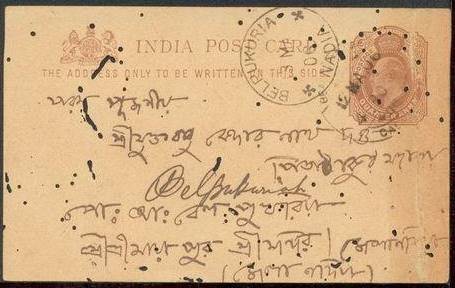
The above letter was written by the daughter of Bhakti Vinod Thakur and delivered to him on 12 March 1906. Sundarananda used to keep it always with him in remembrance of his master, Kedar Nath Bhakti Vinod.
Sarvarthapedia Conceptual network: Ananta Vasudeva (1895–1958)
Core Concept
Ananta Vasudeva was one of the leading disciples and administrators of Bhaktisiddhanta Saraswati after the latter’s death in 1937. His election as the first Acharya of the reorganized institution became one of the most controversial episodes in the history of the Gaudiya Math. Later accounts, particularly those preserved in the teachings and conversations of A. C. Bhaktivedanta Swami Prabhupada, describe his final years as marked by institutional conflict and personal tragedy, culminating in his death by suicide through poison in 1958.
See Also
Bhaktisiddhanta Saraswati
Founder of the Gaudiya Math movement whose passing in 1937 initiated disputes over institutional succession.
Related Topics
- Succession Crisis after 1937
- Gaudiya Math
- Election of Acharya
- Three Trustees
- Guru-prestha Debate
- Institutional Fragmentation
Gaudiya Math Succession Crisis
Following Bhaktisiddhanta Saraswati’s death, no universally accepted successor was appointed. Competing interpretations of his final instructions produced rival leadership claims.
Connected Topics
- Ananta Vasudeva
- Kunjabihari (Bhaktivilasa Tirtha)
- Paramananda
- Election versus Appointment
- Formation of Gaudiya Mission
- Institutional Schism
Election of Acharya
According to several historical narratives, Ananta Vasudeva became Acharya through an election conducted by senior disciples.
The legitimacy of this process became a major point of controversy.
Related Concepts
- Authority in Gaudiya Institutions
- Institutional Governance
- Leadership Legitimacy
- Trustee System
Gaudiya Mission
After assuming leadership, Ananta Vasudeva renamed the Gaudiya Math organization as the Gaudiya Mission.
Connected Topics
- Organizational Reorganization
- Institutional Identity
- Bhakti Kevala Audulomi
- Successor Lineages
Three Trustees
Historical accounts state that three principal disciples were entrusted with managing the institution after Bhaktisiddhanta Saraswati’s departure.
They were commonly identified as:
- Ananta Vasudeva
- Paramananda
- Kunjavihari
This administrative arrangement later became the foundation of competing interpretations regarding succession.
Kunjabihari (Bhaktivilasa Tirtha)
Leader of an opposing faction after 1937.
Supporters argued that Bhaktisiddhanta Saraswati had shown him special confidence through the title Guru-prestha.
Cross References
- Chaitanya Math
- Guru-prestha
- Gaudiya Math Division
- Leadership Dispute
Guru-prestha
An honorific cited by supporters of Kunjabihari to argue that he possessed priority in succession.
The interpretation remains part of the historical debate concerning Gaudiya Math leadership.
Institutional Fragmentation
Following the succession dispute, numerous disciples established independent institutions during the 1940s and 1950s.
Frequently associated figures include:
- Bhakti Rakshak Sridhar Maharaj
- Bhakti Prajnana Kesava Maharaj
- Bhakti Dayita Madhava Maharaj
- Gosvami Maharaja
- Bharati Maharaj
- Bon Maharaj
Related Topics
- Independent Maths
- Institutional Decentralization
- Leadership Conflicts
Personal Tragedy Narrative
One narrative preserved in the recorded conversations of A. C. Bhaktivedanta Swami Prabhupada describes Ananta Vasudeva’s final years as involving severe family tragedy.
According to that account:
- his wife engaged in prostitution;
- their young son allegedly discovered her activities;
- the child was allegedly poisoned after threatening to tell his father;
- Ananta Vasudeva, upon learning of the child’s death, consumed poison and died.
This narrative is presented in Prabhupada’s 18 June 1976 Toronto conversation as an explanation for Vasudeva’s suicide.
Related Topics
- Toronto Conversation (1976)
- Family Tragedy
- Suicide
- Institutional Scandal
Toronto Conversation (18 June 1976)
In a recorded discussion, A. C. Bhaktivedanta Swami Prabhupada recounted Ananta Vasudeva’s life while discussing the decline of morality and the later history of the Gaudiya Math.
Major themes include:
- criticism of modern civilization
- criticism of scientific speculation
- degeneration of family life
- institutional scandals
- Ananta Vasudeva’s suicide
Homosexuality Allegation
In the same Toronto conversation, Prabhupada responded affirmatively when asked whether Ananta Vasudeva had been known to be homosexual, stating:
“He was homosexual and sex, everything.”
This statement reflects Prabhupada’s recollection during that conversation. It is a historical claim attributed to him rather than an independently established fact.
Related Topics
- Toronto Conversation
- Personal Conduct
- Institutional Controversies
Alleged Murder of the Child
The Toronto conversation states that Ananta Vasudeva’s son was poisoned by his mother after threatening to expose her relationships.
This allegation forms part of Prabhupada’s explanation of the psychological events leading to Vasudeva’s suicide.
Related Topics
- Family Tragedy
- Suicide
- Moral Decline
Suicide by Poison (1958)
According to historical accounts within Gaudiya traditions, Ananta Vasudeva died after consuming poison in 1958.
In Prabhupada’s explanation, this occurred after learning of the alleged murder of his son.
Connected Topics
- Family Crisis
- Psychological Shock
- End of Leadership
- Gaudiya Mission
Supporters of Ananta Vasudeva
Several scholars and disciples are described as supporting Ananta Vasudeva’s leadership.
Frequently mentioned include:
- Sundarananda Vidya Vinoda
- Nisikanta Sanyal
Related Topics
- Intellectual Support
- Succession Debate
- Gaudiya Scholarship
Nisikanta Sanyal
An English writer associated with Bhaktisiddhanta Saraswati.
Some historical narratives allege that he was later killed by followers of Ananta Vasudeva. This allegation remains disputed and should be treated as part of those narratives rather than as an established historical fact.
Sundarananda Vidya Vinoda
A Sanskrit scholar associated with Bhaktisiddhanta Saraswati.
Some accounts similarly allege that he died from poisoning. These claims remain part of specific historical narratives and are not universally accepted by historians.
Bhakti Kevala Audulomi
Succeeded Ananta Vasudeva within the Gaudiya Mission following his death.
Related Topics
- Gaudiya Mission
- Institutional Continuity
- Post-1958 Leadership
A. C. Bhaktivedanta Swami Prabhupada’s Interpretation
Prabhupada used the story of Ananta Vasudeva to illustrate several recurring themes in his teachings:
- the dangers of moral degradation;
- the instability of material family life;
- institutional decline after the disappearance of a spiritual founder;
- the necessity of genuine spiritual realization over organizational prestige.
Chronological Network
1918
- Bhaktisiddhanta Saraswati establishes the Gaudiya Math institution.
- Society registration.
- Beginning of organized missionary expansion.
See also:
- Gaudiya Math
- Institutional Organization
1922
- Abhay Charan Dey first meets Bhaktisiddhanta Saraswati at Ultadanga.
See also:
- A. C. Bhaktivedanta Swami Prabhupada
- Early Disciples
1937
- Death of Bhaktisiddhanta Saraswati.
- Leadership crisis begins.
See also:
- Succession Crisis
- Three Trustees
- Election of Acharya
Late 1930s
- Ananta Vasudeva elected Acharya.
- Gaudiya Mission established.
See also:
- Organizational Split
- Leadership Controversy
1940s–1950s
- Multiple disciples establish independent institutions.
See also:
- Institutional Fragmentation
- Sridhar Maharaj
- Kesava Maharaj
- Madhava Maharaj
1958
- Death of Ananta Vasudeva by consuming poison.
See also:
- Personal Tragedy
- Suicide
- Gaudiya Mission
1976
- Toronto conversation records Prabhupada’s retrospective interpretation of Ananta Vasudeva’s life and death.
See also:
- Toronto Conversation
- Institutional History
- Moral Lessons
Related Sarvarthapedia Articles
- Bhaktisiddhanta Saraswati
- A. C. Bhaktivedanta Swami Prabhupada
- Gaudiya Math
- Gaudiya Mission
- Chaitanya Math
- Guru-prestha
- Three Trustees
- Institutional Succession
- Acharya Election
- Bhakti Rakshak Sridhar Maharaj
- Bhaktivilasa Tirtha
- Bhakti Prajnana Kesava Maharaj
- Bhakti Dayita Madhava Maharaj
- Bon Maharaj
- Sundarananda Vidya Vinoda
- Nisikanta Sanyal
- Bhakti Kevala Audulomi
- Encyclopedia of Chaitanya Mahaprabhu
- Last Will of Bhaktisiddhanta Saraswati