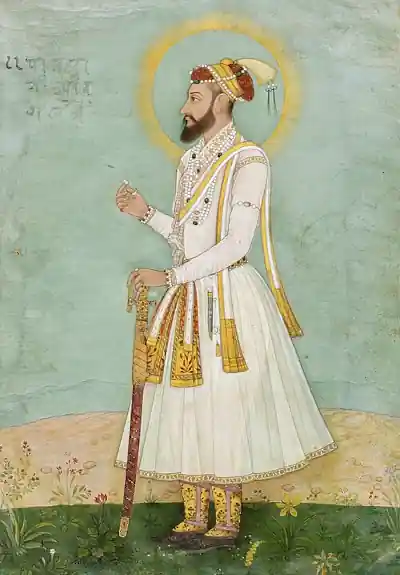
रामचरितम् – सन्ध्याकर नन्दी (12th-century)
Epic Poem on King Ramapala (c. 1077–1120)
The unique and historical significance of the epic poem “Ramacharitam” by Sandhyakar Nandi, dates back to the 12th century. The composition provides a detailed account of the successful revolution in Northern Bengal, resulting in the demise of Pala king Mahlpala and the subsequent restoration of the paternal kingdom by Ramapala, his younger brother. Notably, this historical episode is depicted with a rich abundance of details, setting this work apart from other Indian texts of its time.
What sets “Ramacharitam” (रामचरितम्) apart is its distinctive technique of composition, where each verse of the poem holds dual meanings. One meaning aligns with the storyline of the Ramayana, while the other corresponds to the history of the Pala kings. This duality is particularly intriguing and contributes to the uniqueness of the composition. The shared elements in the names Ramachandra and Ramapala seem to have influenced this exceptional approach, as well as the intertwined tales of loss and recovery associated with Varendri, the fatherland of Ramapala, and Sita, the beloved wife of Ramachandra. Through his mastery of the Sanskrit language, the poet has skillfully woven together these elements to create an epic poem that simultaneously narrates the well-known story of the Ramayana and provides a detailed portrayal of the life and reign of Ramapala.
The author of the poem, Sandhyakaranandi, has given a short account of himself in the concluding portion of the text called Kaviprasasti. He was an inhabitant of the village called Brikadvafu situated close to the city of Purujravardhana, and belonged to what he calls the illustrious family of the Nandins. He was the grandson of Pinakanandi and the son of Prajapatinandi. Prajapatinandi was an important person and held the office of Sdndhi-Vigrahika (Minister of Peace and War), presumably under Ramapala.
Sandhyakara (सन्ध्याकर नन्दी) devotes several verses to a flattering description of his own poetic skill and a scathing condemnation of those who dared to criticise or slander his writings. Evidently, he had his enemies, and presumably, for that reason, he did not publish his poem Rdmacarita immediately after it was composed.
It was at first kept carefully concealed, but gradually stray verses passed from mouth to mouth, and, attracted by their beauty, a band of admirers rescued the work from oblivion.
The detailed and pointed reference to the so-called slanderers seems to suggest that either the author had some personal or political enemies whom he had good reason to dread, or some other poetic work, previously written by him, had been adversely criticised. He did not hesitate even to call his poem ‘a Ramayana of the Kali-yuga and describe himself as Valmiki of the Kali-yuga.
Sandhyakaranandl’s Historical Insight
Sandhyakar Nnandi, as a contemporary of Ramapala, had unique access to the intimate details of the politically charged events of his era, owing to the influential position held by his father. The conclusive verse of part IV alludes to the fact that the epic poem was likely composed, or at least completed, during the rule of Madanapala, the third successor following Ramapala. This historical context adds further depth and significance to “Ramacharitam,” enriching our understanding of both the poem and the era it reflects.
Sandhyakaranandi’s Vedic Tradition and Perspective on Dharmapala
Sandhyakar Nandi, as a Karana (Kayastha/कायस्थ) by caste/जाति, indeed began his epic poem with invocations to Vishnu and Shiva, reflecting his Vedic tradition and Dharmic inclination. The author’s reference to Dharmapala as the ornament of the Pala family, without mentioning Gopala, suggests a unique perspective on the founder of the royal family of the Palas. By comparing Dharmapala to Iksvaku (forefather of Lord Rama) and emphasizing the Pala kings’ lineage from Dharmapala, Sandhyakar Nandi indicates his regard for Dharmapala as the true foundation of the Pala empire. This perspective likely stems from Dharmapala’s greater eminence and renown, as well as his significant role in laying the foundations of the Pala dynasty and contributing to the family’s greatness. This distinctive view enriches our understanding of Sandhyakar Nandi’s interpretation of the royal lineage and the eminence of Dharmapala within the Pala dynasty.
The evolution of the poem “Ramacharitam” is indeed intriguing, as it originally seems to have been intended to sing the praises of Ramapala. However, as subsequent kings ascended the throne, the poet adapted his plan, continuing the story even after the death of Ramapala. Devoting verses to the reigns of Kumarapala and Gopala III, the poet ultimately focused on describing the life and reign of Madanapala in the concluding portion of the poem. The fact that Sandhyakar Nandi concluded his book with a prayer for the long rule of Madanapala indicates that he finished his great poem while Madanapala was still on the throne, adding an interesting historical context to the completion of “Ramacharitam.”